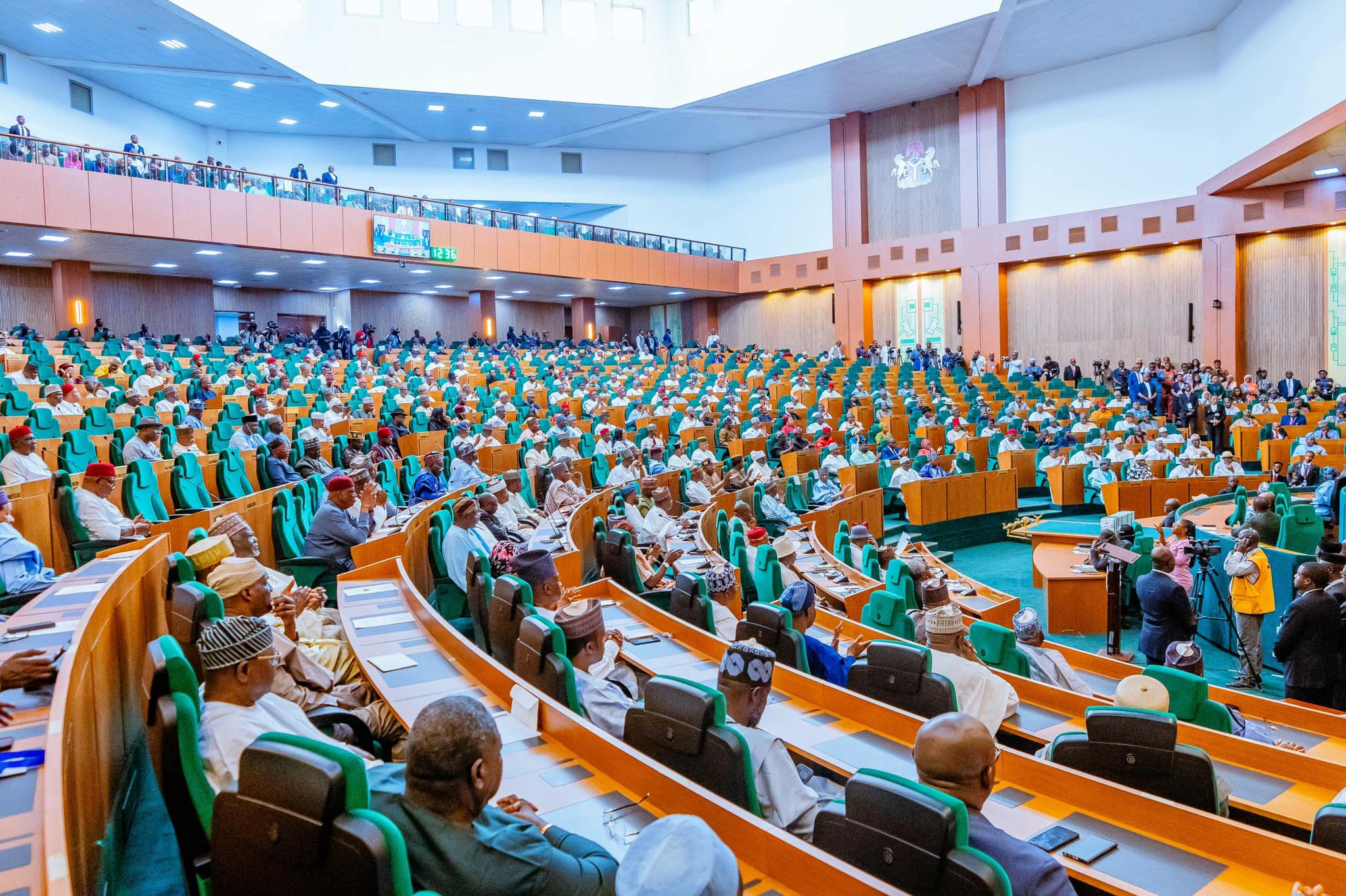
The lawmakers called for swift rescue operations, stronger security deployment and a comprehensive framework to protect educational institutions nationwide.
The House of Representatives on Tuesday urged the federal government and security agencies to intensify efforts to rescue schoolchildren and teachers abducted in Oyo and Borno states.
Members also renewed calls for far-reaching reforms of Nigeria’s security architecture, including the establishment of state police and local policing units.
The resolutions followed the adoption of two separate motions of urgent public importance that highlighted the growing wave of school kidnappings and attacks on communities, which lawmakers said had become a major threat to education and public safety across the country.
The first motion, sponsored by Olamijuwonlo Alao-Akala (APC, Oyo), focused on the abduction of pupils and teachers in Orire Local Government Area of Oyo State, the killing of a schoolteacher, Michael Oyedokun, and the need for structural reforms to tackle insecurity.
Presenting the motion, Mr Alao-Akala lamented what he described as the “unrelenting siege” on communities in Ogbomoso and Orire Local Government Areas, tracing the escalation of insecurity in the area to attacks around the Old Oyo National Park.
He recalled that on 16 May, armed bandits invaded Baptist Nursery and Primary School, Yawota; Community Grammar School, Esiele; and L.A. Primary School, abducting more than 30 pupils and teachers in broad daylight.
The lawmaker expressed particular concern over the killing of Mr Oyedokun, a mathematics teacher who was reportedly beheaded while in captivity.
Mr Alao-Akala said he was “deeply disturbed by the barbaric execution of Mr Michael Oyedokun, a mathematics teacher, who was beheaded in captivity by his abductors, a savage act that has shocked the conscience of our nation and demands an immediate and decisive response from every arm of government.”
He said many victims remained in captivity, leaving their families in anguish and uncertainty.
Mr Alao-Akala acknowledged ongoing rescue efforts by security agencies as well as the federal government’s approval of 1,000 forest guards for the area, but argued that stronger and more permanent security measures were required.
According to him, the vast forests surrounding the Old Oyo National Park have become safe havens for criminal elements, creating a corridor through which terrorists and kidnappers operate across state boundaries.
The lawmaker also reminded the House that it had previously adopted recommendations advocating decentralisation of Nigeria’s security framework through state police, local government policing units, decentralised courts and integrated intelligence systems.
He argued that continued delays in implementing such reforms were leaving communities vulnerable to attacks.
Contributing to the debate, Bamidele Salam (Accord, Osun) warned that the abduction of schoolchildren was becoming a dangerous national trend.
Mr Salam noted that school kidnappings, which gained international attention following the abduction of the Chibok schoolgirls in 2014, were increasingly targeting vulnerable communities across the country.
He described education as a critical tool for combating poverty and ignorance and warned that attacks on schools threatened the future of thousands of children.
The lawmaker called on the federal government to establish a specialised security architecture dedicated to protecting schools nationwide.
He argued that if the government could provide adequate protection for public office holders, similar protection should be extended to pupils and teachers in public schools.
“We cannot afford to close our eyes to the realities of the dangers that our children and the teachers face today in Nigeria,” he said.
Mr Salam also criticised the lack of funding for previous school security initiatives and urged authorities to act with greater urgency.
Similarly, Etanabene Benedict (PDP, Delta) described the state of insecurity across the country as alarming, saying citizens now lived in constant fear.
He renewed calls for state police, arguing that governors should be empowered to deploy local security resources, including modern surveillance technologies such as drones, to tackle security threats within their jurisdictions.
Mr Benedict cautioned against politicising insecurity, warning that partisan narratives could distract attention from efforts to address the crisis.
“Slaughtering of people has become normal to our lives. This is not how it was before,” he said.
The lawmaker also sympathised with families whose children remain in captivity, describing their situation as unbearable.
In a related development, the House considered another motion sponsored by Midala Balami (APC, Borno), who raised concerns over the reported abduction of 42 schoolchildren from communities in Borno State.
Mr Balami said repeated attacks on schools and communities in the state continued to threaten access to education, endanger lives and undermine public confidence in government.
He recalled the 2014 abduction of the Chibok schoolgirls, many of whom remain unaccounted for, as well as several other mass abductions in communities across Borno State.
According to him, persistent insecurity has contributed to declining school enrolment and attendance in vulnerable communities, while increasing fear among residents.
The lawmaker stressed the need for coordinated action to secure the release of all abducted persons and restore confidence in the government’s ability to protect lives and property.