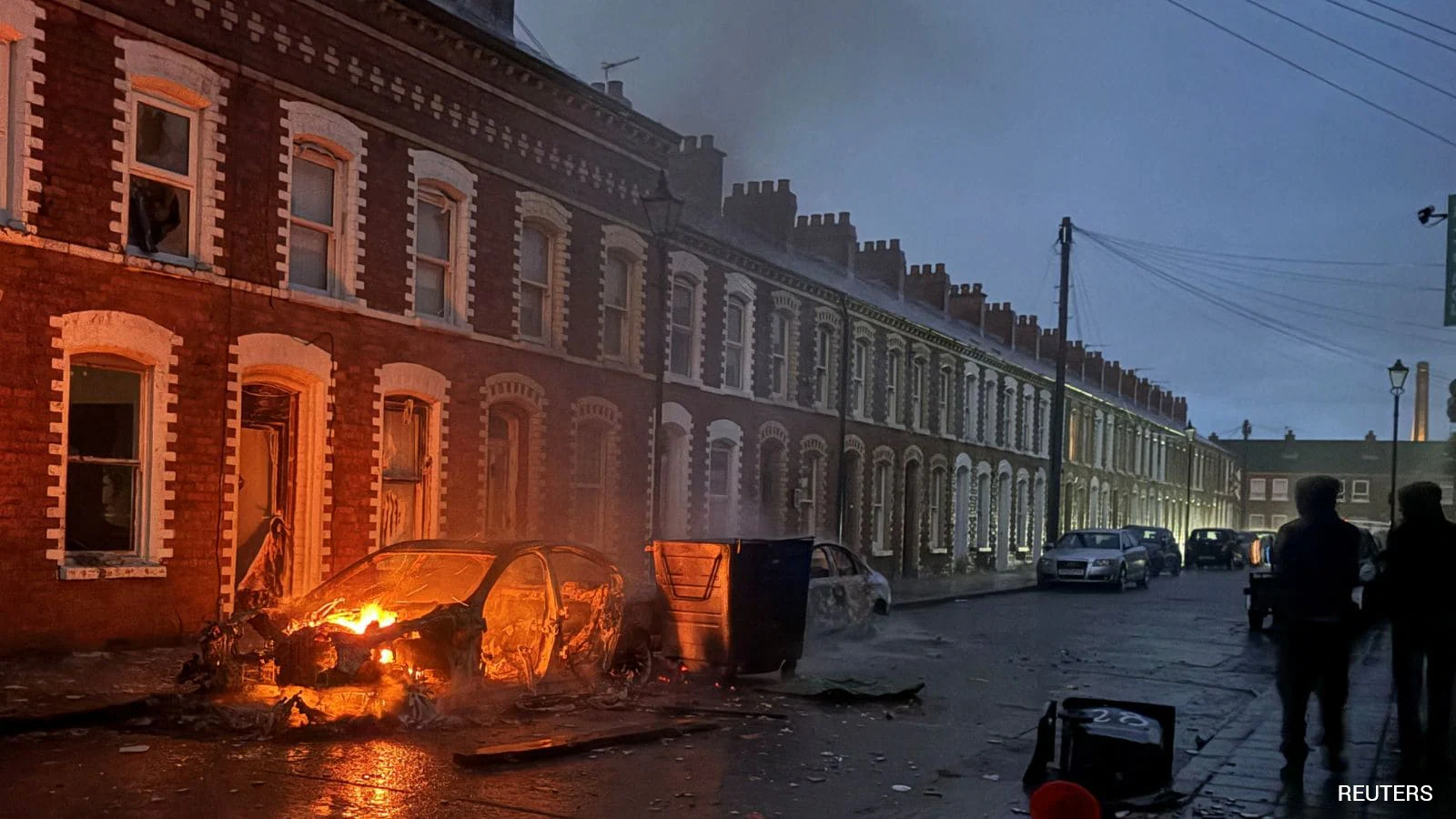
Riots in Belfast spread quickly as race-related tensions and hate between communities made the situation worse. Small clashes in one area soon turned into violence in other parts of the city.
The protest started after a knife attack in north Belfast on Monday night, which left a victim seriously injured. Footage of the attack spread rapidly on social media, and a 30-year-old Sudanese man, who had applied for asylum in the UK, was charged with attempted murder, threatening to kill, and carrying a knife.
Before police action fully took shape, anti-immigration protests began forming and soon escalated into violence across Belfast and nearby areas, according to Newsweek.
During the violence, shops were forced to close, events were cancelled, and public transport was badly affected. The worst incident happened on Tuesday when masked groups came onto the streets. They targeted non-white residents and forced some people out of their homes and attacked police with stones and petrol bombs.
Police said rumours, social media posts, and long-standing mistrust between groups have led to the unrest growing faster. Many people from ethnic minority communities said they now feel unsafe, even in their own homes or while going to work and school, according to The Guardian.
Officials have urged people not to believe rumours or spread hate online, saying the situation is being made worse by misinformation and rising tensions.
Protesters threw bricks, chairs, and bins at police. Some even entered private gardens and driveways. Police officers were trapped and surrounded, and their vehicles were also attacked.
At the same time, thousands of people joined a separate peaceful anti-racism protest in Belfast at City Hall. The “Together Against Hate” rally, organised by United Against Racism, saw political parties, trade unions, and community groups calling for peace and unity. Protesters held banners such as “Refugees welcome” and “Riots don’t speak for Belfast,” BBC reported.
“This week we witnessed something we will never forget. The scenes of families and young children fleeing their homes in terror. We’ll never forget how rich and powerful people used their online platforms,” said Ivanka Antova, the chair of United Against Racism Belfast, as quoted by BBC.
The Belfast protest also comes a week after the case of Henry Nowak, an 18-year-old white student in Southampton, who was wrongly suspected and handcuffed by police after false claims of racism, even though he was actually suffering fatal stab wounds.
The person responsible for the stabbing, Vickrum Digwa, a 23-year-old British Sikh man, had already been jailed for murder.
Masked groups were seen setting cars and buildings on fire and attacking homes believed to be linked to migrant families. Many residents, including women and children, were forced to flee for safety. The violence lasted for around two and a half hours, before the situation was brought under control.