The Federal Government has unveiled a new investment-driven strategy aimed at resolving the persistent electricity crisis in Nigeria’s health sector, with a shift towards private sector participation in powering hospitals nationwide.
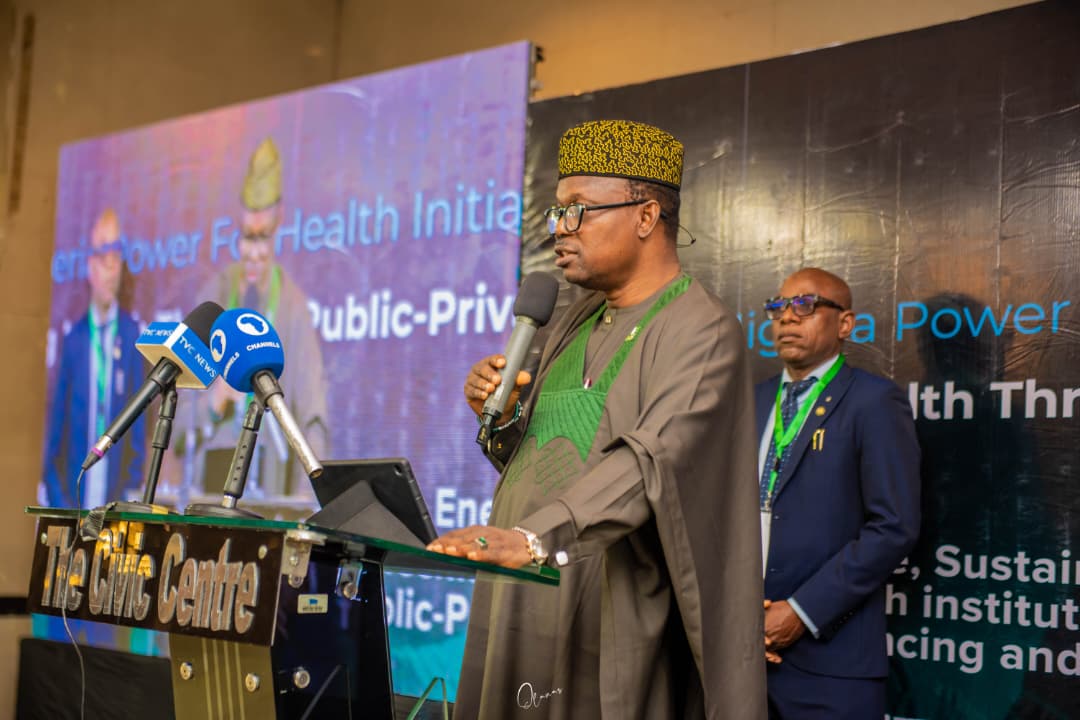
Minister of State for Health and Social Welfare, Iziak Adekunle Salako, disclosed this on Monday at the National Healthcare Electrification Investors Matchmaking Forum held in Lagos under the Nigeria Power for Health Initiative.
Salako said the initiative represents a transition from policy discussions to investment mobilisation, as government seeks to build a sustainable market for healthcare electrification across the country.
He noted that unreliable electricity supply, frequent grid collapses, voltage fluctuations, and rising diesel costs have continued to undermine healthcare delivery, placing heavy financial burdens on hospitals.
“Electricity is not merely a utility in healthcare; it is a critical driver of service delivery. When power fails, healthcare delivery stagnates,” he said.
According to him, many health facilities now spend a large share of their operating budgets on energy, leaving limited resources for medicines, staffing, and patient care.
The minister explained that the Nigeria Power for Health Initiative, approved by President Bola Ahmed Tinubu, was developed to provide a long-term, structured solution to the sector’s energy challenges.
He said past electrification interventions, largely dependent on government and donor funding, had failed to deliver sustainable outcomes due to weak maintenance systems, poor accountability, and inadequate financing models.
To address this gap, Salako said government is introducing an “Energy-as-a-Service” framework in which private energy service providers will finance, install, operate, and maintain power systems in health facilities.
Under the model, hospitals will no longer manage energy infrastructure directly, allowing them to focus on healthcare delivery while investors enjoy predictable returns on investment.
“This approach ensures performance, accountability, and long-term sustainability. It also reduces fiscal pressure on government while improving service delivery for citizens,” he said.
Salako disclosed that the initiative will initially target federal tertiary hospitals but is structured to expand to primary and secondary healthcare facilities across both public and private sectors.
He added that a strong governance framework, including inter-ministerial and technical committees, has been established to enhance transparency and build investor confidence.
According to him, the financing structure will combine public resources with development finance, climate funds, concessional capital, and private investment to unlock large-scale deployment.
The minister urged investors, development finance institutions, and development partners to seize the opportunity, describing healthcare electrification as a strategic intersection of health security, climate action, and economic development.
He assured prospective investors of government’s commitment to providing enabling policies and guarantees to support project execution.
“With the right partnerships, we can ensure that every healthcare facility in Nigeria has access to reliable, affordable, and sustainable energy,” he said.
FOLLOW US
FOR MORE HERE