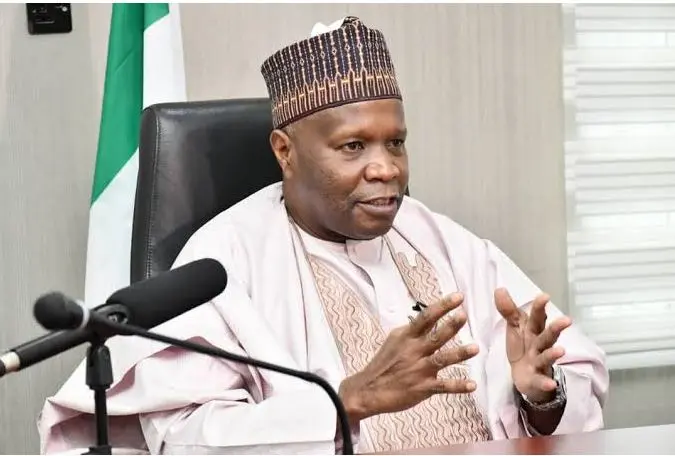
*Obi warns against rushed legislation, wants law after 2027 elections
*CUPP calls for caution
Chuks Okocha, Alex Enumah, Sunday Aborishade in Abuja and Sunday Ehigiator in Lagos
As clamour for the establishment of State Police gains traction, some senior lawyers in the country have declared support for the initiative which they argued was necessitated by the worsening security conditions in the country, though with a caveat.
This is as civil society organisations (CSOs) expressed fears of its being hijacked, misapplied or abused by governors and therefore asked for constitutional safeguards against its possible abuse.
While agreeing to the need for the establishment of state police, former Presidential candidate of Labour party and standard bearer of Nigeria Democratic Congress (NDC), Mr. Peter Obi called for its coming into effect after the 2027 elections as rushed legislations had inherent flaws.
Also lending their voice to the current debate of the matter, the Conference of United Political Parties (CUPP) said passage of the State Police bill was desirous, but should be handled with caution.
The senior lawyers who ventured their opinions on the issue think that for the initiative to succeed, certain constitutional and statutory safeguards must be put in place by appropriate authorities.
The Senate had on Wednesday passed the bill, which is now awaiting passage by at least 24 states of the federation.
Speaking on the development, the senior lawyers who described the move as a significant step towards addressing the persistent security challenges confronting Nigeria, argued that going by the country’s vast territorial landmass, diverse security threats, and the limitations of a highly centralised policing structure, decentralising policing responsibilities has become increasingly compelling.
Reacting, Mr Akinlolu Kehinde, SAN, submitted that the success of State Police will depend less on its creation than on the institutional safeguards put in place to prevent abuse and ensure professionalism. He called for constitutional and statutory provisions that would insulate the command structure from undue political interference, particularly in matters relating to arrests, investigations, and prosecutions.
“Secondly, there should be an independent State Police Service Commission responsible for recruitment, promotion, discipline, and appointments. Membership of the Commission should reflect broad representation and include persons of unquestionable integrity to prevent the force from becoming an instrument of partisan politics.
“Thirdly, there must be clear constitutional delineation of the powers and jurisdiction of the Nigeria Police Force and State Police to avoid operational conflicts and ensure effective collaboration, particularly in matters involving terrorism, organised crime, and offences transcending state boundaries.
“Equally important is the establishment of robust oversight mechanisms. Independent civilian complaint bodies, legislative oversight, judicial review, and strict adherence to constitutional safeguards on fundamental human rights must form part of the framework”, he said.
Kehinde, further advocated for an institutional mechanisms for cooperation between State Police, the Nigeria Police Force, and other security agencies through joint intelligence-sharing platforms and coordinated operations.
Similarly, Ahmed Raji, SAN, while not opposed to the creation of State Police, recalled that the country had sometime in the past practiced the system.
He advised that for the initiative to succeed, the authorities should research into what led to its earlier failure in order to avoid pitfalls.
“Policing is a huge responsibility which is a fundamental component of the Social Contract. It will seem that the current central policing is overwhelmed. However, is state police the answer? We used to practice it before? What were the fault lines then? Have we addressed the fault lines in the proposed arrangement? There is no doubt the Government means well and we should follow them”, Raji stated.
As safeguards he suggested that the federal police should retain the power of intervention in cases of gross abuse.
“There is no disputing the need to do all necessary to stem the tide of the insecurity crisis ravaging the country at this time. To this end, the option of State Police has become a child of necessity,” Dayo Akinlaja, SAN, said.
The senior lawyer observed that the challenges which revolves around possible abuse, funding and proper alignment with the existing federal police structure, could be effectively handled through legislation.
“I have not had the privilege of seeing the proposed legislation as passed by the National Assembly. Thus, I am handicapped in terms of knowing whether or not the fears that have been expressed over time have been properly addressed.
“However, I am more than willing to assume that all necessary safeguards have been taken or will be taken into consideration in the legislation as passed by final analysis before the legislation is passed. Since it is a work in progress, there is still ample opportunity to ensure that the imperative measures are put in place. All that is needed is to ensure that the desired end of State policing, which is to foster better security in the land, is achieved,” Akinlaja noted.
Also speaking, a former chairman of the Abuja branch of the Nigerian Bar Association (NBA), Moses Ebute, SAN, who commended the National Assembly for passing the bill, pointed out that the worsening state of insecurity in the country necessitated the clarion call for State Police.
While he listed possible abuse by state executives, recruitment and training as areas of serious concerns, he urged lawmakers to include in the Constitution that the federal police should be solely responsible for recruitment.
“The constitution could be amended by including a provision that the use of state police for political scores against opponents should be a ground for impeachment or that the immunity provision enjoyable by a governor shall not apply”, Ebute said.
CSOs Welcome Initiative, But Want Strong Oversight
While welcoming the landmark reform as a major step towards tackling Nigeria’s worsening insecurity, Civil Society Organisation stakeholders warned that without adequate checks and balances, decentralising policing could merely transfer the abuse of power from the federal level to the states.
They argued that the success or failure of state police would ultimately depend not on its creation but on the governance architecture put in place to guarantee professionalism, operational independence, respect for human rights and public accountability.
Director of Administration at the Graduate Research Clinic, Mr. Segun Ayodele, described fears that governors could abuse state police as legitimate, citing Nigeria’s long history of executive overreach, politicisation of security institutions and selective law enforcement.
According to him, safeguards must be built into the Constitution, relevant laws and institutional frameworks simultaneously.
At the constitutional level, Ayodele proposed clearly defined limits to governors’ authority over state police, insisting that state commissioners of police should only be appointed on the recommendation of an independent or federal police service commission and subsequently confirmed by the State House of Assembly.
He further recommended security of tenure for commissioners, saying they should only be removed through clearly established judicial or legislative processes rather than at the discretion of state governors.
He also called for constitutional provisions expressly prohibiting the deployment of state police for electoral, partisan, ethnic, religious or personal purposes, with stiff penalties for violations.
“Governors should not have unfettered control over state police because our political history has shown that security institutions are vulnerable to abuse where adequate checks do not exist,” he said.
Beyond institutional independence, Ayodele identified funding autonomy as one of the most critical safeguards.
He proposed constitutionally guaranteed funding streams paid directly to state police commissions rather than through governors, warning that financial dependence would effectively place the police under executive control regardless of constitutional provisions.
Ayodele also underscored the need for rigorous professional training centred on human rights, community policing and conflict de-escalation, adding that sustained political will and civic vigilance would determine the effectiveness of the proposed reforms.
On public accountability, he said no institution could independently guarantee responsible policing.
Similarly, Executive Director of the Foundation for Environmental Rights Advocacy and Development (FENRAD), Comrade Nelson Nnanna Nwafor, welcomed the reform but insisted that strong constitutional protections must accompany the establishment of state police.
He called for clearly defined constitutional responsibilities separating state police from federal security agencies to prevent jurisdictional conflicts.
Nwafor recommended independent State Police Service Commissions responsible for recruitment, promotions and disciplinary processes based strictly on merit.
He also advocated security of tenure for senior officers, transparent recruitment processes reflecting diversity and gender inclusion, judicial oversight over arrests and detention, as well as periodic independent audits of police operations and finances.
According to him, state police should exist to serve citizens rather than political office holders.
“Any structure that allows governors to exercise unchecked control risks undermining democracy, the rule of law and public confidence,” he cautioned.
On accountability, the FENRAD executive director stressed that civil society organisations must continuously monitor police conduct, document human rights violations, provide civic education and support victims seeking justice.
Nwafor maintained that accountability should never rest solely with government institutions.
Instead, he advocated a collaborative oversight framework involving civil society, legislators, oversight agencies, traditional rulers, women, youth, community leaders and the media.
Also speaking, Executive Director of the Public Awareness on Rights and Rehabilitation of Vulnerable Persons Initiative (PAR-RVP Initiative), Mrs. Ogechi Ogu, warned that state police could become governors’ private security outfits unless constitutional safeguards are deliberately entrenched.
She proposed placing state policing on the Concurrent Legislative List with binding national minimum standards applicable across all states.
Ogu also recommended fixed, non-renewable four-year tenures for state commissioners of police, removable only through a two-thirds majority of the State House of Assembly on clearly stated grounds.
According to her, the Constitution should expressly prohibit state police from participating in partisan politics or election-related activities.
She further proposed an independent State Police Service Commission comprising retired judges, representatives of the Nigerian Bar Association, labour unions and civil society organisations.
She also stressed the importance of funding independence, proposing that police budgets become first-line charges on state consolidated revenue funds, complemented by dedicated statutory allocations to prevent executive interference.
At the grassroots level, she advocated Local Government Police Accountability Committees comprising traditional rulers, women leaders, youth representatives, religious leaders and community associations to review complaints monthly and strengthen public confidence.
She equally called for mandatory deployment of body cameras during arrests, elections and protest management to improve transparency and accountability.
Peter Obi: Delay Implementation Till After 2027 Polls
Obi, in a statement issued yesterday through his X handle, said the passage of the State Police Bill by the National Assembly represented a major legislative milestone in Nigeria’s quest to reform its policing architecture.
He, however, said the manner in which the legislation was processed had raised serious concerns about its credibility and possible political misuse.
He argued that while decentralising policing had long been advocated by security experts and regional stakeholders as a solution to Nigeria’s growing insecurity, the constitutional and legislative framework underpinning the reform appeared weak and failed to inspire public confidence.
According to him, the absence of broad public consultation and the speed with which the legislation was passed had created widespread suspicion about the motives behind the initiative.
Obi said, “The recent passage of the State Police Bill by the National Assembly marks a significant legislative milestone in addressing a long-standing demand of the Nigerian people.
“For years, many of us, alongside security experts and regional stakeholders, have consistently argued that a highly centralised policing structure is fundamentally unsuitable for a country as vast, diverse, and complex as Nigeria.
“However, the legislative and constitutional implementation appears shaky and raises legitimate concerns.”
Obi maintained that such a far-reaching security reform required extensive engagement with citizens and stakeholders, insisting that policing should be more visible at the community and local government levels.
He criticised what he described as the disorderly legislative process, noting that the absence of public hearings on such a sensitive constitutional amendment undermined public trust.
“The process should involve greater community participation. Policing should be more visible at the local government and community levels.
“The mechanism for passing the law appears highly disorganised, with no public hearing on such a sensitive issue.
“Indeed, the rush to enact the law without proper legislative procedures fuels suspicion among many observers about the political motives behind it,” he said.
Obi also questioned the willingness of the current administration to refrain from exploiting the new policing arrangement ahead of the next general election.
He said, “Going by what Nigerians have seen so far, there is no guarantee that this administration can resist the temptation to take advantage of state policing to influence the 2027 general election by proxy.
“In view of that possibility and the danger it poses to the polity, it is necessary to defer its implementation until after the general election.”
It Carries Promise, Risk, Says CUPP
In a statement by its National Chairman, Peter Ameh, the CUPP said the Nigerian Senate’s passage of the constitutional amendment bill for the establishment of State Police on June 24, 2026, following earlier approval by the House of Representatives, marks a landmark shift in the nation’s security architecture.
He said that ”This reform moves Nigeria toward a more decentralised policing system in response to the persistent failures of the centralised model.
“Nigeria continues to grapple with severe insecurity and banditry, kidnapping, insurgency, farmer-herder clashes, communal violence, and urban crime. The existing Nigeria Police Force (NPF) has been critically overstretched and under-resourced. Despite repeated promises by the Tinubu administration to massively recruit and adequately fund the police, including announcements of recruiting tens of thousands of officers and enhancing the Police Trust Fund. these commitments have not been fulfilled to the required scale or with the urgency needed.
‘This shortfall has left the federal police ill-equipped to tackle rising threats, underscoring the limitations of relying solely on a centralised force controlled from Abuja.”
However Ameh said, “While this could be a good reform but the hasty nature leaves more to be desired, it is not a panacea.
”We caution that poorly implemented State Police could be vulnerable to abuse, including political weaponisation, election interference, or suppression of opposition.
”There are also legitimate worries regarding funding disparities across states, uneven professional standards, and potential coordination challenges between federal and state commands.”