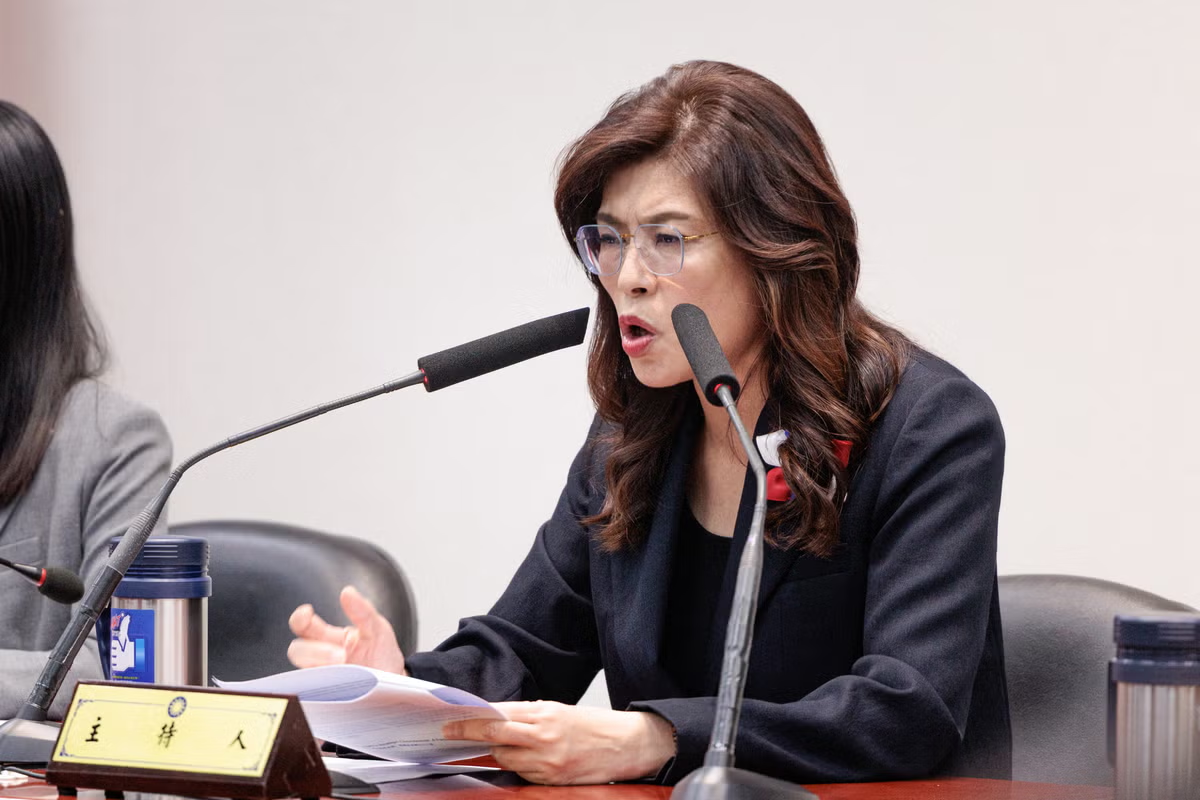
Taiwan’s leading opposition figure, Cheng Li-wun, has declared her “very willing” intention to meet President Donald Trump during her visit to the United States this month.
Cheng, who chairs the Kuomintang (KMT), Taiwan’s largest opposition party, is embarking on a two-week trip to the U.S. today, following her April meeting with President Xi Jinping in China.
Speaking to reporters in Taipei, Cheng highlighted the historical significance of such a meeting, noting that no Taiwanese leader has met a sitting U.S. president since diplomatic ties between Taipei and Washington were severed in 1979.
Despite her official position being KMT chairwoman, she affirmed her readiness to engage. “I am of course very willing,” she stated when asked about a potential meeting with President Trump.
Cheng emphasized her willingness to meet anyone “conducive to peace” and holding a pivotal leadership position, drawing a parallel to her meeting with Xi.
“The same applies to President Trump. Anything that is helpful to peace, I am willing to do; anyone who is helpful to peace, I am willing to meet – let alone the most critical decision-maker and leader, which is the president of the United States.” The White House did not immediately respond to a request for comment outside of office hours.
China, which asserts sovereignty over Taiwan, refuses dialogue with Taiwan’s President Lai Ching-te, labeling him a “separatist” and rebuffing his offers for talks.
Lai rejects Beijing’s claims, insisting only Taiwan’s people can determine their future. Cheng expressed satisfaction with the improving China-U.S. relations following President Trump and Xi’s meeting in Beijing last month.
During her U.S. trip, which includes a stop in Washington, Cheng plans to meet with lawmakers and U.S. officials, though she declined to disclose names, citing confidentiality.
While the KMT, alongside its ally the Taiwan People’s Party, holds a parliamentary majority and supports defense spending, the party recently cut government plans to allocate an additional $40 billion for arms by a third.
This reduction impacted funding for drones and other domestically-made equipment, a boost the U.S. had supported.
Cheng articulated that Taiwan’s defense resilience stems not only from strengthening military hardware but also from engaging in dialogue with China to “thoroughly eliminate any possibility of military conflict or war.”