The tensions come after the US and Iran reached a preliminary agreement aimed at extending a ceasefire and creating a framework for negotiations on a permanent settlement.
While details are still being finalised, the arrangement includes measures related to maritime access, sanctions relief and restrictions on Iran’s nuclear programme.
Israel was not a party to the negotiations.
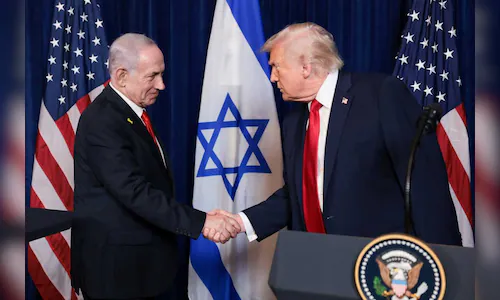
Reuters reported this week that Netanyahu and Trump are on a “collision course” as the US president seeks to secure a diplomatic outcome to the conflict while Israeli officials remain dissatisfied with aspects of the emerging arrangement.
According to the report, Israeli officials privately believe the agreement does not adequately address concerns related to Iran’s capabilities and the regional security environment.
The disagreement has increasingly become public.
Trump has criticised Israeli military actions in Lebanon, warning that such operations could jeopardise efforts to stabilise the region and preserve the emerging agreement with Iran.
“I’m not happy with the way Israel has handled themselves with Lebanon, and with Hezbollah,” Trump had said. “Bibi has to be more responsible with respect to Lebanon.”
“Israel would have been blown up a long time ago, had I not gotten involved,” he added
He has also publicly urged Netanyahu to act more responsibly and suggested that Israeli actions risk undermining a diplomatic outcome that Washington views as significant.
Netanyahu, meanwhile, has maintained that Israel will retain freedom of action against threats it considers critical to its security. In May, an Israeli political source said Netanyahu told Trump that Israel would continue to act independently against threats in various arenas, including Lebanon.
With an upcoming election in October, Netanyahu also distanced himself from the peace deal to be signed on Friday, June 19.
“This agreement was made by the United States, by the President of the United States, and he believes that he can achieve both supervision and the dismantling of the nuclear programme,” he said.
The Financial Times argued this week that the latest dispute marks a more serious break than previous disagreements between the two leaders.
According to the newspaper, Netanyahu had expected sustained pressure on Iran to produce a different outcome and has been left navigating a situation in which Trump is pursuing a diplomatic settlement that many in Israel view with scepticism.
The FT reported that tensions intensified after an Israeli strike in Beirut threatened to complicate the US-backed effort to secure a broader agreement with Iran.
The newspaper also noted that Netanyahu faces political pressure at home as he weighs how to respond to a US-Iran arrangement that has drawn criticism from some Israeli politicians while remaining closely associated with Trump’s foreign policy agenda.
Despite the differences, neither side has suggested a rupture in the broader US-Israel relationship. Netanyahu has described the Iran agreement as “Trump’s decision” while continuing to emphasise close ties with Washington. Trump, for his part, has remained publicly supportive of Israel while pressing for a diplomatic resolution to the conflict with Iran.
The immediate question is whether the ceasefire framework and broader negotiations with Iran can hold. Reuters reported that Israel has signalled it does not consider itself bound by arrangements that could constrain its ability to act against perceived threats, raising the prospect of further friction if Washington and Tehran move toward a more comprehensive agreement.