*Iranian supreme leader, Ali Khamenei, to be buried July 9
Festus Akanbi
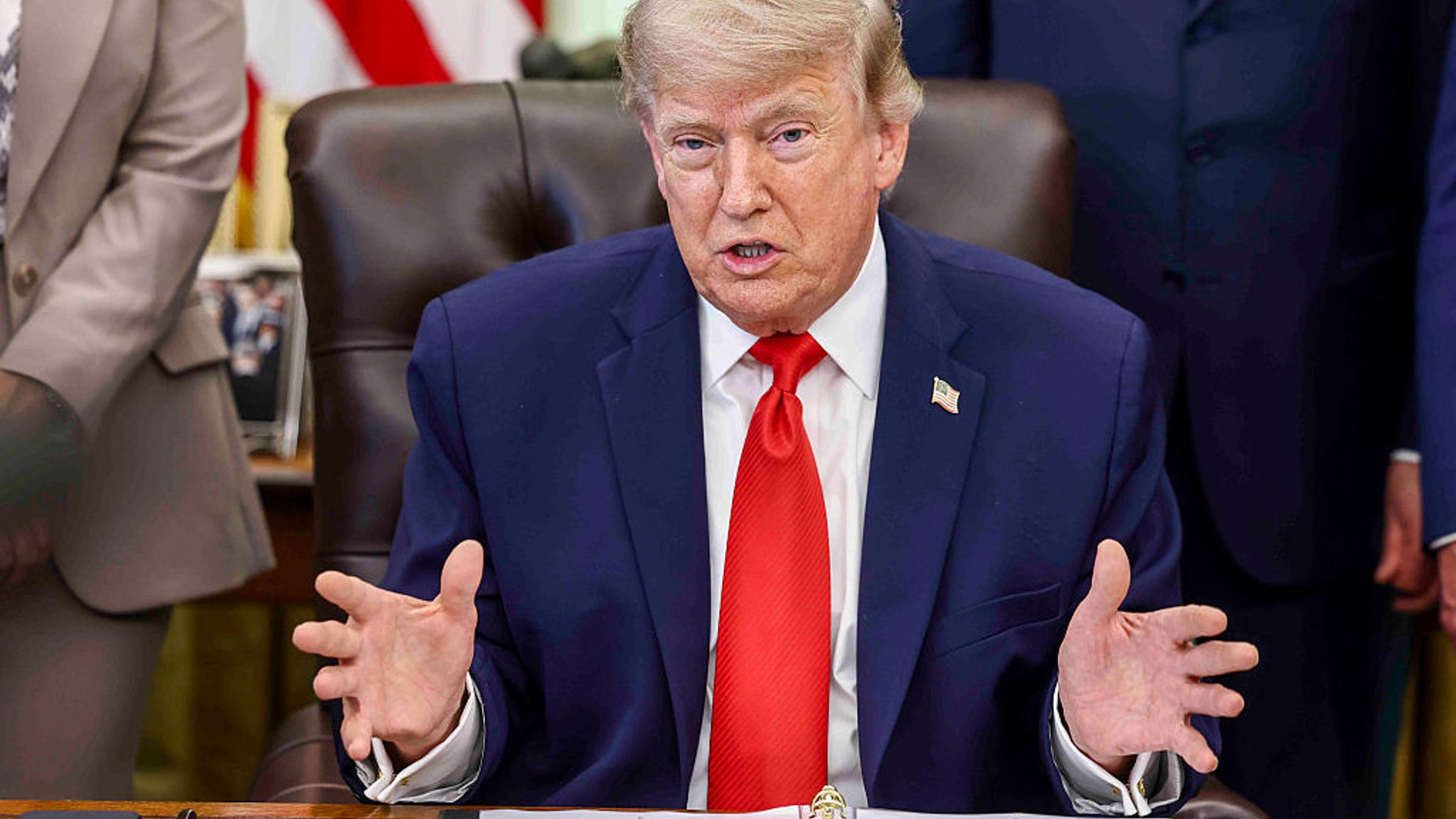
United States President, Mr. Donald Trump, has declared that a preliminary agreement aimed at ending the ongoing conflict involving the United States, Israel, and Iran is expected to be signed today.
Pakistan’s Prime Minister, Shehbaz Sharif, whose government has mediated between Iran and the US to end their war, also confirmed yesterday that a peace deal would “likely” be finalised within 24 hours.
This is as Iran yesterday said its former Supreme Leader, Ali Khamenei, who ruled the country for nearly 37 years before being killed by Israeli and US airstrikes on February 28, would be buried on July 9.
However, Trump and Sharif’s claim contradicted Iranian Foreign Ministry spokesman Esmaeil Baghaei, who dismissed reports that a memorandum of understanding would be signed today, stressing that negotiators were not preparing to travel to Geneva, Switzerland, for any such ceremony.
Other Iranian officials also insisted negotiations were still ongoing.
But Trump, writing on his Truth Social platform yesterday, expressed confidence that the long-anticipated breakthrough would be formalised within 24 hours, signaling what could be a major diplomatic turning point after months of escalating hostilities and failed negotiations.
“The Deal is scheduled to get signed tomorrow, and immediately after it is signed, the Hormuz Strait is OPEN TO ALL,” Trump wrote.
Similarly, Pakistan’s Prime Minister Sharif confirmed yesterday that a peace deal would “likely” be finalised within 24 hours.
“We are closer to a peace deal than ever before. With finalisation likely expected in the next 24 hours, Pakistan is preparing for the electronic signing of the peace deal immediately after, followed by technical-level talks next week,” he said in a post on the social media platform X.
Sharif said he was “confident that this historic peace deal will form a strong foundation for lasting peace”, thanking both Washington and Tehran “for their ongoing commitment”.
Pakistan has been pushing both nations to agree after a fragile ceasefire was struck in April and Islamabad hosted talks between the warring sides, which ended with no deal to resolve the conflict that erupted in late February with US-Israeli strikes on Iran.
The announcements by Trump and Sharif, however, appeared to catch Tehran by surprise.
Earlier yesterday, Iranian Foreign Ministry spokesman Esmaeil Baghaei had dismissed reports that an MoU would be signed today, insisting that negotiators were not preparing to travel to Geneva, Switzerland, for any such ceremony.
According to remarks carried by Iran’s official IRNA news agency, Baghaei maintained that discussions were progressing but suggested that any formal agreement would likely come “in the coming days” rather than immediately.
The conflicting statements underscore the persistent lack of clarity surrounding negotiations that both Washington and Tehran have repeatedly described as being close to a breakthrough.
While officials on both sides have projected optimism about the prospects of ending the conflict, they have continued to offer differing accounts regarding the substance, timing, and scope of the proposed agreement.
Neither government has released the full terms of the anticipated deal, and officials from both countries stressed on Friday that negotiations had yet to be concluded.
Trump nevertheless outlined what he described as key outcomes expected from the agreement.
Beyond guaranteeing unrestricted access through the strategic Strait of Hormuz, the US President said the deal would ensure that Iran would never acquire a nuclear weapon.
Describing the agreement as “A WALL TO NO NUCLEAR WEAPON,” Trump also insisted that no financial transfers would accompany the arrangement.
He further suggested that international authorities would eventually gain access to Iran’s stockpile of enriched uranium, stating that “at the appropriate time, when all is calm, we will go in and get the Nuclear Dust.”
The comments contrasted sharply with the position presented by Iranian Foreign Minister Abbas Araghchi during an interview with Press TV on Friday.
Araghchi explained that the proposed MoU would merely establish a framework for future negotiations concerning Iran’s nuclear programme rather than constitute a comprehensive settlement.
According to him, the immediate objective of the document is to secure a cessation of hostilities. At the same time, more contentious issues, including sanctions relief, frozen Iranian assets, and the long-term future of the country’s nuclear activities, would be addressed in subsequent negotiations.
He also rejected suggestions that the Strait of Hormuz would come under international administration, insisting that Iran and Oman would continue to oversee one of the world’s most strategically important maritime corridors.
The renewed diplomatic activity follows a sharp deterioration in relations this week, during which both Iran and the United States exchanged military strikes, raising fears that a fragile ceasefire in place since April 8 could collapse.
The latest conflict traces its origins to February 28, when the United States and Israel launched military operations against Iran amid stalled indirect negotiations over Tehran’s nuclear programme.
Iranian officials have repeatedly cited deep mistrust of Washington as a major obstacle to achieving a durable settlement, pointing to the United States’ withdrawal from previous agreements.
For his part, Trump has consistently argued that any new accord must surpass the 2015 Joint Comprehensive Plan of Action (JCPOA), negotiated under former President Barack Obama.
The JCPOA required Iran to limit aspects of its nuclear programme and submit to extensive international inspections in exchange for sanctions relief. Trump withdrew the United States from the agreement in 2018, describing it as inadequate.
Tehran has consistently maintained that its nuclear programme is intended solely for civilian and peaceful purposes and that it has no ambition to develop nuclear weapons.
Reiterating his long-standing criticism of the Obama-era accord, Trump insisted that the emerging agreement would be significantly stronger and more comprehensive.
“Our relationship with Iran is a much different and better one than previous Administrations have had,” he wrote.
While expressing optimism that negotiations would conclude smoothly, the US President also issued a veiled warning in case diplomacy fails.
“Hopefully, this process will all work out quickly, easily, and smoothly,” Trump stated.
“If it doesn’t, we have the ultimate alternative, hopefully never to be used again,” he added, without elaborating further.
Iranian Supreme Leader, Ali Khamenei, to Be Buried July 9
Meanwhile, Iran yesterday said its former supreme leader, Khamenei, would be buried on July 9.
Khamenei ruled the country for nearly 37 years before Israeli and US airstrikes killed him on February 28.
The burial in his hometown, the northeastern holy city of Mashhad, initially scheduled for March but postponed due to the war, will follow three days of funeral ceremonies in the capital, Tehran, beginning July 4, and another in the holy city of Qom on July 7, it said.
The start date of the national funeral, July 4, will coincide with the United States’ Independence Day, which this year celebrates its 250th anniversary.
Ali Khamenei’s son, Mojtaba, succeeded him as supreme leader in early March, the third since the establishment of the Islamic Republic in 1979.
Mojtaba Khamenei, wounded in the strikes that killed his father and numerous other officials, has not appeared in public since his appointment and communicates only through statements attributed to him.