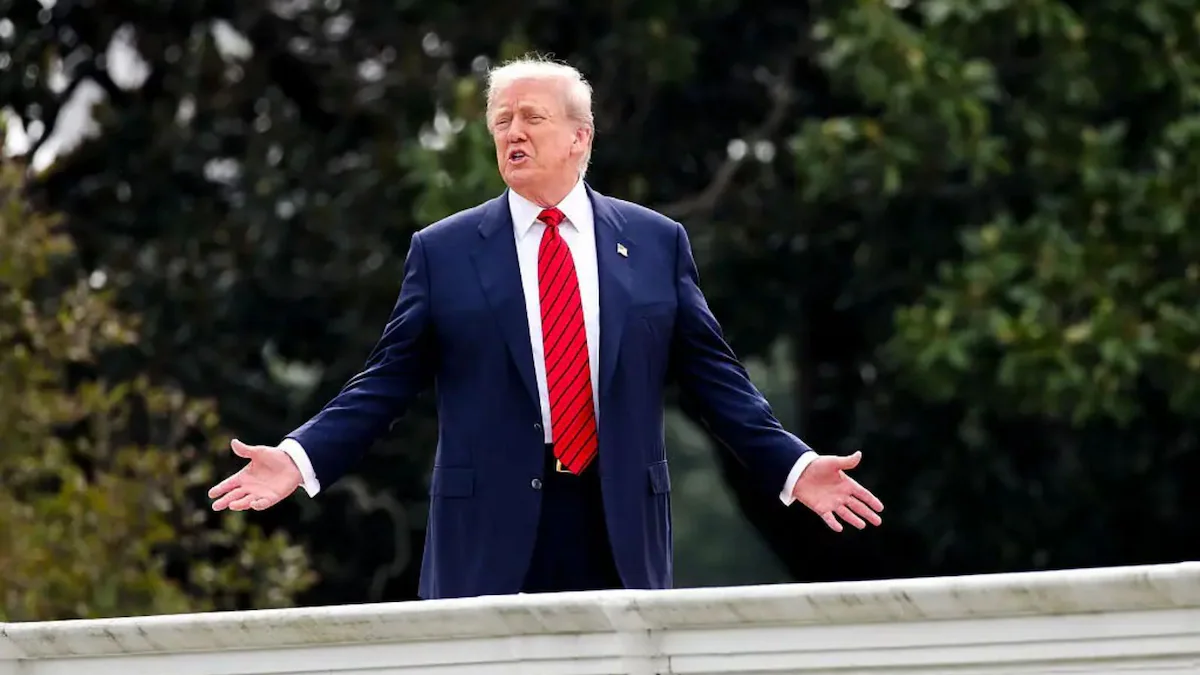
The details appear in Regime Change: Inside the Imperial Presidency of Donald Trump, written by New York Times journalists Maggie Haberman and Jonathan Swan, which describes tensions within the White House ahead of Trump’s sweeping tariff measures, according to Moneycontrol.
“Nobody has f***ing given me any numbers. Hard facts of how much China tariffs us, how much India tariffs us. You give me bullshit numbers,” Trump was quoted as saying in the book, according to both Moneycontrol and NDTV.
When Lutnick presented official USTR data to counter Trump’s claims, the president rejected the figures outright. According to a NDTV report, Lutnick even pushed back, saying “No, these are the real numbers! They come from USTR,” but Trump refused to accept the data. According to Moneycontrol, Trump responded: “No, these are bullshit numbers,” describing the government’s own figures as “f***ing bullshit.”
Trump believed India imposed tariffs of at least 175% on US products, far above the actual rates recorded by the Office of the United States Trade Representative, according to NDTV.
The argument took place in the run-up to Trump’s “Liberation Day” tariff announcement in April 2025, when the US imposed a 25% tariff on Indian imports, according to both outlets. Trump was not alone in his criticism of India’s tariff regime, Treasury Secretary Scott Bessent had previously described India as the “maharaja of tariffs,” according to both Moneycontrol and NDTV.
A White House fact sheet issued alongside an interim India-US trade understanding stated that India maintained some of the highest tariffs among major economies, with average agricultural tariffs of 37% and duties on certain automobiles exceeding 100%, according to Moneycontrol.
The tariff dispute escalated sharply in August 2025, when Trump accused India of “fuelling Putin’s war in Ukraine” by continuing to purchase Russian crude oil and imposed an additional 25% tariff, taking the total burden on Indian goods to 50%, according to Moneycontrol. India subsequently joined China and Brazil among the most heavily taxed US trading partners, according to NDTV.
The dispute strained relations between Washington and New Delhi, which were already under pressure following Operation Sindoor and Trump’s repeated claims that he had prevented a potential war between India and Pakistan, according to Moneycontrol.
Relations eventually stabilised after India and the US announced a framework for a bilateral trade agreement on February 2, 2026. Under the proposed arrangement, tariffs on Indian goods entering the US would fall to 18%, and Trump agreed to withdraw the additional 25% tariff linked to Russian oil after India committed to ending those purchases, according to Moneycontrol. US Trade Representative Jamieson Greer has since met Commerce Minister Piyush Goyal for further discussions aimed at finalising the deal, according to Moneycontrol.