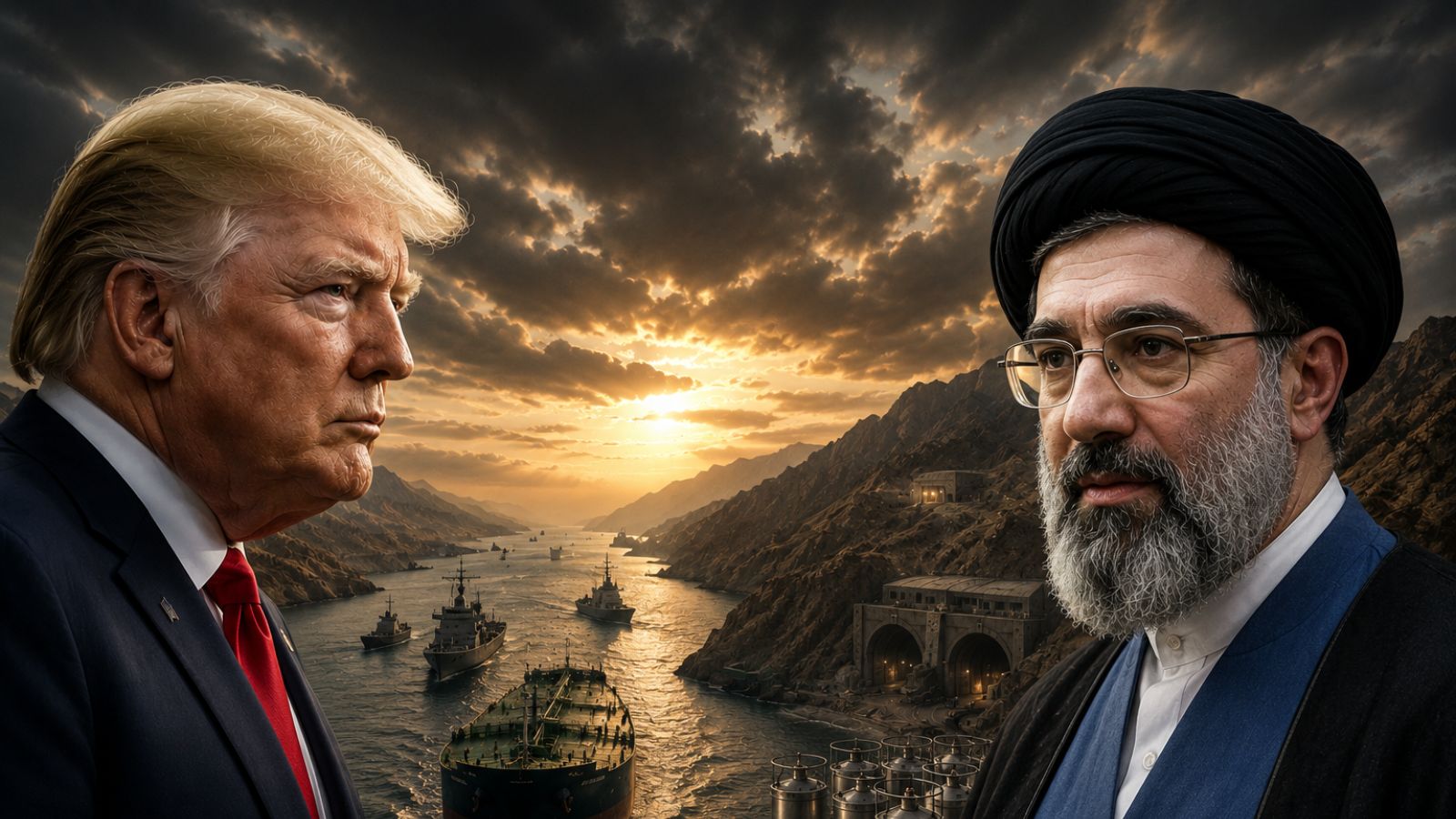
US President Donald Trump said on Saturday that an agreement with Iran was scheduled to be signed on Sunday, declaring that the Strait of Hormuz would reopen immediately afterwards and vowing that the United States would eventually destroy Tehran’s stockpile of highly enriched uranium.
¯In a lengthy post on Truth Social, Trump described the emerging agreement as the “exact opposite” of former president Barack Obama’s 2015 nuclear deal and insisted it would prevent Iran from ever acquiring a nuclear weapon.
However, Iran signalled caution, saying the memorandum was unlikely to be signed on Sunday, even as officials acknowledged that an agreement appeared closer than at any point in recent months.
Trump: Deal to be signed Sunday
“The Deal is scheduled to get signed tomorrow, and immediately after it is signed, the Hormuz Strait is OPEN TO ALL,” Trump wrote.
He claimed the agreement would ensure that Iran “no longer want a Nuclear Weapon, nor will they have one, either through purchase, development, or any other form of procurement.”
Drawing a contrast with the Joint Comprehensive Plan of Action (JCPOA) negotiated under Obama, Trump said the previous agreement had created “an easy, beautiful, smooth road to a Nuclear Weapon.”
“My Agreement with Iran is the exact opposite, A WALL TO NO NUCLEAR WEAPON!” he wrote.
Story continues below this ad
The White House did not immediately release further details of the proposed agreement.
Trump reveals plan for Iran’s uranium
In one of his clearest statements yet on how Washington intends to handle Iran’s nuclear stockpile, Trump said the United States would eventually retrieve and destroy the material.
“At the appropriate time, when all is calm, we will go in and get the Nuclear Dust, buried deep under the powerful sunken granite mountains, thanks to our beautiful B-2 Bombers and their brilliant pilots,” he wrote.
He said the uranium would be “downblend and destroy[ed], whether in Iran, or the United States.”
Story continues below this ad
The comments come days after reports suggested Iran had further fortified sites believed to contain its stockpile of near-bomb-grade uranium by collapsing tunnels and laying explosive mines around entrances.
Trump did not explain how the operation would be carried out or who would oversee the technically complex process.
Iran urges caution
Despite Trump’s confidence, Tehran indicated more time could be needed.
Foreign Ministry spokesperson Esmail Baghaei said that while the chances of finalising the proposed Islamabad memorandum were high, a signing would not take place immediately.
Story continues below this ad
“Although it will not happen tomorrow, the possibility that it could take place in the coming days cannot be ruled out,” he said in remarks carried by Iranian state media.
Baghaei added that the memorandum currently under discussion focused on ending the conflict and that “at this stage, it has been decided that there will be no discussion of the nuclear issue.”
Iran has repeatedly cautioned against excessive optimism, noting that previous rounds of negotiations with Washington ended with military escalation.
Pakistan says agreement is imminent
Pakistan, which has emerged as a key intermediary in the talks, maintained that a breakthrough was close.
Story continues below this ad
Prime Minister Shehbaz Sharif said a peace deal was expected to be finalised within 24 hours and that Pakistan was preparing for an electronic signing ceremony.
Pakistan’s foreign ministry later said the signing was scheduled for Sunday but offered no additional details.
Sharif also told Qatar’s prime minister that the agreement was “ready for signatures by the relevant parties very shortly”.
Trump later amplified Sharif’s comments by sharing a screenshot of the Pakistani leader’s social media post.
Story continues below this ad
Hormuz and G7 discussions
As diplomatic efforts intensified, preparations were also underway for restoring navigation through the Strait of Hormuz.
A senior US administration official said Trump would discuss demining the waterway during next week’s G7 summit in France.
Britain and France have expressed interest in participating in any future operation to clear mines from the strait, through which roughly one-fifth of global oil and liquefied natural gas supplies pass.
Iran’s restrictions on maritime traffic and the subsequent US blockade have severely disrupted regional shipping and energy markets.
Story continues below this ad
Why these developments matter
If signed, the agreement would represent the most significant diplomatic breakthrough in West Asia since the conflict erupted earlier this year.
The reopening of the Strait of Hormuz could ease pressure on global energy prices and stabilise international trade.
But Trump’s latest remarks also highlight the unresolved questions at the heart of the negotiations.
While the US president has publicly committed to destroying Iran’s enriched uranium stockpile, Iranian officials insist that nuclear matters remain outside the scope of the initial memorandum.
Story continues below this ad
The gap between those positions suggests that even if an agreement is signed, the most difficult phase of negotiations may still lie ahead.
For now, Trump is projecting certainty. Tehran remains cautious.
After months of war, near-breakthroughs and shifting narratives, the world may soon find out whether diplomacy can succeed where military pressure failed.
(With inputs from AP)