As the United States and Iran edge closer to an agreement aimed at ending months of conflict, a new obstacle has emerged: Tehran has reportedly fortified the sites believed to contain its stockpile of near bomb-grade uranium, potentially complicating one of the deal’s most sensitive provisions.
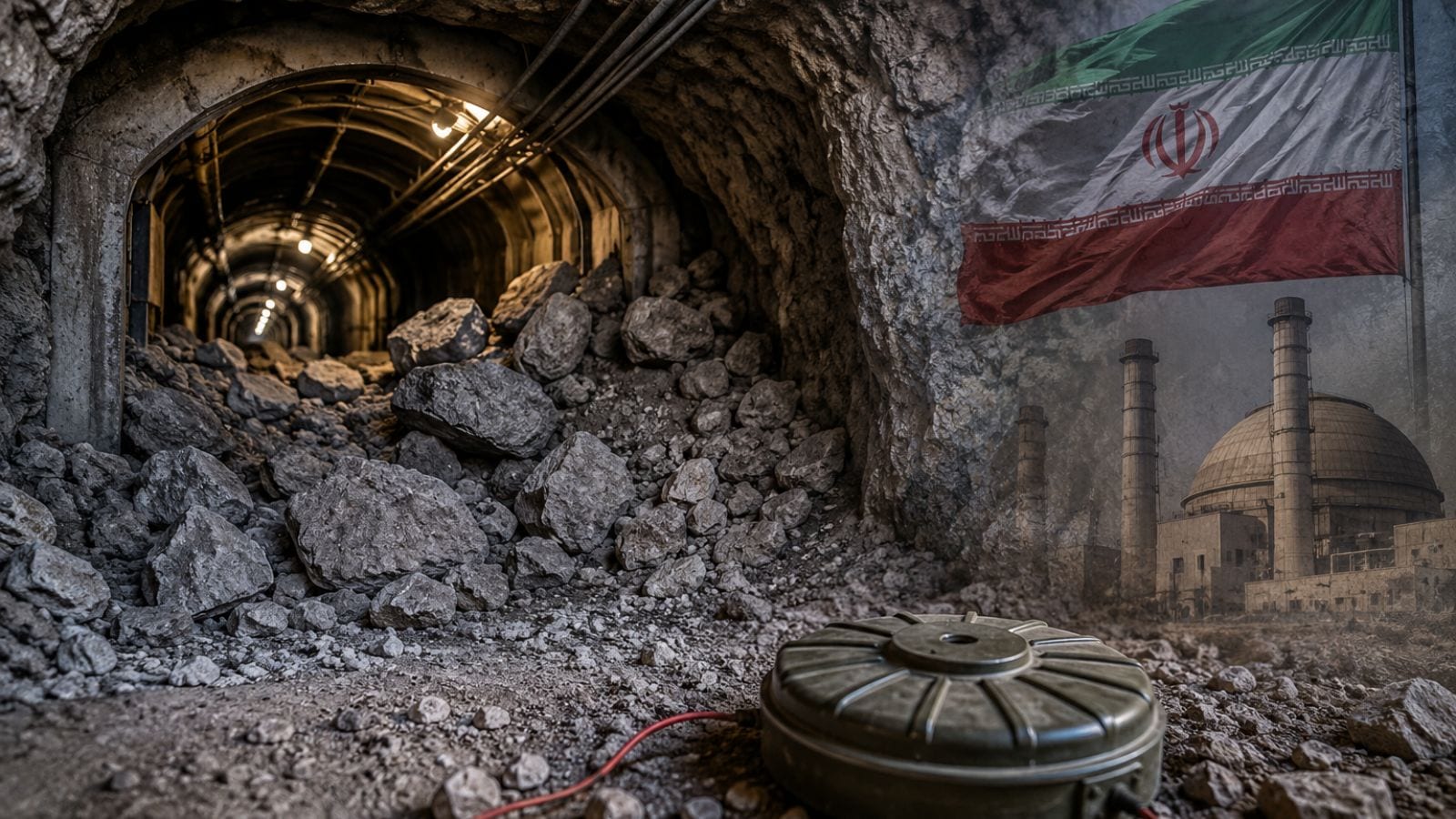
CNN, citing five sources familiar with US intelligence, reported that Iran has deliberately collapsed tunnels housing much of its highly enriched uranium stockpile and planted explosive mines around entrances, making access significantly more difficult and dangerous.
Uranium retrieval becomes more complicated
The stockpile in question consists of roughly half a tonne of highly enriched uranium (HEU), material that experts say is close to weapons-grade.
According to the CNN report, much of the uranium is believed to be buried within collapsed tunnels at the Isfahan nuclear complex in central Iran, with additional quantities stored at other sites.
The reported fortifications mean that retrieving the material would now require extensive excavation and de-mining operations.
Even for Iran itself, accessing the stockpile could prove difficult.
Story continues below this ad
“It would definitely complicate retrieving the HEU,” Scott Roecker, who headed the US National Nuclear Security Administration’s Office of Nuclear Material Removal between 2017 and 2021, told CNN.
Key test for emerging US-Iran deal
The issue has assumed added significance because the fate of Iran’s enriched uranium is emerging as one of the central elements of a proposed agreement between Washington and Tehran.
A senior US administration official told reporters on Friday that both sides had broadly agreed on a framework under which Iran would surrender its enriched uranium stockpile to the United States. The material would be destroyed on site before being removed from the country, the official said.
However, competing accounts from US and Iranian officials have cast doubt over the exact terms of the agreement.
Story continues below this ad
Iranian officials have indicated they prefer diluting the uranium rather than relinquishing it entirely, while Tehran has maintained that its nuclear programme is peaceful.
Could Iran retain some of its stockpile?
The newly fortified sites have also raised concerns among nuclear experts that verifying Iranian compliance could become more complicated.
Roecker warned that if Iran is tasked with producing its full inventory of enriched uranium, Tehran could potentially argue that some of the material is no longer retrievable.
“In this scenario, I would worry that Iran would claim that some portion of the HEU was irretrievable,” he told CNN.
Story continues below this ad
“We wouldn’t have full confidence that Iran couldn’t retain access to it at some point in the future.”
Such uncertainties could complicate future inspections and prolong technical negotiations even if a broader political agreement is reached.
Trump had previously considered a military operation
US President Donald Trump has repeatedly described securing Iran’s enriched uranium as a priority in negotiations aimed at ending the conflict and reopening the Strait of Hormuz.
CNN previously reported that US military planners had prepared options earlier this year to seize the stockpile by force. However, the operation was ultimately considered too risky.
Story continues below this ad
Trump himself acknowledged the challenges of recovering the material through military means.
“We know exactly what’s happening,” Trump told Fox News in May.
“Nobody’s even gotten close to it.”
Technical hurdles remain
Even if Washington and Tehran formally sign an agreement in the coming days, experts caution that removing the uranium could take weeks.
The process would likely require specialised teams from the US National Nuclear Security Administration and mobile uranium-processing capabilities associated with Oak Ridge National Laboratory in Tennessee.
Story continues below this ad
Top US negotiators Steve Witkoff and Jared Kushner reportedly visited the facility earlier this month.
Trump has previously said the removal operation alone could take at least two weeks.
Why it matters
The emerging deal is being viewed as a potential turning point in a conflict that has disrupted global shipping and heightened tensions across the Gulf. But the reported fortification of Iran’s uranium stockpile underscores how the most difficult phase may still lie ahead.
While diplomats may be close to agreeing on broad principles, translating those commitments into verifiable action on the ground could prove far more complicated.
Story continues below this ad
For Washington, ensuring that Iran cannot retain access to near-bomb-grade uranium remains a central objective. For Tehran, preserving its sovereignty and avoiding the appearance of surrendering strategic assets remains equally important.
(With inputs from agencies)