…Warns Of Deep Learning Crisis In Schools
Daud Olatunji
Nigeria’s education system is grappling with a deepening learning and access crisis, as the United Nations Children’s Fund (UNICEF) has warned that only one in four schoolchildren in the country can read properly and perform basic mathematics at the age of 14.
UNICEF also raised concern that more than 20 million Nigerian children are currently out of school, describing the situation as one of the worst education exclusion crises globally, with Nigeria accounting for about 15 per cent of the world’s out-of-school population.
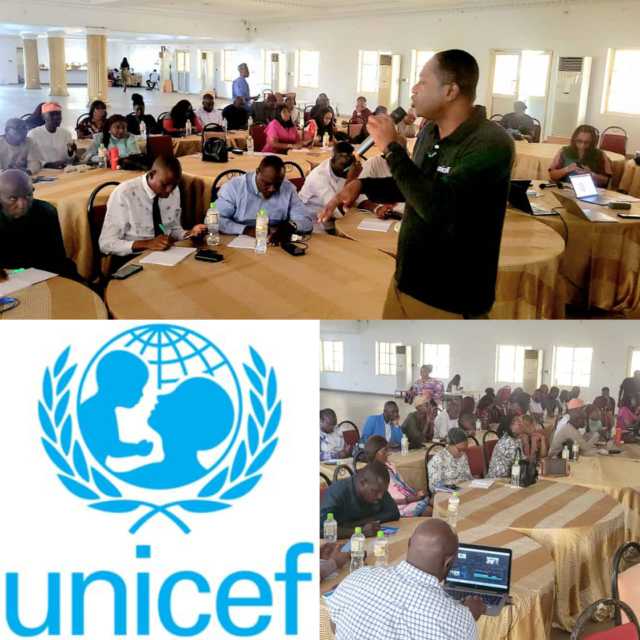
The concerns were raised on Wednesday during a two-day media dialogue on Digital Learning, Artificial Intelligence (AI) and Skills Development for Out-of-School Children, organised by the Osun State Ministry of Education in collaboration with UNICEF held in Ede.
Speaking at the event, the Chief of UNICEF Lagos Field Office, Celine Lafoucriere, said the crisis is not only about school enrolment but also poor learning outcomes among children already in classrooms.
“One in four. Of all the children in Nigeria who actually go to school, only one in four can read properly and do basic math at age 14,” she said.
She warned that about 10 million more children are completely out of school, stressing that the implications go beyond education to long-term economic survival and national development.
“These are not just numbers in reports. These are children growing up without the skills they need to survive, work, support families or contribute to the economy,” she said.
Lafoucriere cautioned that the rapid growth of artificial intelligence and digital technologies could further widen inequality if urgent steps are not taken to improve learning outcomes and access to digital skills.
“The children who know how to use AI will have a chance. The ones who don’t will be left behind,” she said, adding that girls remain disproportionately affected due to poverty, cultural barriers and exclusion.
She urged stronger media engagement to sustain public attention on the crisis and push policymakers towards urgent reforms in the education sector.
Also speaking, UNICEF Education Specialist, Dr Harold Kpojime, said Nigeria currently has about 20 million out-of-school children, driven by insecurity, poverty, rapid population growth and weak education systems.
He explained that 10.2 million of the affected children are at the primary school level, while 8.1 million are in Junior Secondary School, adding that 12.4 million children have never been to school, while about 5.9 million dropped out early.
“Only one in three children of school age has access to early childhood education. More than half of girls at basic education level are not in school,” he said.
Kpojime warned that Nigeria’s education challenge now extends beyond access to issues of retention and completion, noting that only about half of children complete secondary education.
He further identified early marriage, insecurity, poverty and poor learning environments as key drivers of dropout rates across the country.
In his remarks, the Osun State Commissioner for Education, represented by Permanent Secretary Murtala Jimoh, said the state government is adopting digital technology and artificial intelligence to expand access to learning and reduce exclusion.
He said insecurity, poverty and migration—particularly from northern parts of the country—remain major contributors to the out-of-school crisis.
“Many of the out-of-school children we encounter are from migrant families who have relocated due to insecurity,” he said.