4 min readNew DelhiJun 4, 2026 09:43 PM IST
As several parts of India continue to reel under extreme heat, the United Nations’ weather agency has warned that a moderate or possibly strong El Niño could develop in the coming months, raising concerns over higher temperatures, erratic rainfall and stress on food and water systems.
The World Meteorological Organization (WMO) said unusually warm ocean temperatures in the Pacific are driving the development of El Niño conditions. The agency forecast above-average global temperatures between June and August, with the impact likely to continue through November.
“The year 2027 is very likely at this point to be the world’s warmest year on record,” climate scientist Zeke Hausfather of Berkeley Earth told the BBC.
What is El Niño?
According to the WMO, El Niño is a periodic warming of sea surface temperatures in the central and eastern Pacific Ocean. The phenomenon typically lasts between nine and 12 months and can significantly influence global weather patterns.
The term “El Niño”, Spanish for “Christ child”, was originally used by fisherfolk along the coasts of Ecuador and Peru to describe a warm ocean current that usually appeared around Christmas.
El Niño events are often associated with extreme weather conditions, including heatwaves, droughts and heavy rainfall in different parts of the world.
How can El Niño affect India?
El Niño has historically been linked to weaker monsoons and hotter summers in India, although the impact varies from year to year.
Story continues below this ad
According to the India Meteorological Department (IMD), the last four decades have been significantly warmer than previous periods since 1850. Citing the Intergovernmental Panel on Climate Change (IPCC) report of 2021, the IMD said global surface temperatures between 2011 and 2020 were around 1.09 degrees Celsius higher than during 1850-1900.
The IMD has also noted that heatwaves have become more frequent and intense across many regions since the 1950s.
In India, the annual mean surface temperature showed a warming trend of around 0.62 degrees Celsius per 100 years between 1901 and 2020, according to IMD data.
India warming
+0.62°C
per 100 years (1901–2020)
Global rise
+1.09°C
2011–2020 vs 1850–1900
1998 deaths
2,600+
heatwave fatalities
Heatwaves
↑ Since
1950s — more frequent & intense
India & Global Temperature Arc
1850–1900
Baseline
Pre-industrial reference
1901–2020
+0.62°C
India mean surface temp — IMD
2011–2020
+1.09°C
Global surface avg — IPCC 2021
Last 4 decades
Hottest
Since 1850 — IMD
“If that [1998 El Niño] happened today, it would be an incredibly cold year compared to the last two decades.”
— Zeke Hausfather, Berkeley Earth / BBC
1998 El Niño — India Impact Record
🌡️
Severe heatwaves across India
The 1998 El Niño — one of the strongest on record — triggered intense heat events across the country, amplified by already-warming baseline temperatures.
Confirmed — Research cited in article
☠️
2,600+ deaths from heatwaves
El Niño-related health hazard research links the 1998 event to more than 2,600 fatalities caused by extreme heat conditions across India.
Critical · Source: JSTOR research
🦟
Malaria outbreaks linked to event
Research documented disease outbreak surges — including malaria — as shifts in rainfall and heat patterns disrupted ecological and health systems.
Health risk · 1998 event
🌧️
Erratic rainfall patterns
Shifts in monsoon and rainfall distribution accompanied the 1998 heatwave — a dual stress on agriculture and water systems simultaneously.
Rainfall impact · IMD linked
📈
Today’s baseline is far hotter
Climate scientists warn the same 1998 event magnitude would cause far greater damage today — human-driven warming has permanently raised the floor temperature.
Berkeley Earth projection
El Niño–Monsoon Risk Matrix
Drought link — historical record
High Correlation
IITM Pune research shows several major Indian drought years coincided with strong El Niño events — the link is well-established across 20th century data.
Weaker monsoon probability
Elevated Risk
El Niño has historically been linked to weaker-than-normal monsoon seasons in India — translating into below-average rainfall and potential agricultural stress.
Hotter summers probability
Moderate–High
IMD data and El Niño history both point to higher-than-average summer temperatures during El Niño years, compounded by background warming trends.
Every El Niño causes severe drought
Not Always
Researchers caution: not every strong El Niño results in severe drought over India. Multiple climate factors influence the monsoon — the relationship is probabilistic, not deterministic.
Sources: IMD · WMO · IPCC (2021) · Berkeley Earth / BBC · IITM Pune (Kripalani & Kulkarni) · JSTOR research
1998 El Niño and India’s heatwave crisis
One of the strongest El Niño events on record occurred in 1998. Climate scientists have often cited it as an example of how El Niño can amplify extreme heat.
Story continues below this ad
“If that happened today, it would be an incredibly cold year compared to the last two decades,” Hausfather told the BBC, pointing to the long-term effects of human-driven climate change.
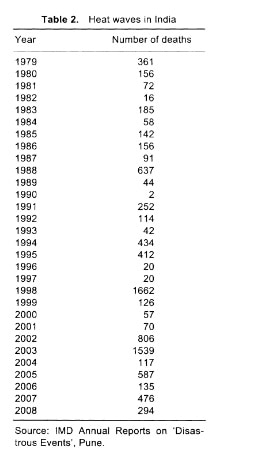 Heatwaves in India
Research on El Niño-related health hazards in India has linked the 1998 event to severe heatwaves, shifts in rainfall patterns and outbreaks of diseases such as malaria.
The heatwave reportedly caused more than 2,600 deaths across India.
El Niño and Indian monsoon
Scientists have long studied the relationship between El Niño and monsoon failures in India.
A research paper by RH Kripalani and Ashwini Kulkarni of the Indian Institute of Tropical Meteorology (IITM), Pune, noted that several major drought years in India coincided with strong El Niño events.
Story continues below this ad
However, researchers have also pointed out that not every strong El Niño results in severe drought conditions over India, indicating that multiple climate factors influence the monsoon.
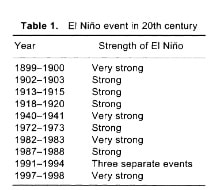 El Niño in the 20th century
How to stay safe during extreme weather
Authorities and weather experts advise people to remain cautious during periods of extreme heat and heavy rainfall.
- Stay hydrated and avoid direct sun exposure during peak afternoon hours.
- Wear light cotton clothing and avoid strenuous outdoor activity during heatwave conditions.
- Keep umbrellas, raincoats and emergency supplies ready in areas prone to sudden rainfall.
- Drive carefully during heavy rain due to low visibility and slippery roads.
- Follow weather advisories issued by the IMD and local authorities.
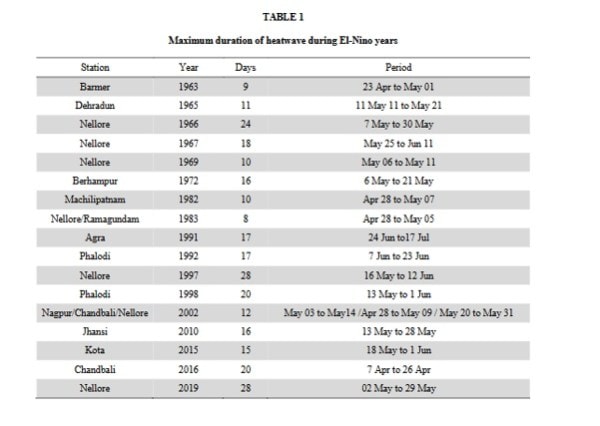 Maximum duration of a heatwave

Stay updated with the latest – Click here to follow us on Instagram