3 min readUpdated: Jun 5, 2026 11:09 PM IST
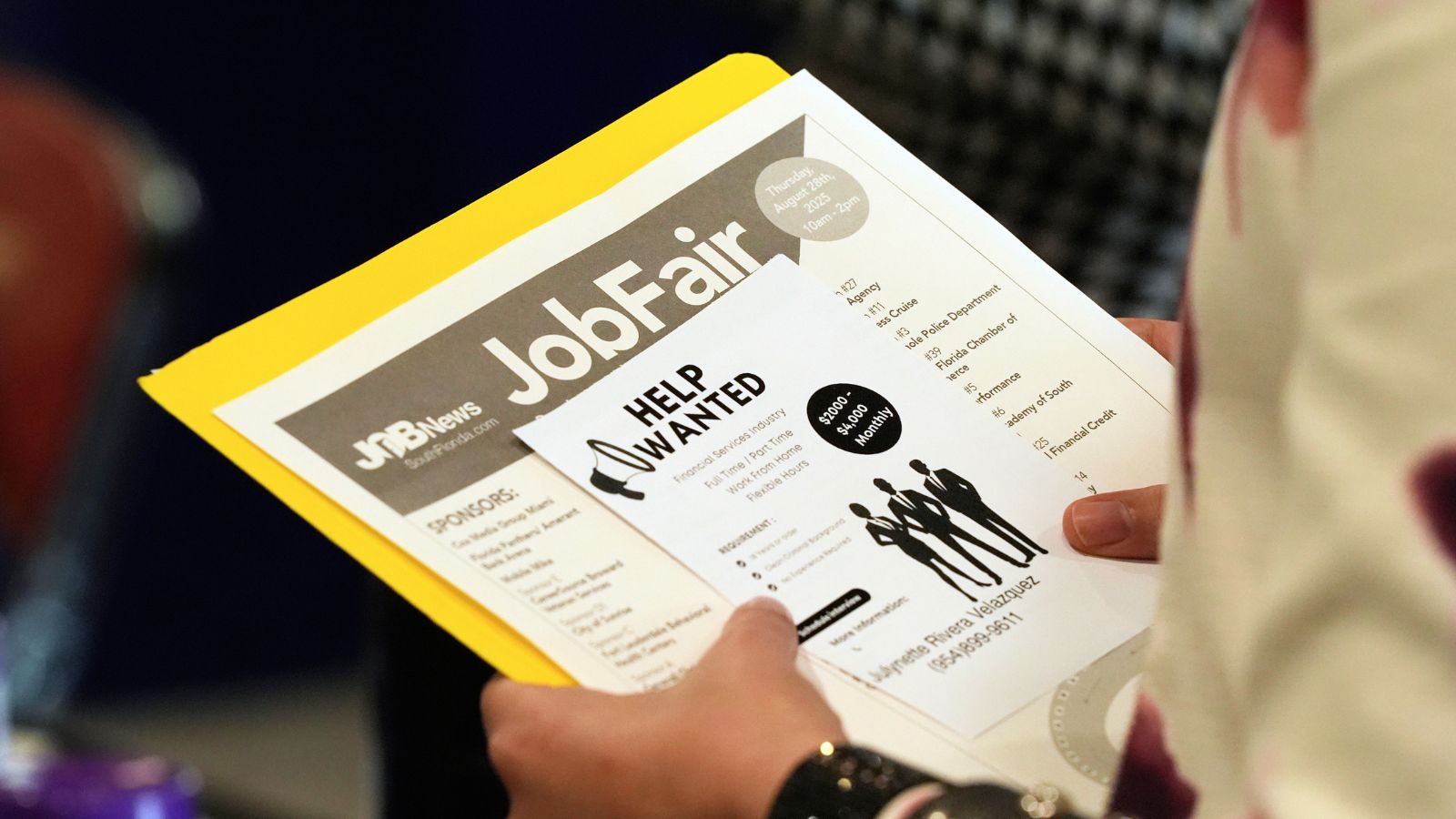
The US economy added more jobs than expected in May, suggesting the labour market remains resilient despite uncertainty caused by rising geopolitical tensions and higher oil prices.
According to the US Labour Department, employers added 172,000 jobs in May after adding 179,000 in April, far above economists’ expectations of around 85,000 new jobs.
How many jobs does the US actually need?
The economists believe that the US economy needs to add between zero and 50,000 jobs every month to keep up with the expanding workforce. The fact that May’s numbers came in at over three times that baseline is being seen as a positive sign.
However, the baseline number itself has dropped. One of the reasons behind this drop was the US government’s crackdown on immigration, which reduced the number of people entering the workforce. This has also made the unemployment rate considerably stable, with it being at 4.3% for three months in a row.
Companies holding onto people – and not hiring aggressively
While the number sounds nice, it gets a bit more nuanced. Economists point out that the gains are less about companies going on a hiring spree and more about companies simply not firing people. Businesses are treading carefully, initially because of heavy tariffs imposed by President Donald Trump last year, and now because of the uncertainty created by the U.S.-Israeli war with Iran.
Economists have a term for this kind of market – a “slow-hire, slow-fire” equilibrium. Think of it as a labour market that is stable, but not particularly energetic.
What about the Iran war and rising oil prices?
The conflict with Iran has pushed up oil prices sharply and disrupted shipping through the Strait of Hormuz – a critical waterway through which a large chunk of the world’s oil passes. However, so far, this does not appear to have directly hurt the US job market in any significant way.
Story continues below this ad
Tax refunds are helping companies stay afloat
Another reason companies have been able to avoid mass layoffs is government support in the form of tax and tariff refunds. Earlier this year, the US Supreme Court struck down Trump’s tariffs, allowing businesses to claim refunds.
This has helped boost company profits, which rose by $40.4 billion in the first three months of 2026, giving employers enough financial cushion to hold on to their staff.
What does this mean for interest rates?
Despite the relatively strong job numbers, financial markets do not expect the Federal Reserve to cut interest rates anytime soon. Most analysts believe the Fed will keep its key interest rate – currently between 3.50% and 3.75% – unchanged well into 2027.
In simple terms, borrowing money in the US is likely to remain expensive for the foreseeable future, even as the job market holds steady.
Story continues below this ad
(Written by Nityanjali Bulsu, who is an intern at The Indian Express)
Stay updated with the latest – Click here to follow us on Instagram