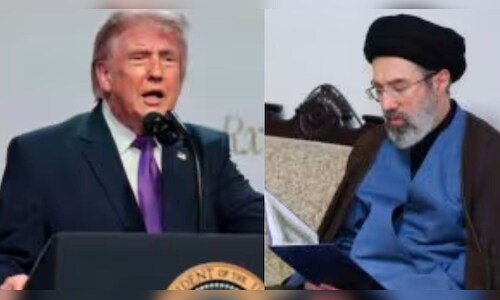
The deal, announced on Sunday by officials from both countries, includes an end to hostilities, the reopening of the critical waterway and immediate lifting of the US naval blockade.
Confirming the agreement, US President Donald Trump said the deal had been finalised and authorised the reopening of the waterway.
In a post on Truth Social, he said, “The Deal with the Islamic Republic of Iran is now complete. Congratulations to all! I hereby fully authorise the toll-free opening of the Strait of Hormuz, and, simultaneously herewith, authorise the immediate removal of the United States Naval blockade. Ships of the World, start your engines. Let the oil flow!”
Here are the world’s reactions to the agreement:
United Nations Secretary-General Antonio Guterres welcomed the agreement, describing it as an important step toward a peaceful resolution.
In a post on X, he wrote, “The Secretary-General welcomes the announcement that the United States and Iran have agreed on a peace deal that provides for an immediate and permanent ceasefire, the reopening of the Strait of Hormuz, as well as a framework for further negotiations. This represents a critical step towards the peaceful settlement of the conflict.”
I warmly congratulate the US & Iran for having reached a peace deal that provides for an immediate & permanent ceasefire, the reopening of the Strait of Hormuz, as well as a framework for further negotiations. This represents a critical step towards the peaceful settlement of the…
— António Guterres (@antonioguterres) June 14, 2026
Australian Prime Minister Anthony Albanese also welcomed the breakthrough.
“As we have said, the longer this war goes on, the greater the impact will be. Continued restraint and constructive engagement will be essential to prevent further escalation and secure a lasting agreement,” Albanese tweeted.
— Anthony Albanese (@AlboMP) June 14, 2026
British Prime Minister Keir Starmer stressed the importance of restoring freedom of navigation through the Strait of Hormuz.
“Attention must now turn to fully implementing the memorandum of understanding to ensure the Strait reopens and remains fully and permanently open, and that the detailed elements of the nuclear agreement are finalised. We are clear that toll-free freedom of navigation must now be restored. Iran must never have a nuclear weapon,” he said.
My statement on today’s agreement between the United States and Iran. pic.twitter.com/taQZufv7ij
— Keir Starmer (@Keir_Starmer) June 14, 2026
French President Emmanuel Macron described the agreement as the result of sustained diplomatic efforts by multiple partners. “I call for its swift and full implementation by all belligerents. This agreement must allow for the urgent and unconditional reopening of the Strait of Hormuz, which the international mission established with the United Kingdom is ready to support,” he said.
Je salue l’accord conclu entre les États-Unis et l’Iran, fruit d’un effort diplomatique auquel ont contribué plusieurs partenaires. J’appelle à sa mise en œuvre rapide et complète par tous les belligérants.
Cet accord doit permettre la réouverture urgente et inconditionnelle…
— Emmanuel Macron (@EmmanuelMacron) June 14, 2026
German Chancellor Friedrich Merz hailed the accord as a diplomatic breakthrough. “This can pave the way towards a reinvigorated global economy and a more secure Middle East. It is crucial to implement it with determination,” he wrote on X.
I welcome the agreement between the U.S. and Iran and congratulate President Trump and the Iranian side on this diplomatic breakthrough. This can pave the way towards a reinvigorated global economy and a more secure Middle East. It is crucial to implement it with determination.
— Bundeskanzler Friedrich Merz (@bundeskanzler) June 14, 2026
Japanese Prime Minister Sanae Takaichi expressed hope that safe and free navigation through the Strait of Hormuz ” will be actually ensured, and that a final agreement on Iran’s nuclear issue and other matters will be realised at the earliest possible date.”
今般、米国及びイラン双方が、戦闘終結等に関する覚書に合意した旨発表しました。
これまで我が国は、事態の沈静化が一刻も早く実際に図られることが最も重要との立場から、積極的な外交努力を行ってきました。…— 高市早苗 (@takaichi_sanae) June 14, 2026
New Zealand Foreign Minister Winston Peters called it an important step toward global economic security. “This pivotal, constructive deal is a step towards reducing tensions and promoting stability in a region that is critical to global economic security… Dialogue and diplomacy remain the most effective means of resolving longstanding issues,” he shared on X.
New Zealand welcomes the US – Iran Memorandum of Understanding aimed at ending the conflict. We want to see swift implementation including the reopening of the Strait of Hormuz. We urge all parties to continue the positive momentum. While the situation remains fragile, this is a…
— Winston Peters (@NewZealandMFA) June 14, 2026
In a joint statement, the E4 leaders Britain, France, Germany and Italy also emphasised that the immediate reopening of the Strait of Hormuz and the restoration of unrestricted freedom of navigation were critical. “Iran must never acquire a nuclear weapon. We stand ready to work with the US, Iran and the IAEA [International Atomic Energy Agency] to this end,” the group said, according to Reuters.
Speaking with The Wall Street Journal earlier, Trump stated that the agreement would be signed electronically, either by him or Vice President JD Vance.
Following intensive talks, we are pleased to announce that the Peace Deal between the United States of America and Islamic Republic of Iran has been REACHED. Both sides have declared the immediate and permanent termination of military operations on all fronts, including in…
— Shehbaz Sharif (@CMShehbaz) June 14, 2026
According to Pakistan Prime Minister Shehbaz Sharif, a formal signing ceremony is scheduled to take place in Switzerland on June 19.