Benjamin Netanyahu is running out of time, literally.
The 76-year-old wants a seventh term in an election to be held by October, but his poor standing with voters – many still furious about the Oct 7 Hamas attack, and corruption and fraud cases against him – does not guarantee that outcome.
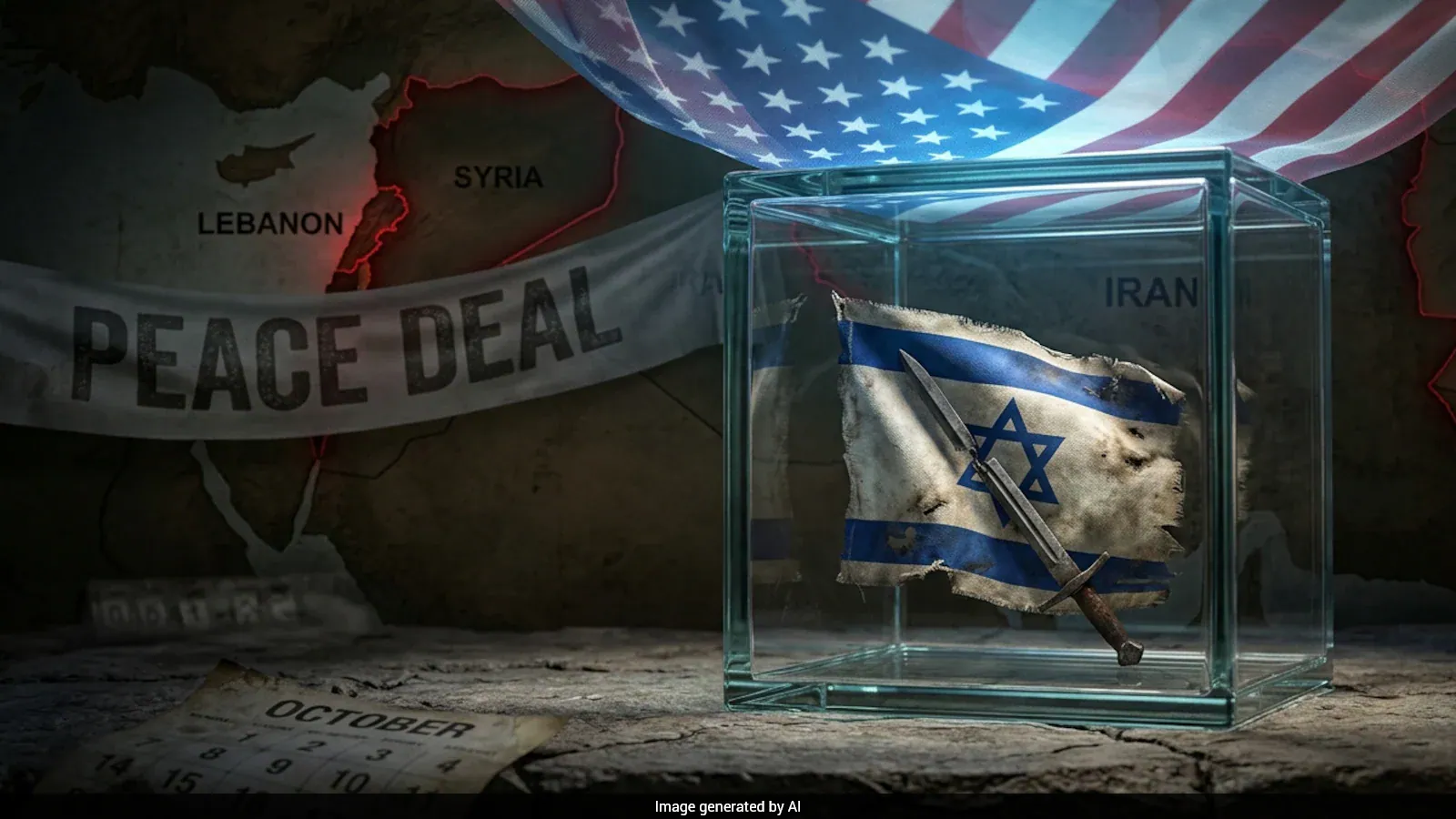
And now plans to use the US’ war against Iran and Israel’s war with its Lebanese proxy, the Hezbollah – both framed as ‘existential threats’ to the Israeli people – seem to have fallen through after Donald Trump’s proposed peace agreement.
Advertisement – Scroll to continue
Netanyahu is now in a more constrained phase; the only viable options seem to be a political rather than military campaign, albeit one backed by calibrated action against the Hezbollah.
His core political plank – a hawkish figure who zealously ‘protects’ Israel from the Hezbollah in the north and demands of a Palestinian state in the south – is unchanged, though it has been dented by the Hamas attack and dragging Israel into two wars, both unresolved as of today.
He can, and will, play up the brutal and ongoing Gaza campaign, but the Iran deal – and Lebanon rider hamstrings attempts to escalate or fashion a more palatable resolution for his voters.
The timing of Trump’s deal has thrown quite the spanner into Netanyahu’s works.
What the Israeli prime minister is likely now left with is an oddball mixture of political and military strategies to convince voters – a particularly difficult task in the electorally vital north.
A June survey by Israel’s Hebrew University showed a sharp drop in support from the region – only 23 per cent compared to 35 per cent in the 2022 election – for Netanyahu’s Likud party. Voters demanded an end to the Hezbollah threat and were suspicious of any forced peace deal.
One likely way forward is limited military action – enough to keep northern voters and domestic critics quiet but below the threshold to anger Trump, who faces his own electoral test in November and is now more interested in freezing, if not ending, the war than expanding it.
Netanyahu has already declared ‘victory’ against Iran. He claimed last week US-Israel strikes had saved his country from the threat of “nuclear annihilation”. Washington’s deal with Iran – details of which are still unclear – is believed to include a guarantee that Tehran will not pursue the manufacture of a nuclear weapon, and will hand over its stockpile of enriched uranium.
This lets him ease Iran back from the spotlight and focus on the Hezbollah.
This week he told reporters that despite the US-Iran deal Israeli forces will remain in the roughly 570 sq km of southern Lebanese territory it currently holds. “We will stay in the Lebanon security buffer zone for as long as necessary,” he said, in remarks received dimly by Iran.
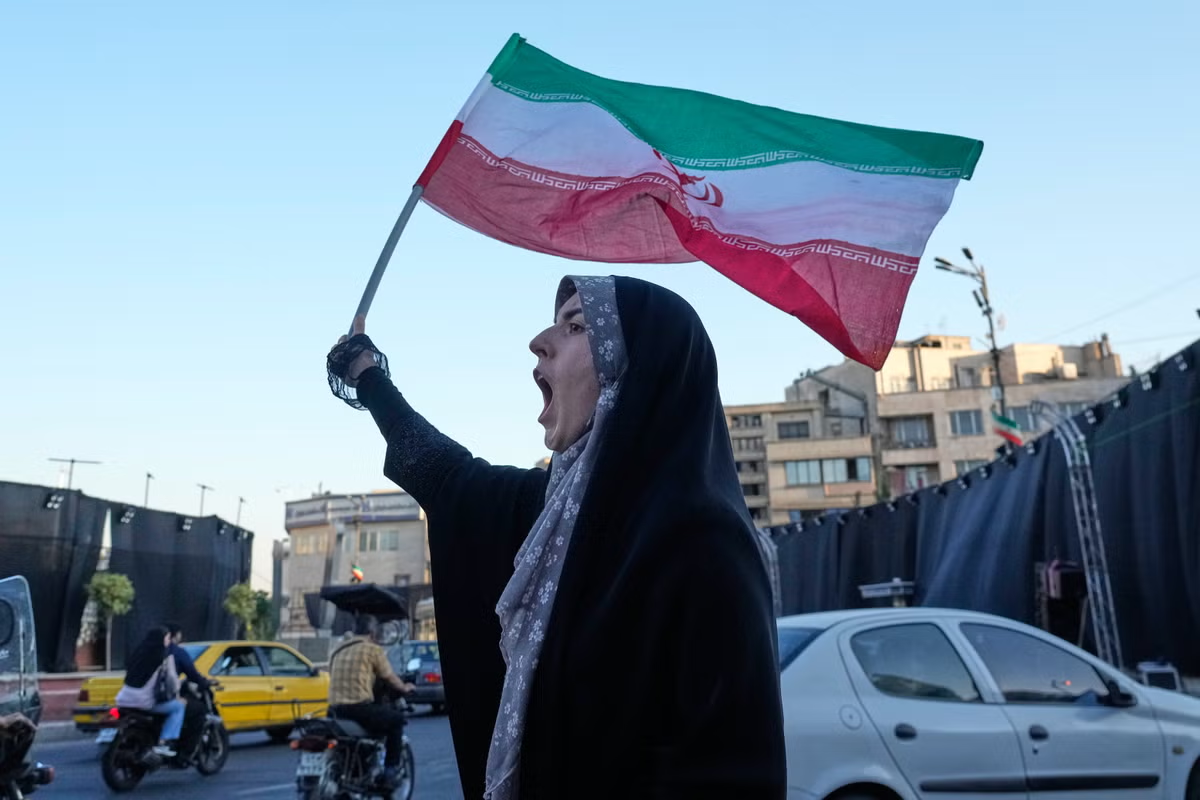
Tehran has insisted any deal must include peace in Lebanon. The Hezbollah – its most powerful proxy – told Reuters it is open to peace so long as Israel doesn’t attack. And Israeli military officials told the Jerusalem Post that if the Hezbollah didn’t attack, they wouldn’t either.
A measure of peace appears possible and that is something Trump has pushed for, recognising belatedly that the war has cost him votes and is bleeding the US treasury and arsenal dry.
But Netanyahu – who knows Israel relies heavily on the US for financial and military aid, having received $3.8 billion annually since 2019 – cannot afford to back down too much. The strike on Lebanese capital Beirut last week – three people were killed – invited a rebuke from Trump.
He also knows that hardline Israeli factions will see an end to fighting in Iran – without a complete dismantling of the regime – as an invitation to it and the Hezbollah to re-arm themselves, particularly since the deal with the US includes lifting of economic sanctions.
Retaining troops in southern Lebanon – a detente that will not please either the US or Iran, but will likely be grudgingly accepted – lets Netanyahu keep his ‘protector’ image alive.
And it allows him to act against Hezbollah to keep the northern voters happy, though these will largely be covert strikes. But it has to be within limits deemed acceptable by Trump and Iran.
The primary problem confronting Netanyahu now is – ‘how do I project deterrence without a full-blown war that is backed by the US, and is therefore one that can be diplomatically sustained?’
Peace with Iran – and the Hezbollah – can help because it removes the spectre of an open-ended war that could spiral into a strategic disaster. But it also hurts because it robs Netanyahu of the kind of crisis atmosphere that works for incumbents with strong security credentials. If the peace holds, Netanyahu will likely be forced into a defensive campaign that could leave him at a disadvantge in coalition management. In that sense, the deal changes Netanyahu’s challenge from wartime leadership to constrained peacetime management.