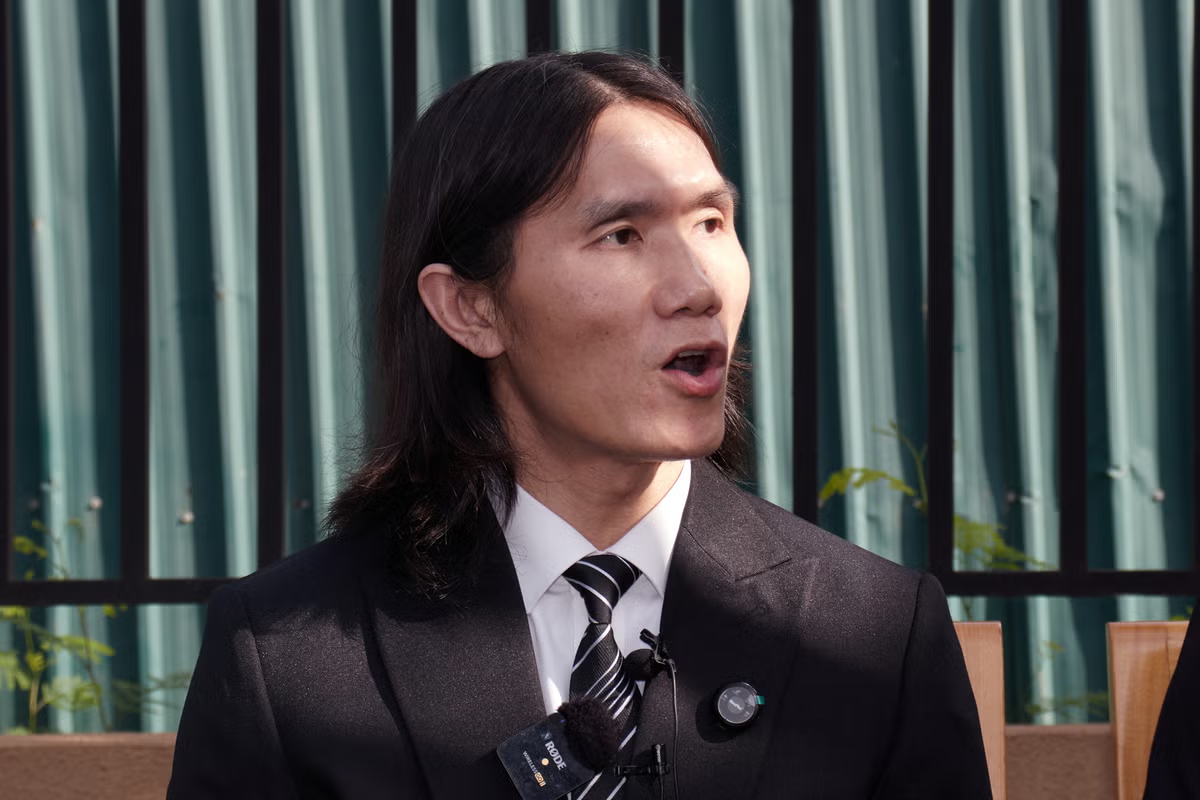
A Vietnamese national, Tuan Phan, 44, was repatriated to Vietnam on Friday after over a year detained in South Sudan, following his deportation under a controversial Trump administration program.
His return was announced by South Sudan’s Ministry of Foreign Affairs.
“We are grateful that while in our custody Mr. Phan was very disciplined, joyful, and importantly, he remained healthy,” said spokesperson Agok Anyar.
Phan and seven other men were sent to Africa in May 2025. Their deportation to South Sudan was initially blocked midflight by a federal judge citing procedural irregularities, rerouting them to a U.S. military base in Djibouti. They ultimately arrived in Juba, South Sudan’s capital, in July 2025, after a Supreme Court ruling greenlit their removal.
The eight men all have criminal convictions in the U.S. but had served their prison sentences when they were taken into custody last year.
At least seven African countries have agreed to accept deportees who are not their own citizens as part of arrangements with the U.S., which in exchange has agreed to pay millions of dollars to those governments.
More than 180 people have been sent to those countries, according to the monitoring initiative Third Country Deportation Watch.
The choice of South Sudan as a receiving nation was particularly controversial given its exceptionally poor human rights record, high levels of corruption and growing political instability. Armed conflict displaced more than half a million people in 2025, according to the United Nations.
Phan is the second person in the group to be repatriated after Jesus Munõz-Gutierrez was flown to Mexico in September. Dian Peter Domach, the only South Sudanese national in the group, was released upon his arrival, officials said. The remaining men are from Cuba, Myanmar, and Laos.
Phan moved to the U.S. as a child in 1991, court documents show. In 2000, shortly after turning eighteen, he received a 25-year prison sentence after he shot and killed someone during a gang altercation. His removal from the U.S. was ordered in 2009, and he was taken into custody by Immigration and Customs Enforcement immediately after completing his sentence in March 2025.
In Juba, the deportees were held in a gated house under supervision by armed guards, according to a U.S. Senate report. A congressional aide who visited Juba last year was the first person other than a South Sudanese official to visit the men, the report says.
Michael Bochenek, a senior counsel for Human Rights Watch, said that the lack of visits means “there’s been no independent check on people’s treatment and conditions of confinement and raises serious questions about South Sudan’s compliance with human rights norms and essential safeguards against abuses in detention.”
While the details of deals made between the U.S. and other governments to accept deportees have been made public, the conditions of the South Sudan arrangement remain murky.
State Department documents made public show that South Sudan made requests to the U.S. after agreeing to accept the men, including sanctions relief for a former top official and support with the prosecution of a prominent opposition leader.
It is unclear what South Sudan’s government was paid or what it received in return.