Danish pharmaceutical giant Novo Nordisk, maker of the popular weight-loss drug Wegovy, is seeking greater insurance coverage for its US users. The company’s top US executive hopes this will offset the substantial direct-to-consumer sales that have driven the market’s rapid expansion.
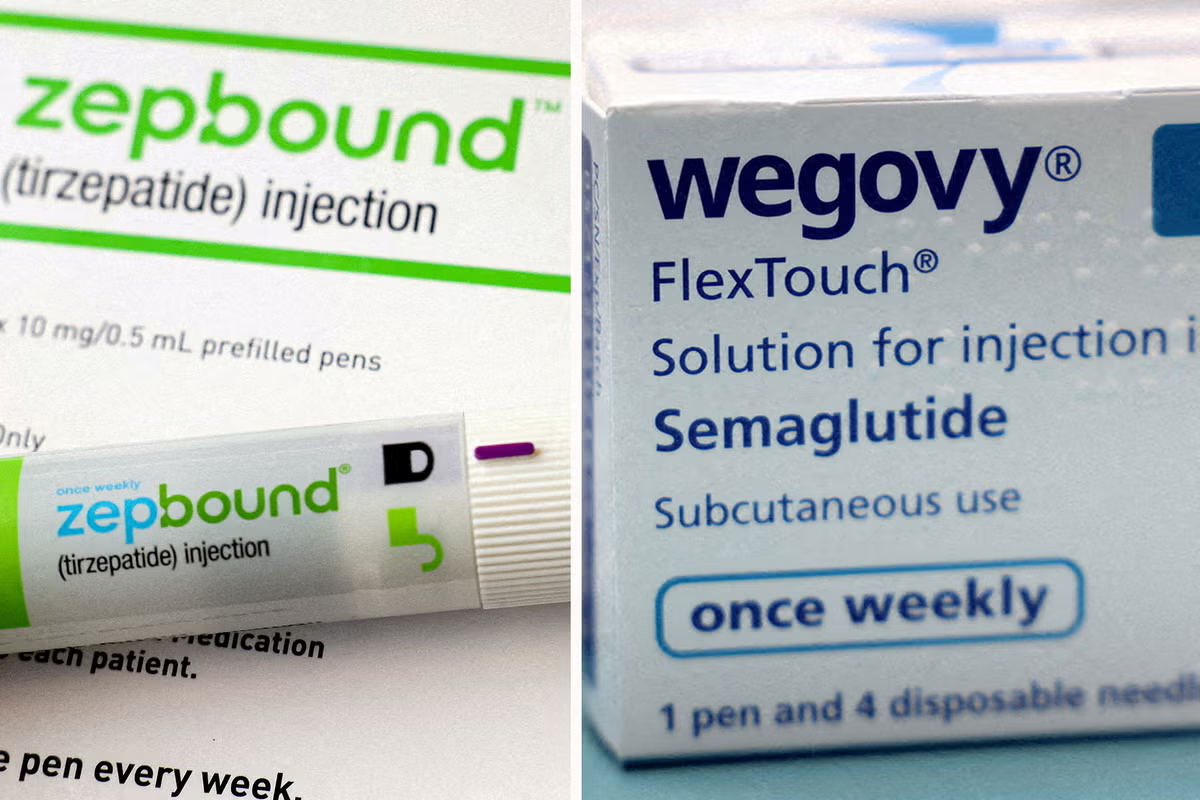
Demand for obesity and weight-loss medications, including Novo’s Wegovy and diabetes drug Ozempic, alongside rival Eli Lilly’s Zepbound, Mounjaro, and Foundayo, has soared. This surge occurs even as employers and health plans push back against covering their considerable cost.
Direct consumer purchases currently constitute 30 per cent of Novo’s injectable GLP-1 weight-loss drug sales by volume. Furthermore, these direct sales account for around 90 per cent of its Wegovy pill, which launched in the US in January, US Executive Vice President Jamey Millar confirmed in an interview on Wednesday.
Millar hopes that sales mix will evolve toward an equal split between the insurance-covered and self-pay segments for both forms of the medication. “There are benefits to the traditional model,” he told Reuters. “That’s why I’d like to see more balance, but we’ve got to solve the cost trend concern for that to be the case.”
Wegovy has a U.S. pharmacy list price of about $1,350 a month, but Novo has said it will reduce the cost to $675 in 2027. Self-pay consumers can buy Wegovy for $149 a month under manufacturer discount programs. Many people have proved willing to shell out their own cash for the medications, a rarity for prescription drugs which have traditionally been paid for by employers, insurers and the government.
Millar said patient demand for the drug to treat a severe form of fatty liver disease which became eligible for coverage in 2025 is a small but `growing part of the business.
Not all insurance companies cover GLP-1s, and some are planning to drop coverage as more people take the medications. Health insurer Cigna has notified its employees it plans to end coverage in July. The pharmaceutical companies have begun to offer pricing discounts to address cost concerns.
Novo is seeking to expand coverage of GLP-1s in the U.S. while trying to reassure payers that any increase in sales volume can be kept predictable, Millar said. “If all of a sudden, the flood gates opened, the cost trend would be impermissible” for payers, Millar said. “So we’re engaged in that conversation. That’s what has to be solved.”
Novo expects a bump in demand when the U.S. government rolls out a pilot program in July covering GLP-1s for weight `loss for people enrolled in Medicare, which covers Americans age 65 or older and people with disabilities. Medicare `already covers the drugs for conditions including cardiovascular and severe fatty liver diseases, but the pilot will be the first time it covers GLP-1s for weight loss alone. The new program, which runs through 2027, will give older adults access to the drugs for $50 a month.
Millions of people are expected to take advantage of the program. Novo’s Millar declined to provide sales volume estimates for the program.