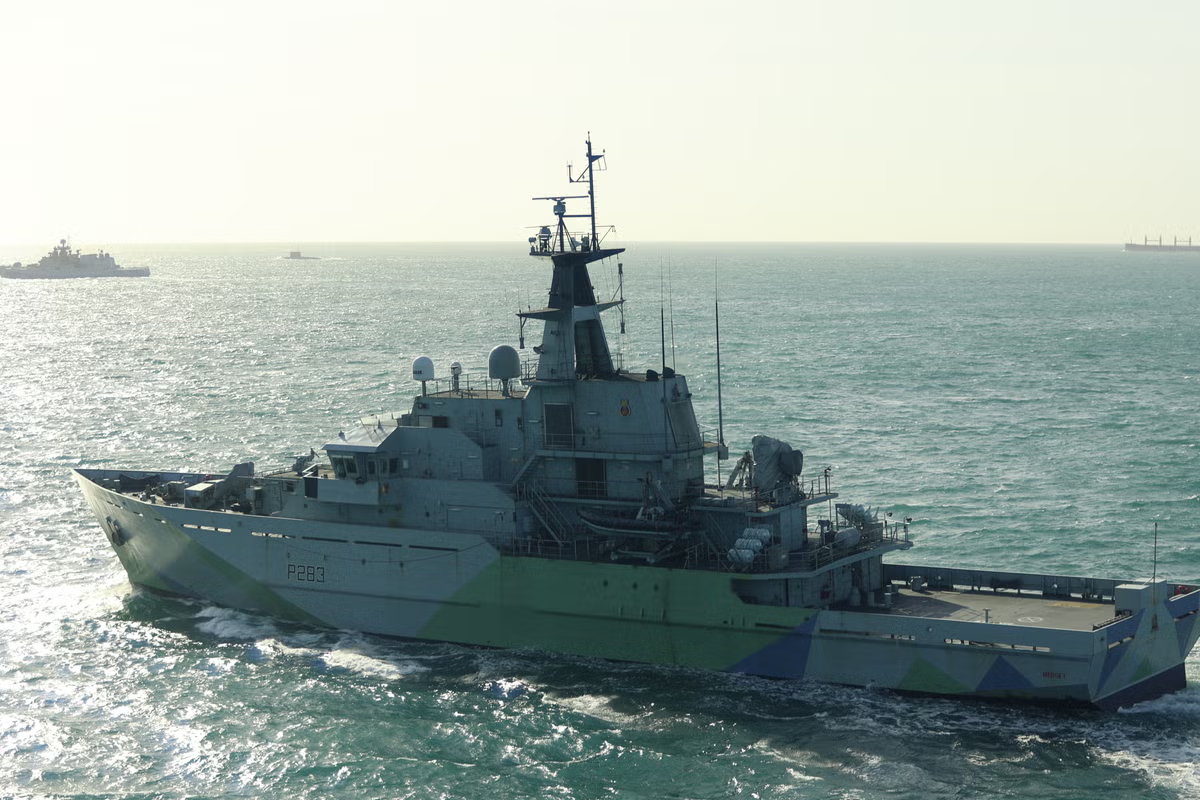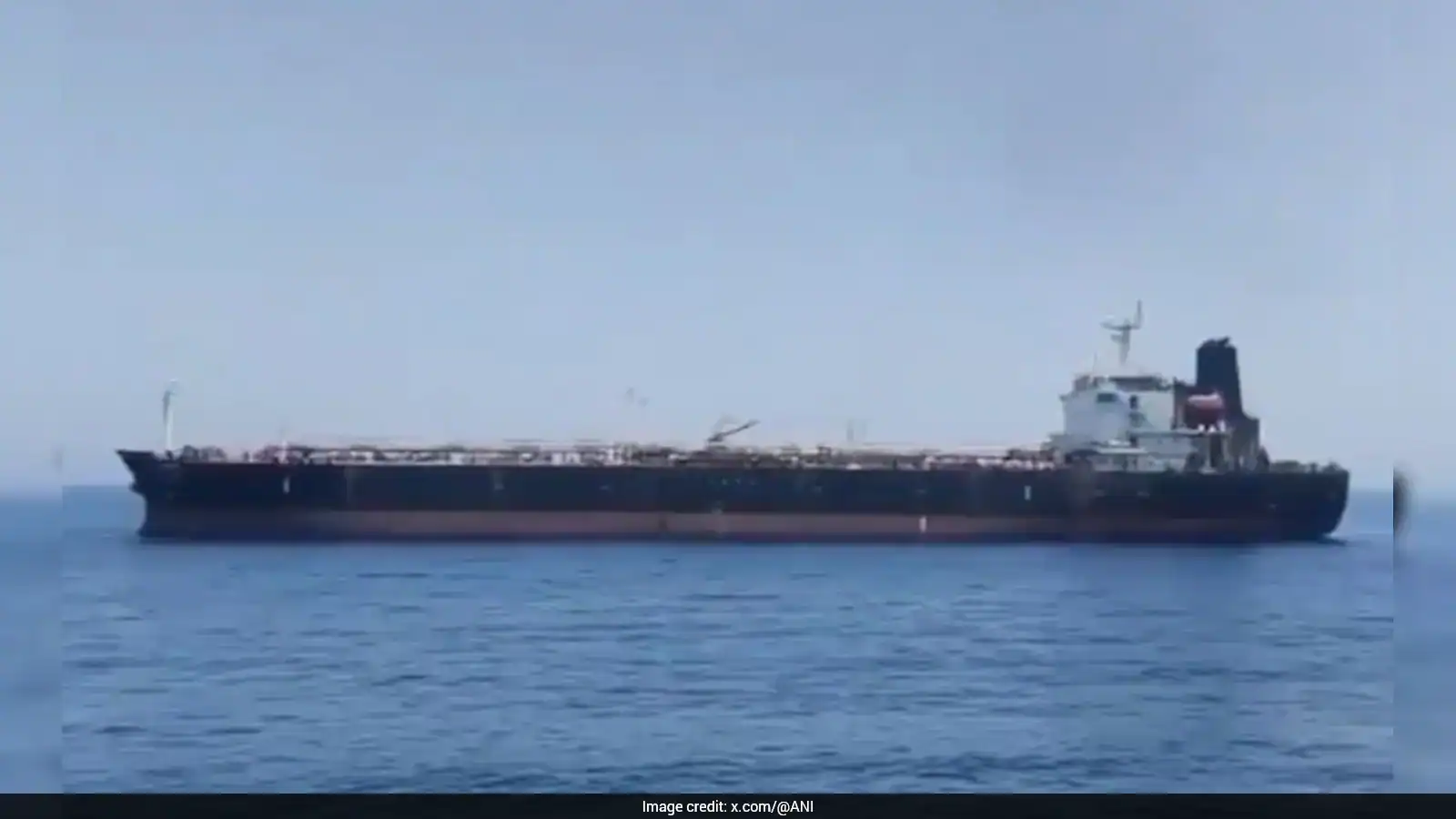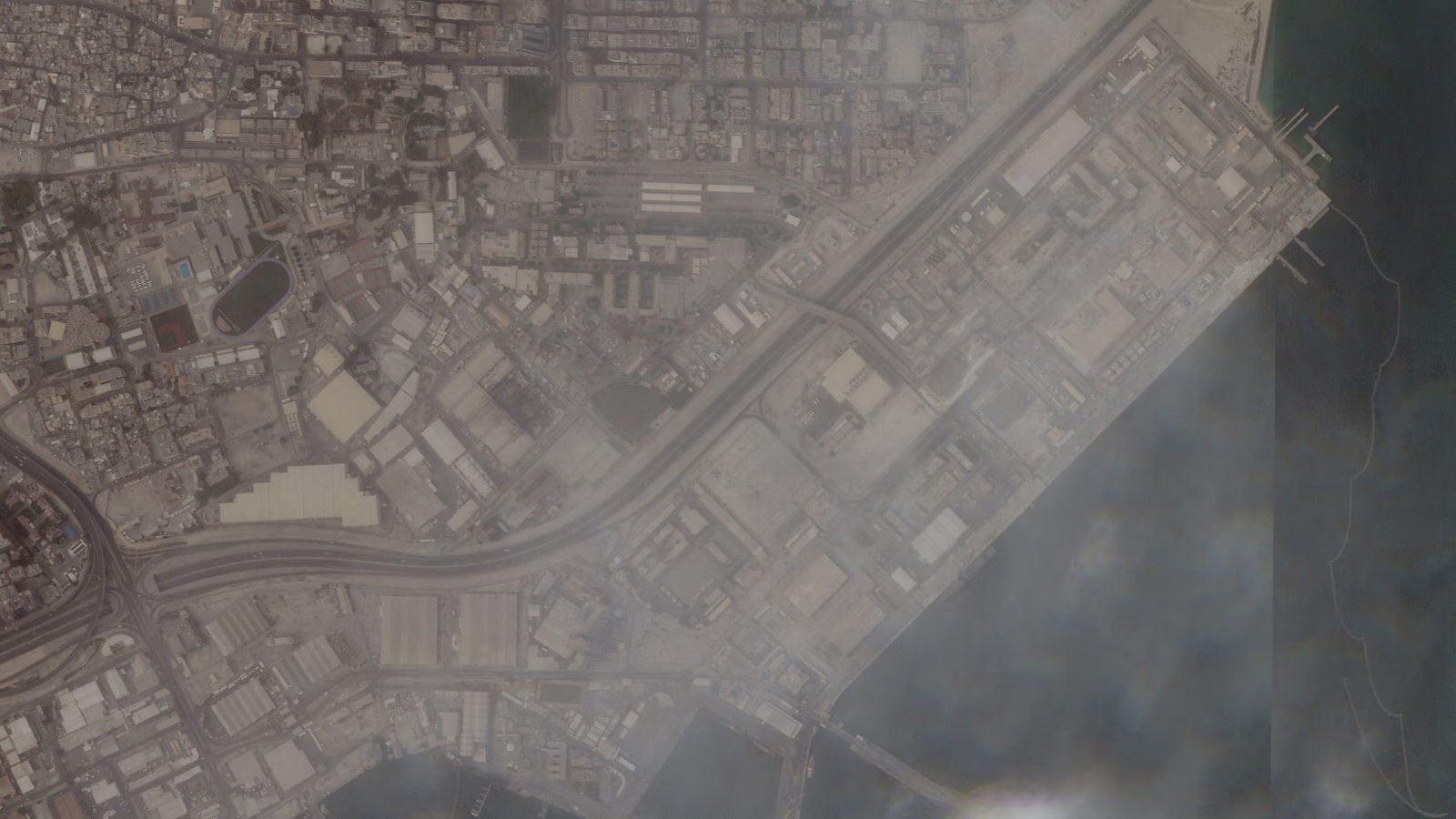
Iran’s claim that it targeted the US Fifth Fleet in Bahrain has thrust one of America’s most important overseas naval commands into the spotlight. Headquartered in Manama, the Fifth Fleet safeguards critical shipping lanes stretching from the Persian Gulf to parts of the Indian Ocean, including the Strait of Hormuz, a narrow waterway through which nearly a fifth of the world’s oil supplies pass.
Iran’s Revolutionary Guards said they targeted a US base in Jordan and 21 other sites across the Gulf region, including facilities linked to the US military presence in Bahrain and Kuwait, news agency Reuters reported. Most of the incoming missiles and drones were intercepted, according to initial US assessments.
What triggered the latest confrontation?
The latest round of hostilities began after the US military carried out strikes on Iranian air-defence systems, surveillance radar sites and ground-control stations near the Strait of Hormuz. US President Donald Trump said the operation was ordered after a US Apache attack helicopter was brought down by what American officials described as an Iranian one-way attack drone.
Speaking to ABC News, Trump said the American response needed to be “very strong” and “very powerful”. Reuters reported that nearly 20 Iranian targets were struck during a four-hour operation conducted by US Central Command.
Iranian state media reported attacks on Qeshm Island, Sirik and areas near Bandar Abbas and Jask, all strategically located around the Strait of Hormuz.
Iran’s retaliation
In response, Iran’s Revolutionary Guards announced missile and drone attacks on multiple US-linked facilities in the Gulf.
Tehran claimed the strikes targeted F-35 fighter jet hangars at Jordan’s Muwaffaq Salti Air Base, though the claim has not been independently verified.
Story continues below this ad
Iran also claimed responsibility for drone attacks on the Ali Al Salem Air Base in Kuwait and facilities associated with the US Fifth Fleet in Bahrain. Bahrain activated air-raid warnings, while Kuwaiti authorities said air-defence systems engaged hostile aerial targets.
A US official told Reuters that preliminary assessments suggested nearly all Iranian missiles and drones were intercepted, with no immediate reports of casualties among American personnel.
📋 Identity & Structure
What is the Fifth Fleet?
America’s dedicated naval command for the Middle East
The Fifth Fleet is a numbered US Navy fleet operating under NAVCENT — US Naval Forces Central Command — which reports to US Central Command (CENTCOM). Originally formed in 1944 for the WWII Pacific campaign, it was deactivated in 1947 and permanently reactivated in 1995 after the Gulf War.
1944
Originally established
1995
Reactivated post-Gulf War
1948
US Navy in Bahrain since
🏢
HQ: NSA Bahrain, Manama
The only permanent US Navy headquarters in the Middle East. Continuous US naval presence here since 1948.
🔗
Parent command: NAVCENT / CENTCOM
Reports to US Naval Forces Central Command under US Central Command — the joint military HQ for the broader Middle East and Central Asia.
👥
Personnel: thousands, fluctuating
US military, civilians, and coalition members support operations from Bahrain. Exact numbers shift with deployments and operational tempo.
🗺 Area of Responsibility & Force Composition
No permanent ships
Forces rotate in as needed — a flexible, scalable command
The Fifth Fleet draws ships rotated from other US fleets based on operational requirements and regional developments, making it highly adaptable. Aircraft carriers, destroyers, submarines, and amphibious ships deploy based on the threat picture.
2.5M
sq miles under watch
🚢
Aircraft carriers
Carrier strike groups deploy on rotation — the most powerful conventional deterrent in the fleet’s toolkit.
🎯
Guided missile destroyers
Air defence, anti-submarine warfare, and strike capability. Core escorts for carriers and amphibious ships.
🛡
Amphibious assault ships & patrol craft
Patrol craft monitor Gulf chokepoints; amphibious ships project power ashore when required.
🤖
Unmanned systems — growing role
Unmanned surface, underwater, and aerial systems are increasingly integrated — extending coverage without adding personnel.
🌐
8 waterways: Persian Gulf to Red Sea
Persian Gulf · Gulf of Oman · Gulf of Aden · Arabian Sea · Red Sea · Indian Ocean (parts) · Strait of Hormuz · Bab el-Mandeb Strait
📅 Major Operations: A Timeline
1944–1945 — World War II
Original Fifth Fleet, Pacific Campaign. Under Admiral Raymond Spruance — decisive role in the Battles of Iwo Jima and Okinawa.
July 1, 1995 — Reactivation
Fleet reactivated post-Gulf War to establish a permanent naval command structure for the Middle East.
Post-September 11, 2001
Afghanistan operations. Fifth Fleet provided the naval backbone for logistics, strike operations, and force projection via the Arabian Sea.
March 2003 — Iraq War
Naval support for the invasion of Iraq. Carrier strike groups in the Gulf and Red Sea launched strikes and enforced maritime security throughout the campaign.
2000s–2010s — Counter-piracy
Fifth Fleet supported multinational counter-piracy operations in the Gulf of Aden and off Somalia under the Combined Maritime Forces (CMF) coalition.
Recent — Red Sea Operations
Protecting commercial shipping in the Red Sea. The fleet is central to multinational efforts responding to threats against vessels in one of the world’s busiest shipping corridors.
⚠️ US Fifth Fleet vs Iran: Key Flashpoints
Persistent Tension
Three decades of confrontation at the world’s most critical chokepoint
Iran views the Fifth Fleet’s permanent Gulf presence as a direct strategic threat. The fleet regards Iran’s capacity to threaten the Strait of Hormuz — through which ~1/5 of world oil flows — as its primary regional concern. This has produced recurring crises.
April 18, 1988 — Operation Praying Mantis
Largest US naval engagement since World War II. Launched after the USS Samuel B Roberts struck an Iranian mine. US Navy sank two Iranian warships and destroyed two oil platforms.
January 2016 — Sailor Detention
Iran detained 10 US Navy sailors after their patrol boats entered Iranian waters near Farsi Island. Personnel released through diplomatic channels.
Recurring — Tanker Incidents
The fleet has repeatedly responded to attacks and seizures of commercial vessels transiting the Strait of Hormuz — leverage Iran has used during periods of sanctions and diplomatic tension.
Recent — Ongoing Escalation Watch
Iranian and regional media have periodically reported attacks involving US facilities in Bahrain. Such claims require careful attribution — official assessments may differ from initial reports.
Strait of Hormuz
~1/5 of world oil supply passes through — the fleet’s most critical chokepoint to defend
Iran’s leverage
Capacity to mine or blockade the strait is Tehran’s foremost asymmetric threat
🌍 Strategic Significance
Energy Security
Roughly one-fifth of global oil consumption flows through its watch zone
The Strait of Hormuz is one of the world’s most important energy chokepoints. Any closure — even temporary — would spike oil prices and disrupt supply chains linking Asia, Europe, and Africa. The Fifth Fleet is the primary deterrent against that scenario.
Trade & Commerce
The waterways it guards connect three continents
Its area of responsibility spans waterways linking Europe, Asia, and Africa — critical not just for energy security but for global commercial shipping, container trade, and the broader world economy.
Combined Maritime Forces
Dozens of nations, one coalition headquarters in Bahrain
The Fifth Fleet works with the Combined Maritime Forces (CMF) — a multinational naval partnership based in Bahrain — conducting missions on maritime security, counter-piracy, commercial shipping protection, and regional stability.
Source: The Indian Express
Why the US Fifth Fleet matters
One of the most significant targets named by Iran was the US Fifth Fleet, headquartered in Bahrain.
The Fifth Fleet serves as the backbone of America’s naval presence in the Middle East. Operating under the US Naval Forces Central Command, it oversees maritime security across approximately 2.5 million square miles of water, including the Persian Gulf, Gulf of Oman, Red Sea, Arabian Sea and parts of the Indian Ocean.
Story continues below this ad
The fleet is responsible for safeguarding some of the world’s most critical shipping routes, particularly the Strait of Hormuz, through which roughly one-fifth of global oil and liquefied natural gas supplies pass. It routinely deploys aircraft carriers, destroyers, surveillance assets and mine-countermeasure vessels to deter threats from Iran and ensure freedom of navigation.
The fleet has long been viewed by Tehran as a symbol of American military influence in the region, making it a frequent focus of Iranian threats during periods of heightened tensions.
Strait of Hormuz and peace talks
The latest escalation has renewed focus on the Strait of Hormuz, a key global oil and gas shipping route that carries nearly a fifth of the world’s energy supplies. According to Reuters, shipping traffic has begun recovering but remains below normal levels following months of conflict.
The crisis was triggered after a US Apache helicopter went down near the Strait on Tuesday. While US officials blamed an Iranian drone attack, Tehran did not directly address the allegation. The rescue marked what appears to be the US military’s first publicly known use of an autonomous surface vessel for personnel recovery, with a Saronic Corsair sea drone helping retrieve the two Apache crew members.
Story continues below this ad
The exchange has also cast fresh doubt on ongoing peace efforts. While President Donald Trump has said Washington and Tehran remain close to an agreement, major differences persist. The US wants guarantees that Iran will not develop nuclear weapons, while Iran is seeking sanctions relief, access to frozen assets and recognition of its role in the Strait of Hormuz.
The escalation also carries implications for India. Roughly 65–70 per cent of India’s crude oil imports transit through the Strait of Hormuz. At the same time, hundreds of thousands of Indian nationals live and work across Bahrain and Kuwait, raising concerns over energy prices and diaspora security.