According to trade sources cited in a report by The Hindu BusinessLine, China has suspended imports from three Indian exporters after detecting methamidophos residues in some shipments. The development comes months after Beijing tightened checks on Indian rice consignments, raising concerns about increasing quality scrutiny on Indian agricultural exports.
What is methamidophos?
Methamidophos is a highly toxic organophosphate insecticide that can affect the nervous system. While it is not widely used directly in chilli cultivation, experts say residues may sometimes appear as a metabolite of acephate, another pesticide that is legally used by some farmers.
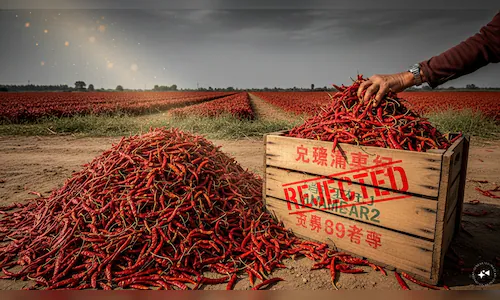
Chinese authorities reportedly found residue levels exceeding their permitted limits, prompting them to reject at least three consignments and suspend the exporters involved.
Why does China matter so much?
The issue is significant because China is India’s largest overseas buyer of dried red chillies.
India exported around 2.36 lakh tonnes of chillies to China in FY25, worth nearly ₹3,857 crore, accounting for more than a third of India’s chilli exports. Demand comes largely from China’s oleoresin, food processing and culinary industries.
For Indian exporters, China has been one of the fastest-growing markets. Exports to China rose sharply in FY25, making the latest restrictions particularly concerning.
Is this a blanket ban?
No.
Trade sources indicate that China has not imposed a blanket ban on Indian chillies. Instead, authorities have targeted specific exporters and consignments that allegedly failed residue tests.
In fact, none of the affected shipments have reportedly been returned. Importers and exporters are said to be negotiating price discounts to account for quality concerns.
Why is China becoming stricter?
Experts say the move reflects a broader trend rather than an isolated incident.
Countries around the world are tightening food safety standards and increasing checks on pesticide residues, contaminants and traceability. China, in particular, has been strengthening oversight of imported agricultural products.
The chilli episode follows similar concerns raised earlier over Indian rice shipments, suggesting Chinese regulators are paying closer attention to food safety compliance across multiple commodities.
What does this mean for Indian exporters?
The immediate impact could be slower shipments, higher testing costs and greater scrutiny at Chinese ports.
Longer term, exporters may need to strengthen:
- Farm-level pesticide monitoring
- Residue testing before export
- Traceability systems
- Quality-control practices across the supply chain
Industry experts warn that maintaining access to premium export markets will increasingly depend on meeting stringent food-safety norms rather than simply offering competitive prices.
The bigger picture
The rejection of a few consignments may not significantly disrupt India’s chilli trade with China for now. However, it serves as a reminder that global agricultural markets are becoming more demanding on quality and compliance.
For India, which aims to expand agricultural exports, the challenge is no longer just growing more produce—it is ensuring that every shipment consistently meets the increasingly strict standards of international buyers.