For India, the key issue is not merely gaining access to the US market but ensuring that its exporters face lower tariffs than competing manufacturing hubs such as Vietnam, Thailand and Bangladesh. Without such an advantage, Indian products could struggle to gain market share despite a trade deal.
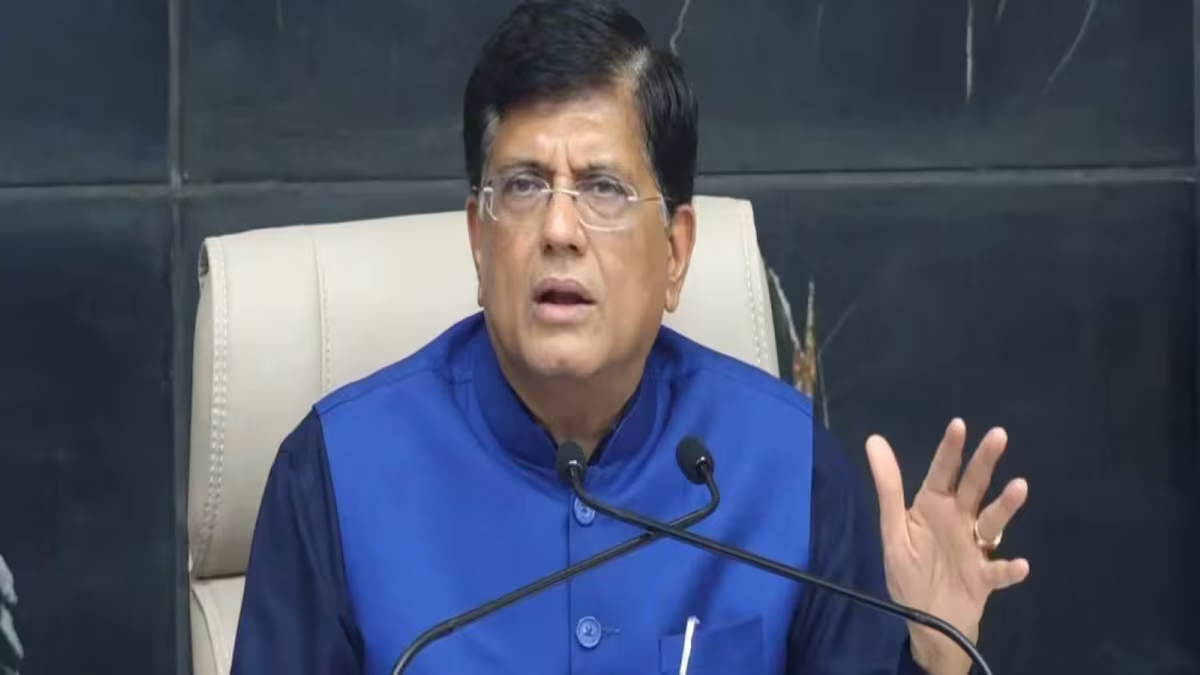
Speaking at the India Global Forum’s UK-India Week 2026 in the UK, a day after holding multiple rounds of meetings with US Trade Representative Ambassador Jamieson Greer in New Delhi, Goyal said India was focused on ensuring that its exporters enjoy an advantage over countries that compete with India in global markets.
“We are looking at countries at a similar stage of development or with similar cost structures as India—whether it is Vietnam, Thailand, the Philippines, Indonesia, Malaysia, China, Bangladesh, Sri Lanka or our other neighbours,” Goyal said.
“Until the framework for securing that competitive advantage is finalised, we cannot bring a US deal into force,” he added.
The minister said the broad contours of the agreement had been finalised in February 2026 and that negotiations since then have focused on working out the finer details.
“The deal was done in February 2026 with the broad contours fixed up. Teams have been working since then to finalise the fine print, and there’s always a little give and take,” he said.
India is seeking a tariff advantage over competing manufacturing economies such as Bangladesh, China, Malaysia, the Philippines, Sri Lanka, Thailand and Vietnam.
Referring to earlier negotiations, Goyal said the agreement had been structured around reducing tariffs from 50% to 18%, which would have given Indian exporters a meaningful edge over competitors.
A lower tariff rate than competing countries could make Indian goods more attractive to US buyers, potentially boosting exports in sectors such as textiles, engineering goods, electronics and labour-intensive manufacturing.
“The whole deal was centred around that competitive advantage that we got with 18% over our neighbours and other competing countries. We would have been lower than all our neighbouring and ASEAN countries, other than Singapore, and that is why the deal was attractive for us,” he said.
However, Goyal noted that subsequent developments, including a US Supreme Court ruling striking down certain tariffs, had altered the framework within which the agreement was originally negotiated.
The ruling has complicated negotiations because if tariffs fall for all countries, India could lose the preferential advantage that formed a central pillar of the proposed agreement.
“With the 10% tariffs, which expire on July 24, we obviously have to have some reason to be able to bring into force the agreement that we have already agreed upon and ensure that we get a competitive advantage over what is being paid by competing countries,” he said.
According to the Global Trade Research Initiative (GTRI), Indian exports to the US are currently subject to Most Favoured Nation (MFN) tariffs plus an additional 10% levy. GTRI estimates that Indian exports face a weighted average MFN tariff of 2.8% in the US.
The think tank noted that MFN tariffs apply to most products, excluding sectors such as steel, copper, aluminium and certain auto components.
GTRI added that if the additional 10% tariffs lapse on July 24 as scheduled, most imports into the US would revert to standard MFN tariff rates, effectively restoring the tariff regime that existed before April 2, 2025.
In effect, India is signalling that it would rather wait than sign a deal that leaves its exporters on the same footing as rival manufacturing economies.