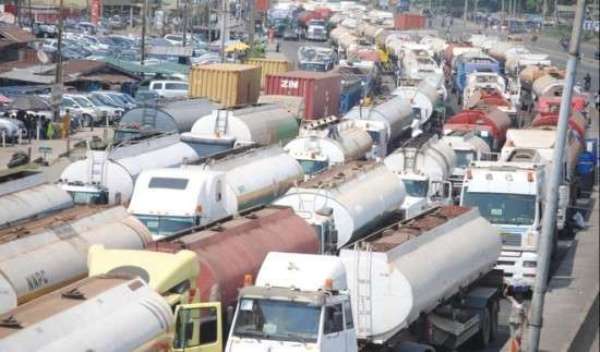
The Major Energies Marketers Association of Nigeria (MEMAN) has cleared its member companies of blame regarding the resurgence of petroleum tanker congestion in Apapa, Lagos, insisting that their depots operate under strict truck scheduling and traffic management systems.
The association said its members’ depots in the Apapa axis currently experience “generally free movement of traffic” due to the implementation of designated truck holding areas and automated call-up systems.
MEMAN, which represents 11 Plc, TotalEnergies Marketing Nigeria Plc, Conoil Plc, Ardova Plc, NNPC Retail Limited and MRS Oil Nigeria Plc, however, clarified that it has no member facilities in the Kirikiri axis.
“MEMAN members’ depots within the Apapa axis are located along Dockyard Road, Mobil Road and Kayode Street.
“At present, there is generally free movement of traffic into and out of these facilities,” the association said.
“MEMAN does not have member facilities within the Kirikiri axis and, therefore, cannot speak directly to the specific causes of tanker congestion in that area,” it further noted.
The association explained that all member depots have designated truck parking and holding areas where trucks remain until they are scheduled to load petroleum products.
According to MEMAN, “All MEMAN member depots have designated truck parking and holding areas where trucks remain until they are scheduled to load at the terminal.
“This process is supported by automated call-up and scheduling systems, which help regulate truck movement and prevent unnecessary queuing around the depots.”
The group also said trucks travelling into Lagos from outside the state are first held at the Ogere transit park until they receive loading tickets.
It said, “For trucks travelling into Lagos from outside the state, transit parking arrangements are available at Ogere.
“Trucks remain at the transit location until a loading ticket has been generated and they are formally called forward to the relevant depot.
“This significantly reduces the number of trucks entering the Apapa corridor without confirmed loading instructions.”
MEMAN further disclosed that many trucks used by its members are equipped with On-Board Computers (OBCs) and vehicle-tracking systems to enable real-time monitoring of their movements.
The association added that most of the trucks display dedicated telephone numbers through which members of the public can report traffic violations or unsafe driving.
“Such reports are investigated promptly, appropriate disciplinary action is taken where necessary, and feedback is provided to the complainant,” it said.
On enforcement, MEMAN noted that it works with security and traffic management agencies to ensure compliance with approved parking arrangements.
“MEMAN also works closely with relevant security and traffic management agencies to conduct routine patrols and monitoring exercises within the corridors where member depots are located.
“These efforts are aimed at preventing indiscriminate parking and ensuring the continuous free flow of traffic,” the statement said.
The association said it also organises quarterly emergency response drills, transport safety campaigns and driver engagement programmes to educate drivers on traffic discipline, defensive driving and authorised parking locations.
While acknowledging reports of renewed tanker congestion in parts of Apapa and Kirikiri, MEMAN stressed that sustained collaboration among stakeholders remains the most effective solution.
“With respect to the reported resurgence of petroleum tankers on roads within the Apapa and Kirikiri areas, MEMAN believes that sustained collaboration among government, regulators, terminal operators and transport unions remains essential,” it said.
The association recommended “strengthening the electronic truck call-up system, expanding transit and holding bays, ensuring that only trucks with valid loading tickets are permitted into depot corridors, maintaining strict enforcement against indiscriminate parking, and continuously engaging transport operators and drivers on compliance with established traffic and safety protocols.”
According to MEMAN, implementing these measures would improve traffic management, enhance public safety and ensure the efficient distribution of petroleum products across Nigeria.