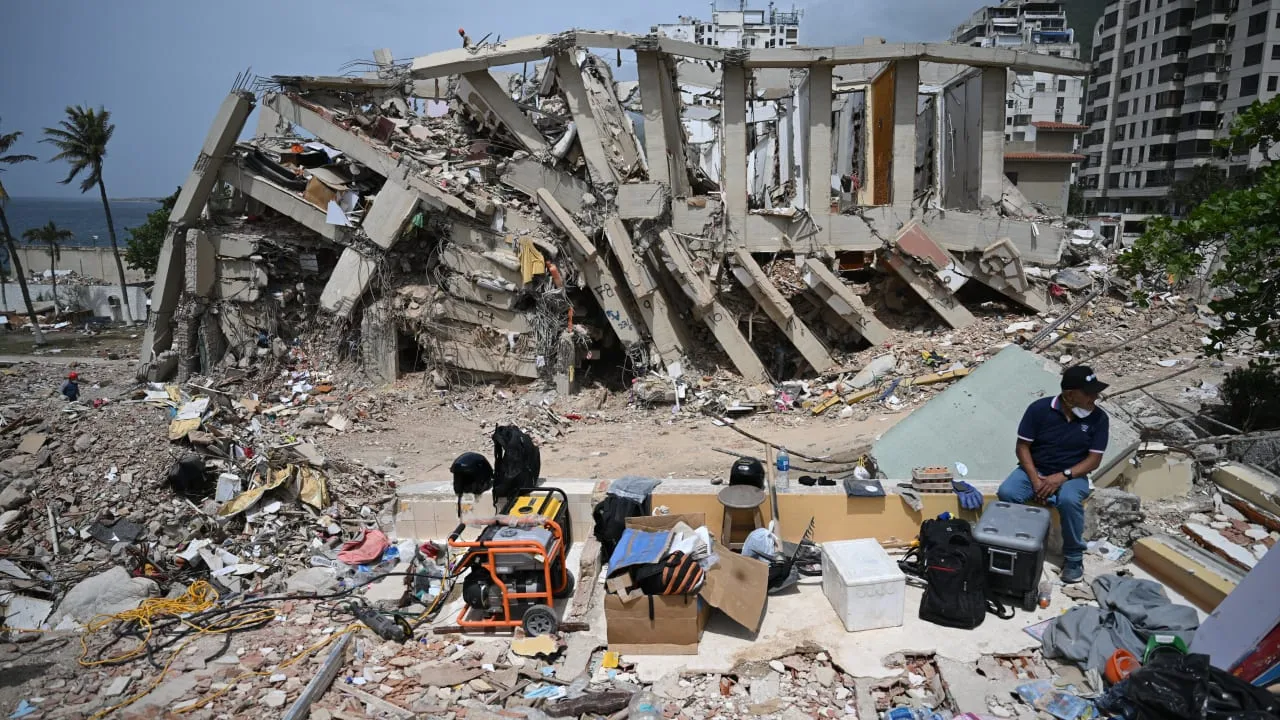
The death toll from Venezuela’s twin quakes has risen to 3,342, according to numbers released by the Venezuelan information ministry on Sunday.
The new tally also puts the number of injured at 16,470, while the number of homeless has risen to 17,345.
Earlier in the day, in a speech commemorating Venezuela’s 215th independence day, Venezuelan President Delcy Rodriguez defended the government’s actions following the quakes amid growing frustration over what many have called a delayed and inadequate response to the disaster.
Rodriguez said she deployed security forces immediately and announced the creation of a new military unit to help deal with emergencies and disasters.
Civilians of all stripes – including survivors, family members, volunteer paramedics and foreign rescue teams – have descended on disaster areas since the 7.2- and 7.5-magnitude quakes struck on June 24.
Many of those digging through the rubble, along with international aid organizations, say the government’s response was slow and ineffectual, with aid such as food and medical supplies delayed and a persistent lack of heavy machinery to move debris amid search operations.
An Israeli rescue delegation from Magen, Ready for Rescue, and SmartAID continues its mission aiding civilians in disaster zones across Venezuela.
The team is working with local forces and is being directed to sites where authorities have received information that people may have been inside buildings that collapsed following the earthquakes that struck the country.
Search and recovery work is being carried out manually under difficult field conditions, following consecutive days of intensive activity. The delegation said it has recovered numerous bodies from the rubble and will continue operating wherever local authorities identify a need for assistance.
“We go to every site where information is received about people who were inside buildings that collapsed,” said Eran Magen, head of the rescue delegation.
“This is manual, prolonged, and highly complex work, carried out under difficult field conditions and over days of continuous activity. We continue to operate wherever we can help, with full commitment to the mission,” he said.
Shir Perets contributed to this report.