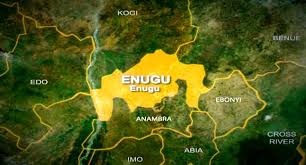
(Enugu Map. Photo Credit: Daily News Nigeria)
The Enugu State Commissioner for Health, Professor George Ugwu, has called on media practitioners to step up public awareness on free malaria testing and treatment, stressing that effective communication remains critical to sustaining the state’s gains in malaria control.
Represented by the Health Secretary of Enugu East Local Government Area, Dr Ifeyinwa Ugwueze, the commissioner made the call during a media chat organised by the Enugu State Ministry of Health on free malaria testing and treatment.
He commended the Enugu State Malaria Elimination Programme and its development partners for their consistent implementation of malaria interventions across the state, describing their regular monitoring, stakeholder engagements and programme follow-up as key factors behind the notable progress recorded.
He said it was one thing to have a clear plan and another to follow through on it, expressing satisfaction that the programme had remained regular and consistent in its implementation.
The commissioner also challenged the malaria programme and its partners to ensure sustainability beyond donor support, through measurable strategies capable of keeping interventions running after current funding cycles come to an end.
Earlier, the Programme Manager and Coordinator of the Enugu State Malaria Elimination Programme, Dr Ifeoma Otiji, said the state had recorded significant progress in reducing malaria prevalence through free diagnosis, treatment and preventive interventions supported by development partners.
She noted that although the 2022 malaria survey placed the state’s malaria prevalence at 24 per cent, above the national prevalence of 22 per cent recorded in 2018, the state had gone on to exceed its target.
She said the target had been to bring malaria prevalence down to 10 per cent by the end of 2025, and expressed delight that the state had surpassed that target, with prevalence dropping to 9.9 per cent by the end of 2025.
She attributed the achievement to support from the Islamic Development Bank, the Global Fund and other development partners, noting that the programme currently supports 557 public and private health facilities across the state.
According to her, the programme has strengthened the supply chain for antimalarial medicines and diagnostic commodities through regular last-mile distribution and routine monitoring of health facilities.
Otiji added that the programme had established technical working groups, strengthened data quality assurance systems and introduced grievance redress mechanisms to improve accountability and service delivery. She stressed, however, that sustaining the gains recorded would require a stronger partnership with the media.