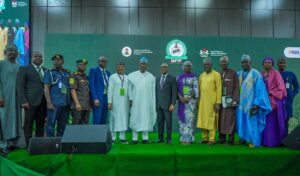
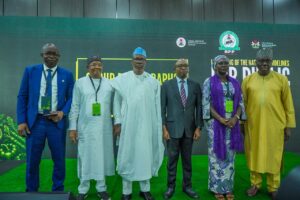
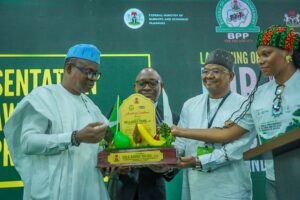
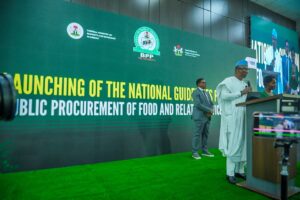
The Federal Government has launched new National Guidelines for the Public Procurement of Food and Related Services aimed at promoting healthier diets, improving nutrition and reducing the burden of diet-related diseases across Nigeria….
The Federal Government has launched new National Guidelines for the Public Procurement of Food and Related Services aimed at promoting healthier diets, improving nutrition and reducing the burden of diet-related diseases across Nigeria.
Speaking at the launch in Abuja on Monday, the Minister of State for Health and Social Welfare, Dr Iziaq Adekunle Salako, said the guidelines would make government food procurement a strategic tool for improving public health, strengthening food systems and supporting national development.





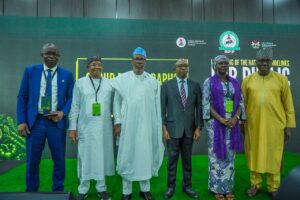
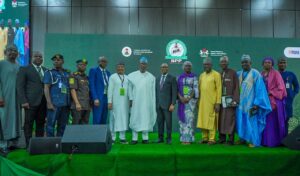
He said the policy aligns public procurement with the country’s health, nutrition and economic priorities, noting that government, as Nigeria’s largest institutional buyer of food, has the capacity to shape healthier food environments and influence food production standards.
“Every public procurement decision reflects a national priority and should no longer be viewed merely as a compliance exercise, but as a strategic policy tool capable of improving health outcomes, strengthening human capital and stimulating economic growth,” Salako said.
The minister said unhealthy diets contribute to about 7.2 million deaths globally each year, adding that Nigerians consume an average of 3.9 grams of sodium daily—almost twice the World Health Organisation’s recommended limit of two grams.
He also identified excessive intake of industrial trans fats and sugar-sweetened beverages as key drivers of cardiovascular diseases, obesity and diabetes.
Salako said the new guidelines complement existing government measures such as the National Guideline for Sodium Reduction, Trans-Fatty Acid Regulation and the Sugar-Sweetened Beverage Tax.
He also expressed concern over the country’s malnutrition burden, revealing that nearly half of deaths among children under five are linked to malnutrition, while about four in every 10 Nigerian children are stunted and almost two million suffer severe acute malnutrition each year.
According to him, the guidelines establish evidence-based standards for food procurement by encouraging balanced diets and setting limits for sodium, sugar and unhealthy fats in meals served in public institutions.
He said successful implementation would lead to healthier meals in schools, hospitals, correctional centres, military formations and other government institutions, ultimately improving the health and wellbeing of Nigerians.
Salako added that the initiative complements ongoing procurement reforms in the health sector, including MediPool, which is designed to improve transparency, strengthen supply chains and expand access to quality health commodities.
He urged procurement officers and heads of public institutions to treat procurement as a strategic governance function capable of improving health, education, productivity and public confidence, stressing that the success of the guidelines would depend on effective implementation and regular monitoring.