Juliet Akoje in Abuja
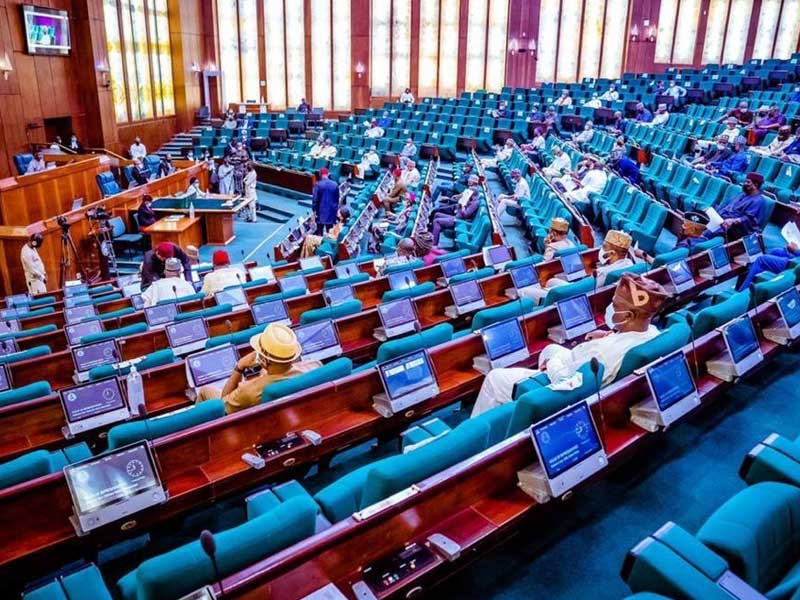
The House of Representatives Committee on Finance has directed the Nigeria Customs Service (NCS) to provide a detailed report on the approximately N34 trillion worth of import duty waivers granted in 2025.
The lawmakers requested a comprehensive breakdown showing the beneficiaries of the waivers, the legal framework under which they were approved, and the specific purposes they were intended to serve.
The directive was issued on Tuesday by the Chairman of the Committee, Hon. James Abiodun Faleke, when the management of the Nigeria Customs Service appeared before the panel during the National Assembly’s ongoing revenue monitoring and oversight exercise.
Faleke explained the Committee was not opposed to the federal government’s policy of granting import duty waivers but insisted the National Assembly had a constitutional obligation to ensure that such concessions were awarded transparently and in a manner that advances the country’s economic interests.
He stated that lawmakers were particularly interested in identifying the beneficiaries of the waivers and determining whether the concessions achieved the objectives for which they were granted.
According to Faleke, while granting waivers is a legitimate economic policy, there must be accountability regarding those who benefit from them and the intended outcomes.
He said waivers granted on products such as medical supplies and agricultural commodities are understandable because they are designed to support economic growth and ease the burden on citizens.
He noted that agricultural waivers, for instance, are expected to reduce food prices. However, he stressed that the Committee wanted full disclosure of all beneficiaries of the N34 trillion waivers.
The Committee also raised concerns over what it described as inconsistencies in the revenue figures presented by the Nigeria Customs Service despite the agency consistently surpassing its annual revenue targets.
Faleke observed that although Customs had recorded remarkable revenue performance, the financial documents submitted to the Committee failed to clearly account for the sources of the additional revenue generated above the approved targets.
He maintained that proper accountability required the Service to provide a detailed month-by-month breakdown of its revenue collections and explain the fluctuations recorded during the year.
The Committee Chairman said lawmakers could not commend the agency’s performance because its financial records were not properly reconciled.
While acknowledging Customs’ commitment to transparency, he insisted that the agency must explain how the excess revenue was generated.
He pointed out that some months reflected lower-than-expected collections while others recorded significant increases, adding that the Committee required detailed explanations to accurately assess the agency’s performance.
Deputy Chairman of the Committee, Hon. Saidu Mohammed Abdullahi, argued that the federal government should review upward the revenue targets assigned to its agencies, particularly major revenue-generating institutions like the Nigeria Customs Service.
He noted that Customs had repeatedly exceeded its annual revenue targets, demonstrating that the agency possessed greater revenue-generating capacity than the benchmarks currently assigned to it.
Abdullahi expressed the belief that the agency was capable of generating far more revenue if given more ambitious targets.
He recalled that Customs exceeded its N5 trillion target in 2024 by generating N6.1 trillion and also surpassed its approximately N6 trillion target in 2025 by recording N7.2 trillion.
According to him, setting higher expectations would encourage even stronger performance.
Responding to the lawmakers, the Comptroller-General of Customs, Bashir Adeniyi, represented by the Deputy Comptroller-General in charge of Finance, Administration and Technical Services, Kikelomo Adeola, clarified that the Nigeria Customs Service has no authority to approve import duty waivers.
She explained the Service only implements waiver approvals issued by the Federal Ministry of Finance in line with existing laws and government policies.
Speaking on trade facilitation, Adeola advocated the establishment of inland dry ports across the country, describing them as vital infrastructure that would ease congestion at seaports and improve the efficiency of cargo clearance.
She encouraged state governments to invest in inland dry ports, explaining that containers destined for such facilities could be moved directly from the seaports for examination, thereby reducing pressure on the nation’s ports and promoting smoother trade activities across the states.
On concerns surrounding delays in cargo clearance, Adeola informed the Committee that Customs scanners across the country were largely operational, except for a few units currently undergoing repairs.
However, a member of the Committee, Hon. Ifeanyi Uzokwe, urged the Customs management to discipline officers responsible for operating the scanners whenever negligence results in equipment failure or operational delays.
The Committee also scrutinised the operations of the Corporate Affairs Commission (CAC), directing the agency to submit comprehensive records of all registered companies and businesses in Nigeria, including the registration fees paid by each entity.
Lawmakers further questioned the Commission over its failure to submit its audited financial statements to the Fiscal Responsibility Commission (FRC), as required by law, since 2019.
The Committee subsequently directed the Corporate Affairs Commission to immediately reconcile its financial records with those of the Fiscal Responsibility Commission.
During the session, a representative of the Fiscal Responsibility Commission informed lawmakers that the Corporate Affairs Commission owed the federal government N13.9 billion in unremitted operating surplus accumulated over several years.
In response, the Registrar-General of the Corporate Affairs Commission disclosed that the agency had already begun reconciling its accounts with the Fiscal Responsibility Commission and had reached an agreement to clear the outstanding liability through quarterly payments of N500 million.