The lawmakers also resolved to invite the Minister of Budget and Economic Planning and the Director-General of the Budget Office of the Federation to explain the verification procedures applied before new entities are admitted into the federal budget.
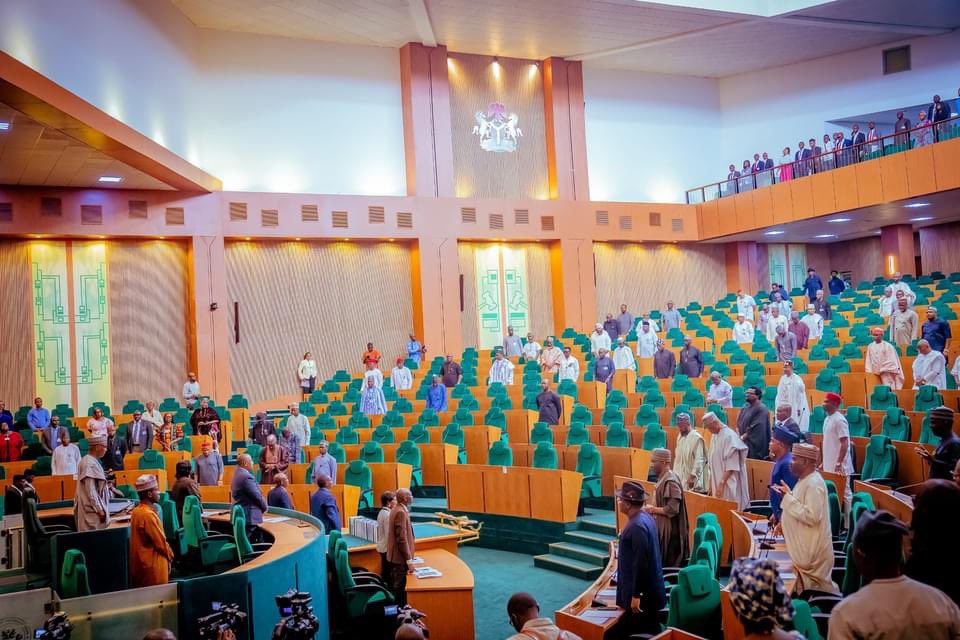
The House of Representatives has resolved to investigate the inclusion of over ₦1.3 billion vote for a non-existent federal agency in the 2026 Appropriation Framework. Lawmakers have described the embarrassing development as a significant threat to the integrity of Nigeria’s budget process and public financial management.
The decision arose from a motion of urgent public importance sponsored by Yusuf Gagdi (APC, Plateau). Arguing the motion, he had warned that the incident exposed serious weaknesses in the country’s appropriation system and raised concerns that other fictitious agencies could have slipped into previous budgets unnoticed.
The proposed investigation will examine how the so-called Presidential Foreign Intervention Promotion Council (PFIPC) secured budgetary allocations despite not being established by any law or executive instrument.
Mr Gagdi stated that the council allegedly operated from the Federal Secretariat Complex in Abuja, interacted with several government institutions, and presented itself as a legitimate body before the federal government publicly declared it non-existent.
According to Mr Gagdi, the organisation’s activities are already the subject of ongoing criminal proceedings before the Federal High Court in Abuja. He stressed that the House investigation would focus solely on the budgetary implications and the institutional failures that allowed the entity to gain official recognition.
He informed lawmakers that the organisation relied on a document purporting to establish it under “Chapter N2117 Laws of the Federation of Nigeria.” However, records from the National Assembly indicate that no legislation establishing such a council was ever passed. He explained that the closest relevant law is the Nigerian Investment Promotion Commission (NIPC) Act, rendering the purported legal instrument relied upon by the council “manifestly false” when compared with official statutory records.
Mr Gagdi further noted that more than ₦1.3 billion linked to the council was reflected in the 2026 budget framework, raising critical questions regarding how an agency without any legal foundation could pass through executive and legislative budget scrutiny. “The ease with which a single unestablished entity processed through official channels suggests a systemic vulnerability rather than an isolated administrative lapse,” he noted. House Resolutions
Following the adoption of the motion, the House resolved to:
Mr Gagdi anchored these resolutions in Sections 80, 81, 88, and 89 of the Constitution, as well as Sections 19, 30, and 50 of the Fiscal Responsibility Act, 2007.
Supporting the motion, Deputy Speaker Benjamin Kalu disclosed that he had personally met representatives of the organisation after receiving an official-looking letter bearing the Presidency’s insignia. Mr Kalu noted that his office received correspondence dated 2 May 2025 from a body that identified itself as both the Presidential Economic Advisory Council (PEAC) and the Presidential Foreign Intervention Promotion Council.
The letter featured a Federal Secretariat address, an official-looking government logo, and a “.gov.ng” website, which prompted his office to verify the organisation’s physical location before granting an audience. While officials confirmed the organisation operated from the stated office, Mr Kalu said the delegation abandoned the policy issues outlined in their letter during the meeting and appeared more interested in taking photographs.
“This shows that having the Presidency on a letterhead is no longer sufficient proof that an agency is genuine,” he remarked, adding that the House must investigate how the organisation secured office accommodation and access to senior officials.
PREMIUM TIMES had reported on the activities of the PFIPC and its leadership, which allegedly presented itself as part of the Presidency. At the centre of the controversy is Adeniyi Adeyemi, who claimed to be the director-general of both the PFIPC and the PEAC.
Mr Adeyemi and his associates reportedly attended official functions and met with senior officials while using official-looking letterheads and maintaining a government-style identity.
However, the Presidency subsequently disowned both Mr Adeyemi and the organisation. In a statement issued by the Chief of Staff to the President, Femi Gbajabiamila, the Presidency categorically stated that neither council exists under the administration of President Bola Tinubu and warned public institutions against dealing with them.
The Senate had also explained on Tuesday that the ₦1.3 billion appropriated for the non-existent PFIPC in the 2026 budget was ”neither recommended nor inserted” by the National Assembly.