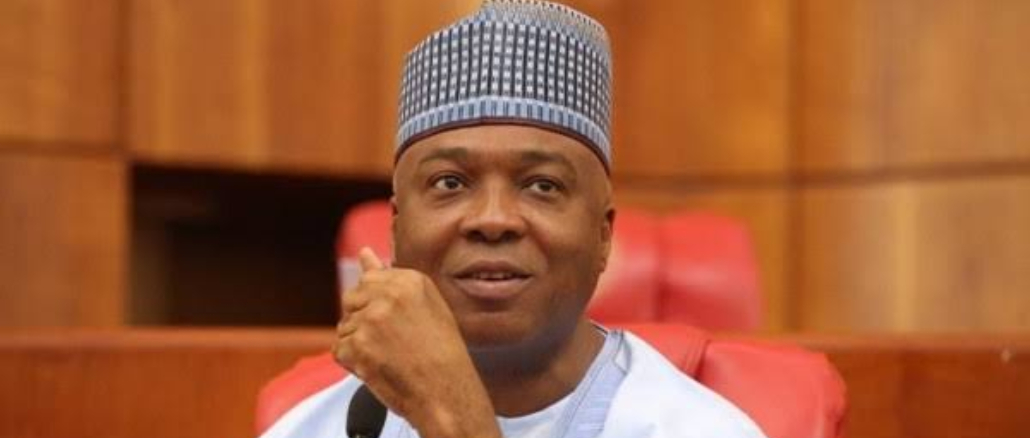
Former Senate President, Dr. Bukola Saraki, has dismissed claims that he routinely approved foreign loan requests during his tenure, insisting that every borrowing proposal was subjected to legislative scrutiny despite political pressure.
Speaking at the Global Strategic Advisory Group meeting held at Villa La Collina in Lake Como, Italy, Saraki said the Eighth National Assembly prioritised fiscal accountability through open budget hearings, oversight of government finances and reforms in the petroleum sector.
Reflecting on his tenure between 2015 and 2019, the former Senate President said the National Assembly took deliberate steps to strengthen transparency in public finance.
“During my tenure as Senate President, we placed strong emphasis on fiscal oversight, introducing open budget hearings, confronting the issue of unremitted revenues held outside the treasury system, and working on petroleum sector governance reform.
“These were not easy fights. But they were necessary ones, because the alternative is permanent external dependency,” he said.
Saraki maintained that he resisted pressure to approve foreign loans without proper legislative oversight, stressing that borrowing should never be treated as a routine exercise.
“I challenged the executive on foreign loan approvals and received significant political push-back because the system was not designed to support proper scrutiny of purpose or impact. Many of these loans were accepted as if they were free gifts, yet repayment obligations remained,” he added.
The former Kwara State governor also expressed concern over Nigeria’s low tax-to-GDP ratio, describing it as one of the weakest among economies of similar size. He argued that continued dependence on foreign loans and aid undermines the country’s economic independence.
According to Saraki, African countries must strengthen domestic revenue generation, build stronger institutions and shift towards partnerships driven by trade, investment and industrialisation rather than external aid.
He further urged governments across the continent to promote transparent budgeting, legislative oversight, judicial independence, credible elections and greater investment in education, innovation and youth development.
Comments:
@TruthSeeker: Easy to say now. Nigerians will judge based on the records.
@PolicyWatch: Proper legislative scrutiny is exactly what every loan request should go through.
@NaijaObserver: Foreign loans aren’t the problem. It’s how they’re used and managed.
@CitizenVoice: Accountability should remain a priority regardless of who is in power.
@EconomicLens: Stronger local revenue generation is more sustainable than relying on borrowing.