- Says Public Funds Can No Longer Meet Infrastructure Needs
James Emejo in Abuja
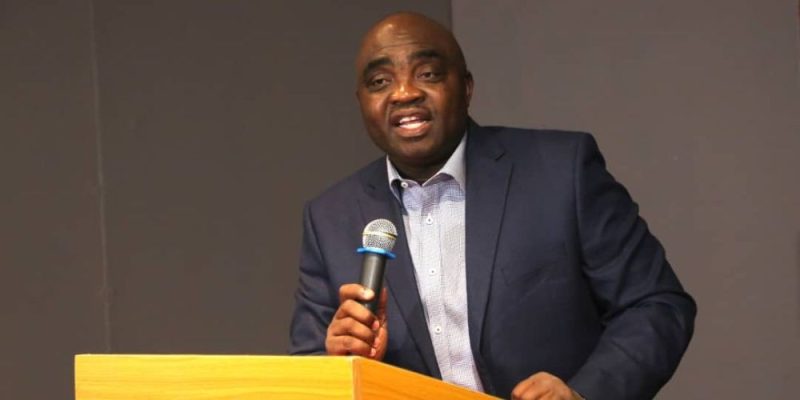
Director General, Infrastructure Concession Regulatory Commission (ICRC), Dr. Jobson Ewalefoh, has declared that West African governments can no longer depend solely on public resources to finance critical infrastructure.
He urged countries across the sub-region to embrace Public-Private Partnerships (PPPs) as the most viable pathway to closing the region’s huge infrastructure gap.
Ewalefoh spoke at the ECOWAS Infrastructure Forum in Abidjan, Côte d’Ivoire, stressing that the widening infrastructure deficit had made it imperative for governments to mobilise private capital and expertise to deliver roads, railways, housing, water facilities and other strategic assets needed to drive sustainable economic growth.
He said with infrastructure requirements increasingly outstripping available public resources, governments must focus on creating transparent regulatory frameworks and developing bankable projects capable of attracting long-term private investment.
The ICRC boss described PPPs as a practical alternative to traditional public procurement, noting that the model enables governments to leverage private sector financing, innovation, technical expertise and efficient risk-sharing to accelerate infrastructure delivery.
In a statement by acting Head, Media and Publicity, ICRC,
Ifeanyi Nwoko, he also advocated greater use of well-regulated unsolicited PPP proposals, explaining that such initiatives provide an additional pipeline for infrastructure projects without replacing the conventional procurement process.
According to him, unsolicited proposals allow private investors to identify viable infrastructure opportunities, finance project development at their own expense and bear the associated development risks, thereby easing fiscal pressure on governments.
He stressed that the approach was particularly valuable at a time when governments lacked adequate resources to prepare every infrastructure project for investment.
He said, “An unsolicited proposal is a complementary proposal. We simply do not have enough public resources to develop every project through the solicited route. What we have done is to pragmatically transfer that responsibility and the associated risks of project development to the private sector.”
He, however, maintained that privately initiated projects undergo the same rigorous appraisal and approval process as government-sponsored PPP projects to ensure transparency and value for money.
Highlighting the country’s experience, Ewalefoh said the country had strengthened its PPP framework through clear eligibility requirements, structured governance processes, the Swiss Challenge procurement model, non-refundable application fees and performance bonds designed to ensure that only credible and financially viable proposals progress through the transaction process.
He also challenged development partners to channel more resources into project preparation, observing that although many institutions were willing to finance infrastructure projects, fewer were prepared to support the development of bankable projects needed to attract investment.
According to him, the shortage of well-prepared projects remains one of the biggest constraints to infrastructure financing across Africa, adding that unsolicited proposals provide a practical solution to bridging that gap.
Ewalefoh further called for stronger collaboration among ECOWAS member states through a regional network of national PPP institutions to deepen technical capacity, facilitate knowledge sharing and harmonise best practices in project appraisal and implementation.
He said greater regional coordination would improve the credibility of PPP transactions by promoting common evaluation standards and enhancing information sharing on cross-border infrastructure projects with regional significance.
The panel session featured representatives from Ghana, Senegal and Côte d’Ivoire, who shared their respective experiences on deploying PPPs to accelerate infrastructure development.
Ewalefoh reaffirmed Nigeria’s commitment to strengthening its PPP ecosystem through transparent regulation, sound governance and innovative project development frameworks aimed at attracting credible private investment into critical infrastructure.