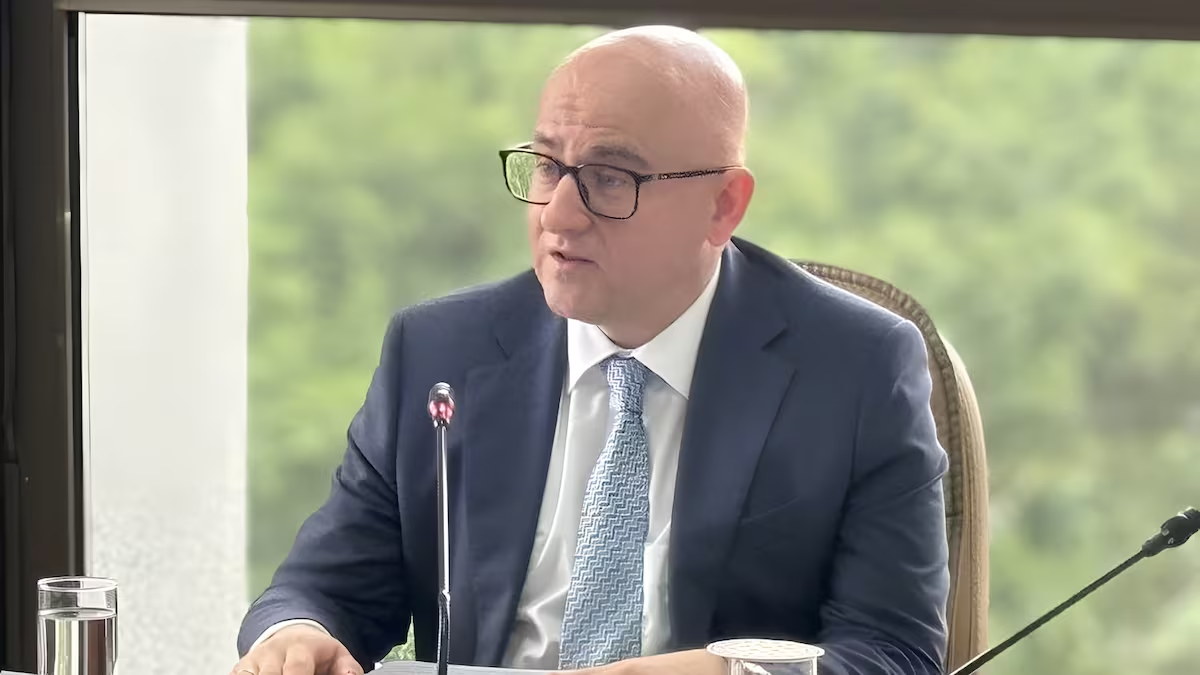
Ladanov met Joint Secretary (Eurasia) Mayank Singh at 10:30 am for around 15 minutes—the first such summons this year over Indian deaths in Ukraine.
The MEA conveyed India’s grave concerns and condemnation over the 19 July attack, which occurred as the vessel left Odesa port.
#WATCH | Delhi: Ministry of External Affairs (MEA) summons Russian Charge d’Affaires (CDA) Vladimir Ladanov. pic.twitter.com/6t5wBRm6UZ
— ANI (@ANI) July 21, 2026
It said such attacks undermine the safety and stability of maritime commerce, and asked Ladanov to relay India’s concerns to Moscow, calling for no further strikes on civilian ships.
Ship Under Fire
The Guinea-Bissau-flagged Golden Leo, carrying grain, had 17 crew, including five Indians. Four Indians died; a fifth remains critical in a Ukrainian hospital. The Ukrainian Navy said three Kh-59/Kh-69 cruise missiles hit the ship’s starboard superstructure, sparking a fire, before rescue teams responded.
Nine crew members died overall, plus a Ukrainian rescue pilot, taking the toll to 10. The MEA had earlier condemned the attack, offered condolences, and said its Ukraine mission was assisting those affected.
Black Sea Corridor at Risk
Russian strikes on Odesa have intensified amid the ongoing war, with at least 28 deaths in the region this month, while Ukraine has targeted Russian-occupied Crimea.
Ukraine’s export corridor, reopened after drone strikes weakened Russia’s Black Sea Fleet, has faced renewed Russian pressure, even as Kyiv hits Russian refineries.
Foreign Minister Andrii Sybiha said Russia struck another vessel, flagged to Antigua and Barbuda, a day earlier, killing one and injuring three, accusing Moscow of targeting freedom of navigation. Ships still use the corridor via Romania, Bulgaria and Türkiye to reach the Mediterranean.
Attacks on civilian ships have grown. At least 13 Indian seafarers have died near the Strait of Hormuz in Iranian and American strikes, prompting India to summon US and Iranian diplomats over similar concerns.