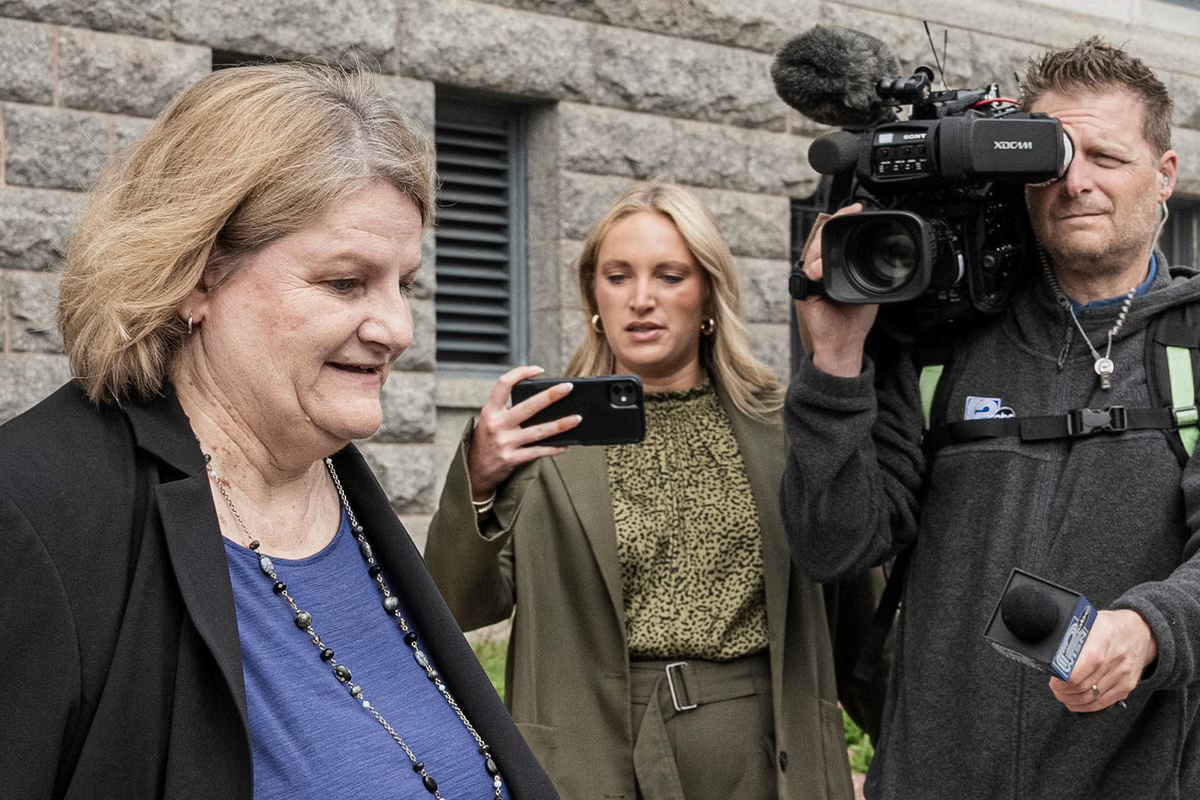
A Wisconsin judge, Hannah Dugan, convicted of felony obstruction for assisting an immigrant in evading federal officers during a period of heightened immigration enforcement under Donald Trump, is scheduled for sentencing in federal court this Wednesday.
Dugan, 67, faces a potential five-year prison term following her conviction on December 19. She resigned from her position as a Milwaukee County circuit judge two weeks later amidst impeachment threats from Republican state lawmakers, having served for nine years.
The case against Dugan was initiated by the administration of Donald Trump, which pursued a sweeping immigration crackdown. The administration and its allies labeled Dugan an “activist judge,” while her attorneys contended during the trial that the administration sought to “crush her” to set an example.
Immigrant rights advocates and Dugan’s supporters argued the administration aimed to use her case to stifle judicial opposition to its immigration policies. The proceedings became a national bellwether in the conflict between the judiciary and the administration’s immigration efforts.
Following her conviction, Republican U.S. Rep. Tom Tiffany, a staunch supporter of Donald Trump, urged authorities to “lock her up” in a social media post.
Dugan’s attorneys declined to comment ahead of the sentencing, though they indicated she would address the court on Wednesday, marking her first public comments on the case in over a year.
Prosecutors are advocating for a “serious sentence.” Dugan’s attorneys had argued she was immune from prosecution as a judge, a claim rejected by U.S. District Judge Lynn Adelman, who will deliver the sentence.
In a sentencing memo, prosecutors asserted that Dugan violated her judicial oath and endangered both law enforcement and the public. “Judges are entrusted with tremendous discretion, but there is a line they cannot cross,” wrote Executive Assistant U.S. Attorney Richard Frohling. “The defendant crossed that line.”
Conversely, Dugan’s legal team argued she has been “punished enough,” citing her resignation and threats of violence. They requested no additional jail time beyond the single day she spent in federal custody. Federal sentencing guidelines suggest 15 to 21 months behind bars, though the judge is not bound by these.
Prosecutors noted the average sentence for obstruction cases is 16 months but did not recommend a specific term, with Frohling stating, “This was a serious offense, and it warrants a correspondingly serious sentence.” Regardless of the outcome, Dugan’s attorneys plan to file an appeal.
Dugan’s case marked the first instance of a state judge in Wisconsin facing trial for obstructing immigration agents. She was acquitted of concealing an individual to prevent arrest, a misdemeanor.
The incident occurred on April 18, 2025, when immigration officers arrived at the Milwaukee County courthouse after learning Eduardo Flores-Ruiz, 31, had reentered the country illegally and was due before Dugan for a state battery case.
Dugan confronted the agents, directing them to the chief judge’s office, asserting their administrative warrant was insufficient for Flores-Ruiz’s arrest. After the agents departed, she escorted Flores-Ruiz and his attorney through a private jury door.
Agents subsequently spotted Flores-Ruiz in the corridor, pursued him outside, and arrested him after a foot chase. A week later, FBI agents arrested Dugan at the courthouse, leading her out in handcuffs. Flores-Ruiz was deported in November.