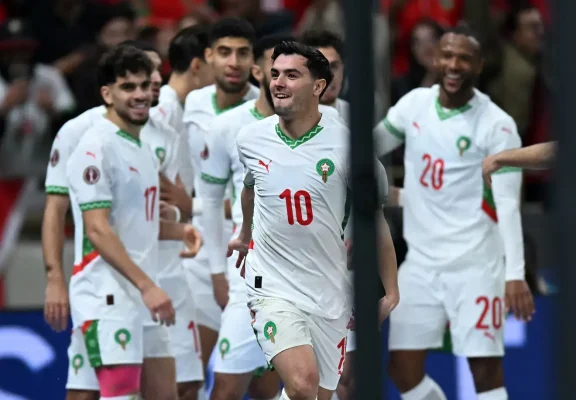
Football enthusiasts have hailed Morocco and Egypt’s outstanding 2026 FIFA World Cup campaigns, describing their performances as a landmark moment for African football.
They said both countries proved African teams can compete with the world’s strongest nations rather than merely participating at the tournament.
Speaking with the News Agency of Nigeria (NAN) in Lagos on Wednesday, Nigeria Rugby Federation General Manager, Azeez Ladipo, said their achievements reflected Africa’s remarkable football progress.
He said African teams now approach the World Cup believing they can challenge and defeat leading football nations.
He said: “The performances of Morocco and Egypt show how far African football has come.
“African teams are no longer at the World Cup just to take part. They are there to compete, challenge the best teams and even win matches.”
Ladipo attributed both countries’ success to sustained investment, careful planning and improved football administration over several years.
“Their success is the result of investing in young players, improving coaching, running football better and giving players the chance to play in top leagues.
“It shows that African football is moving in the right direction,” he said.
He said the achievements should inspire young footballers across Africa and encourage governments and football authorities to strengthen development programmes.
According to him, the success of Morocco and Egypt has enhanced Africa’s global reputation while demonstrating the continent’s immense football potential.
“This achievement is bigger than football. It has made Africa proud and shown the world the great talent we have.
“Other African countries should improve their local football, so that these kinds of achievements become common,” he said.
Ladipo expressed confidence that more African nations would enjoy similar success at future international competitions.
Sebioba Football Club coach, Abdulrahman Gbadamosi, described Egypt’s campaign as one of the tournament’s biggest surprises.
He said Egypt exceeded expectations by displaying courage, resilience and composure throughout difficult matches.
Gbadamosi added that reaching the knockout stage showed African teams were becoming increasingly organised, disciplined and mentally stronger.
“Egypt have shown courage, unity and determination throughout the competition.
“The players have represented not only their country but also the hopes of millions of Africans who want to see the continent succeed at the World Cup,” he said.
He said Egypt’s achievement should encourage greater investment in grassroots football and youth development across Africa.
Sports analyst, Monday Ahanmisi, also described Morocco’s and Egypt’s performances as evidence of African football’s steady growth.
He said many football associations now prioritise player development, coaching education and improved sporting infrastructure.
“Football in Africa has continued to improve. More African players now play in top leagues around the world and gain valuable experience.
“This has helped national teams become stronger, more organised and more confident against the world’s best teams,” he said.
Ahanmisi said both teams united supporters across Africa, with many fans celebrating their success as a continental achievement.
“The performances of Morocco and Egypt have made many people believe that Africa can one day win the FIFA World Cup.
“The journey is still difficult, but these teams have shown that African countries can compete with the best teams from Europe and South America,” he said.
Football enthusiast Samuel Eze urged African governments and sports administrators to increase investment in football development.
He called for improved sporting facilities, stronger youth academies, better coaching programmes and more competitive domestic leagues.
“Africa has many talented players, but talent alone is not enough. We must train young players well, improve our sports facilities and give them more chances to grow and succeed.