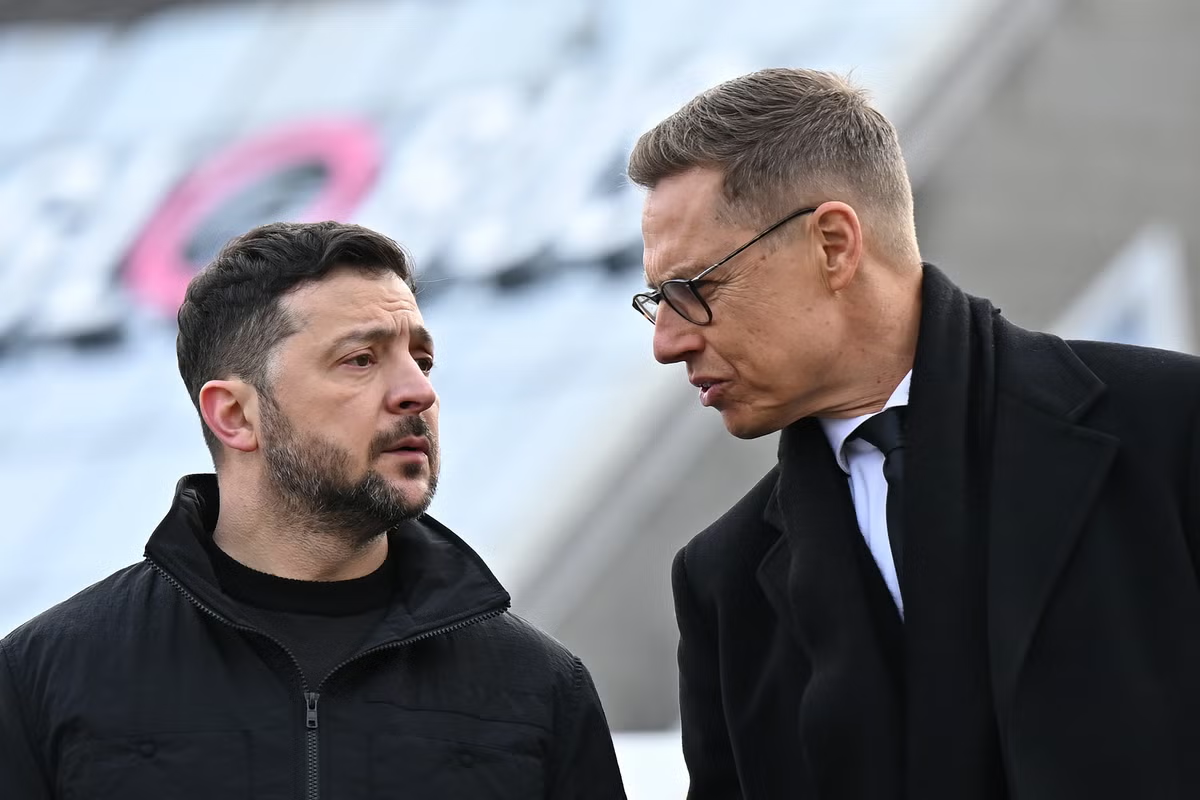
Nato leaders back Ukraine’s campaign of long-range strikes deep inside Russia as it looks to pressure Moscow back into negotiations, Finnish president Alexander Stubb has said.
Kyiv is in the “best” position it has been in since the war began and Ukraine’s long distance strikes on Russian oil and military infrastructure have changed US strategic thinking on the war, significantly strengthening Ukraine’s negotiating position, Mr Stubb told the Financial Times.
“I think that [all Nato leaders] understand why Ukraine is doing this,” he said, speaking on the eve of the Nato leaders’ summit in Ankara. “Everyone believes that we need to continue to increase the pressure.”
The summit will see Nato leaders discuss further support for Kyiv at a time when the missile and drone strikes inflict heavy damage on Moscow, both in terms of its economy and also on the Kremlin’s ability to convince its population and army that the war is going as planned.
“We are in a fairly good place when it comes to Ukraine because everyone, including our American friends, sees that Ukraine is right now on top on the battlefield,” Stubb added. “That has changed the strategic thinking also of those who are trying to mediate peace.”
Read more: How Ukraine’s audacious drone campaign sparked a fuel crisis 3,500km behind enemy lines
He said Ukraine “is in a better position, militarily, politically and financially, than they have been at any time in this war,” adding: “That is why we are seeing a lot of uneasy activity in Russia right now.”
As Ukrainian strikes on oil infrastructure cause fuel shortages, notably including in the Russian-occupied Crimean peninsula, recent polling shows Russians are also growing increasingly negative about the Russian economy and frustrated with the policies of the Putin regime.
“When war becomes personal… the Russian population is going to turn against it. This gives us an opportunity to get back to the negotiating table, which I think we all desperately want,” Mr Stubb continued.
Mr Zelensky has called on Kyiv’s European allies to help it seize the current momentum in the war, with Ukrainian officials believing there is a window of opportunity to force Moscow to the negotiating table through its sustained long-range bombardment.
The Ukrainian president said the strikes were intended to “compel” Moscow to end its invasion.
While China and several Nato allies were earlier nervous about Kyiv’s desire to carry out the long-range strikes – due to fear of the Russian response, which has so far involved multiple heavy air attacks on Kyiv – Mr Stubb said they “all want to end this war”.
At the heart of the concerns are Putin’s thinly-veiled nuclear threats along with his hints that European countries will face consequences for supporting Ukraine.
Mr Stubb, who met Chinese foreign minister Wang Yi on the weekend, added: “The steps of escalation are always possible and we look at different scenarios… when the nuclear escalation issue came up, the answer was very firm from the Chinese side and involved plenty of red flags.”
Kremlin spokesman Dmitry Peskov told state television that the West had turned Putin’s “special military operation” – its name for Putin’s invasion – into “a real war”.
Mr Stubb said Europe must remain alert for further provocation by Russia.
“I think we have to be realistic and say that in the short term there will be hybrid attacks on Europe. We see these almost on a daily basis,” he said.
“In the long term, what we are doing is preparing for a scenario where Russia . . . might want to attack Europe. After the war, Russia will reconstitute troops, especially up in the north [of Europe]. We know that and we see that. We are realistic about it.”