By Daniel Oluwatobiloba Popoola
The Senate has assured Nigerians that the proposed State Police Bill contains constitutional safeguards allowing the Nigeria Police Force to intervene in cases of electoral intimidation, serious human rights abuses and threats to national security.
The assurance came on Sunday, 5 July, 2026 in a statement issued by the media office of the Senate Leader, Senator Opeyemi Bamidele, amid concerns that state governors could abuse state police for political purposes.
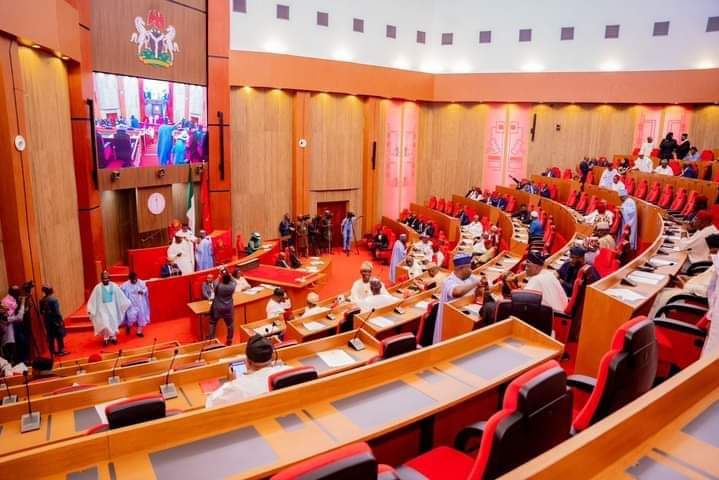
Bamidele also defended the Senate’s passage of the Constitution of the Federal Republic of Nigeria (Alteration) (State Police) Bill, 2026, disclosing that 84 of the 109 senators voted in support of the legislation during clause-by-clause consideration.
He said the overwhelming support demonstrated the broad national consensus behind the proposed constitutional amendment.
According to Bamidele, the bill clearly defines the responsibilities of the federal and state police to prevent operational conflicts and strengthen security coordination.
He explained that the federal police would retain responsibility for protecting federal institutions, policing the Federal Capital Territory, combating terrorism, organised crime, cybercrime, arms trafficking, border security, interstate crimes and other national security matters.
State police, he said, would enforce state laws, maintain public order and protect lives and property within their respective states.
Bamidele said the bill also contains safeguards against political interference.
He explained that although governors would nominate Commissioners of Police, the appointments would require recommendations from the National Police Council and approval by a two-thirds majority of the relevant State House of Assembly.
He added that while the National Police Council would oversee policy, funding and appointments, an independent State Police Service Commission would regulate the operations of state police without the approval or control of any governor.
Explaining the circumstances for federal intervention, Bamidele said such action would only be permitted under exceptional conditions.
“The intervention can only be granted when there is an outright breakdown of public order; where a state police service is incapable of functioning; where there are serious abuses of fundamental rights; where there is partisan or electoral intimidation; and when national security is heavily strained and threatened,” he said.
He said the proposed State Police Service Commission was specifically designed to prevent abuse of the system.
“To avoid any form of abuse, the bill creates the State Police Service Commission. In design, the commission will serve as the regulatory authority of the state police system.”
The Senate Leader also dismissed suggestions that the proposal was politically motivated, saying it followed extensive consultations with the executive, the Nigeria Governors’ Forum, the Conference of Speakers of State Legislatures and the leadership of the Nigeria Police Force.
He added that public hearings held across the six geopolitical zones in July 2025 attracted overwhelming support for the establishment of state police.
Bamidele said both ruling and opposition lawmakers participated actively in the legislative process, stressing that support for the bill transcended party lines.
“In the Senate, 84 out of 109 members voted clause by clause in support of the Bill. This accounted for 77.06 per cent approval at the Senate alone,” he said.
He maintained that the proposed constitutional amendment was aimed at strengthening accountability, improving internal security and ensuring that state police enhance public safety without undermining democratic governance or citizens’ fundamental rights.