Islamabad:
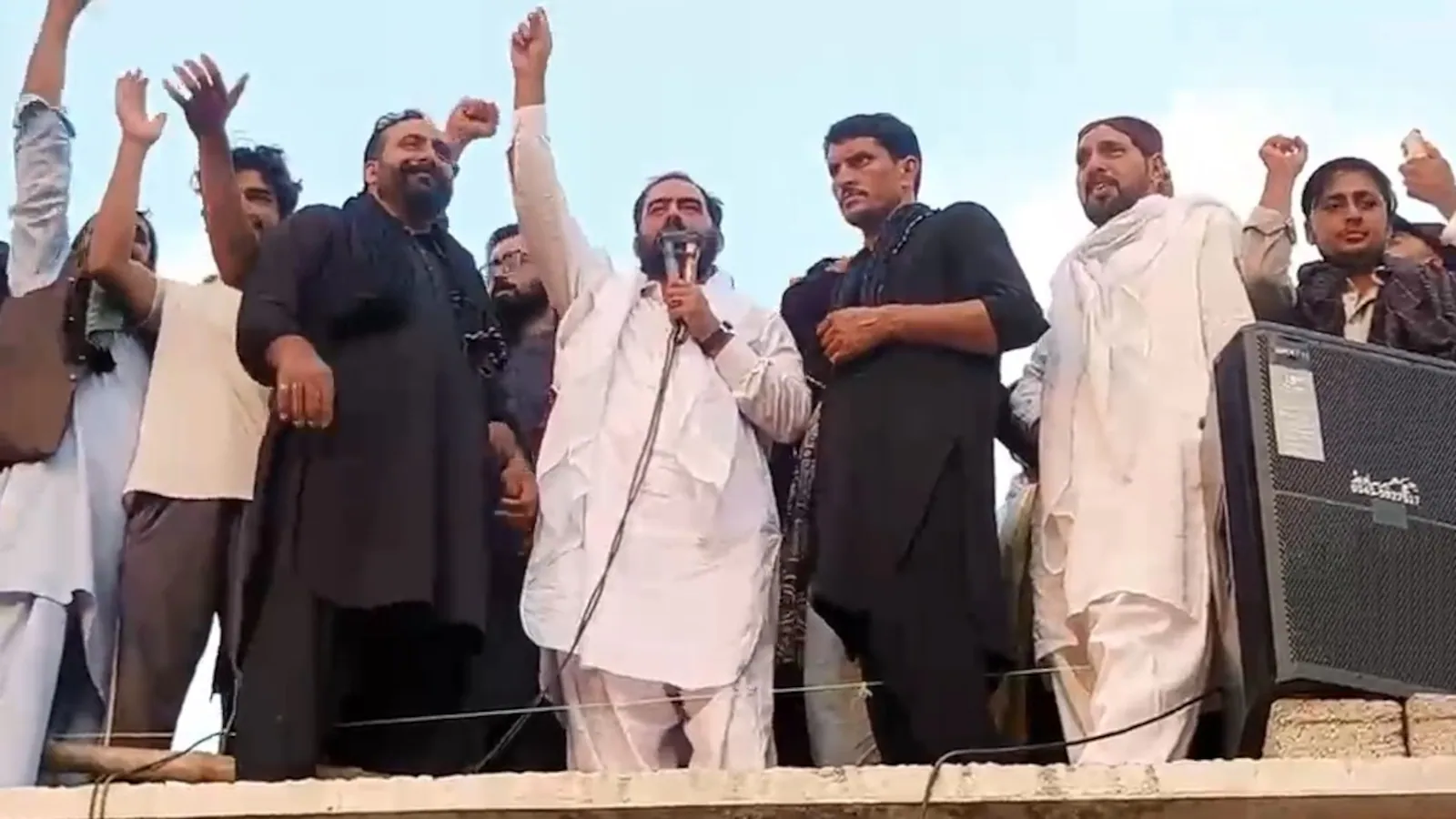
Amid the ongoing unrest in Pakistan-occupied Kashmir (PoK), which has left dozens dead so far, Sardar Aman Khan, the leader of the Joint Awami Action Committee (JAAC), has sought closer ties with India, claiming that Islamabad has imposed an economic blockade in the region following a sweeping crackdown on the protest. The JAAC leader called on New Delhi to send humanitarian assistance and open the border along the Line of Control (LoC), arguing that civilians should have a choice to move to India if conditions deteriorate further.
“We need India’s help. There is a shortage of rations… and we need your help,” Khan was heard saying in a widely circulated video on social media. He claimed PoK residents were facing shortages of food and medicines as security forces intensified operations against protesters, triggering a severe humanitarian crisis.
Addressing a massive gathering at Rawalakot’s Eidgah Ground, Khan asked the crowd whether they should move towards the Line of Control. The crowd repeatedly responded, “Move towards it.”
“Help Us, India”: PoJK Protesters Make Direct Appeal Amid Food Shortage
On the 26th day of protests, one of the main protest leaders, Sardar Aman Khan, appealed to the people across the Line of Control and to India for help, alleging that Pakistan has blocked food and medicine… pic.twitter.com/DRg3z2AlrL
— OsintTV 📺 (@OsintTV) July 5, 2026
He warned that if the authorities respond to the people’s demands with bullets, “we also have other paths.”
The JAAC leader also urged the opening of the LoC in the Poonch and Doda sectors, claiming Islamabad’s crackdown was worsening the hardships faced by people living in the region.
NDTV could not independently verify the video’s authenticity, which is reportedly from Khan’s June 30 rally.
Unrest In PoK
The appeal comes as PoK witnesses large-scale protests against the Pakistani administration since last month. Last week, during a massive protest rally held at the Eidgah Ground, people chanted slogans like “PoK is not part of Pakistan” and “We want freedom”, highlighting that what initially began as a genuine local resistance with demands for reforms has now transformed into an open call for independence from Pakistan’s long-exercised political control over the occupied region.
Experts have repeatedly pointed out that the current political crisis in PoK underscores the deep disconnect between the local population and a “toothless” regional administration that remains entirely subservient to Islamabad.
They reckon that the Pakistani authorities’ decision to ban the JAAC and deploy lethal force in the occupied territory reflects a broader military-driven strategy to suppress the growing unrest in the region.
The unrest in PoK had intensified after Pakistani authorities outlawed the JAAC on June 5, branding the grassroots group as a “terrorist” organisation. Islamabad has long exercised political control over the region through Pakistan’s mainstream parties, which have dominated power for decades, while steadily shrinking the space for local political groups, a report in the ‘International Centre for Peace Studies’ highlighted recently.
According to the report, the party in power in Islamabad has consistently emerged victorious in elections in PoK and Pakistan-occupied Gilgit-Baltistan (PoGB), a pattern that, it argued, can hardly be dismissed as mere coincidence.