The Nigerian National Petroleum Company Limited, NNPC Ltd, has recorded a $3.4 billion reduction in operating costs through an aggressive contract restructuring and optimisation programme, as part of its ongoing transformation into a commercially driven enterprise.
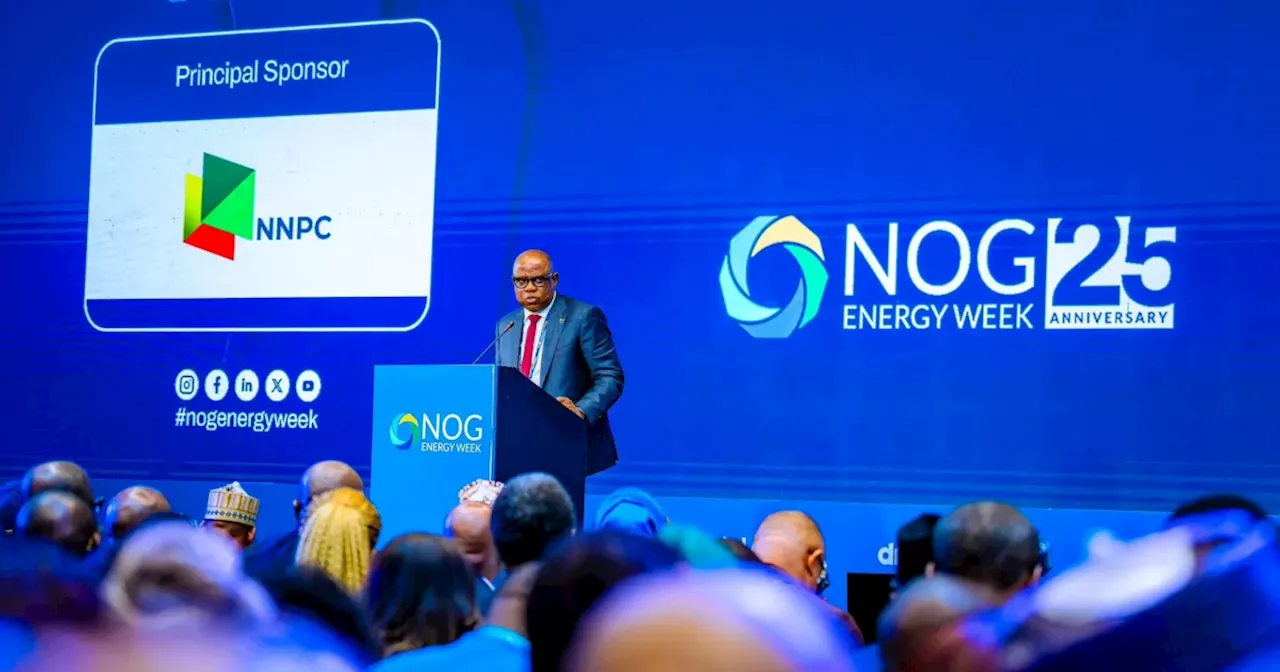
The Group Chief Executive Officer of NNPC Limited, Bayo Ojulari, disclosed this on Tuesday while presenting the company’s one-year performance scorecard at the opening of the 25th NOG Energy Week in Abuja.
According to Ojulari, the cost savings were achieved without slowing operations.
He said the programme was designed to eliminate waste, improve commercial discipline, and strengthen the competitiveness of Nigeria’s petroleum industry.
Production and revenue gains
Presenting the scorecard, Ojulari said NNPC recorded a 6% increase in crude oil production year-on-year to 569.7 million barrels. Gas production rose by 8.1% to 2,576 billion standard cubic feet over the same period.
The company’s contribution to government revenue also increased by 21.8% to N19.5 trillion.
“Our transformation is yielding measurable outcomes,” Ojulari said.
“We have achieved a six per cent increase in crude oil production, an 8.1 per cent increase in gas production, delivered N19.5tn in government take to the Federation, representing a 21.8 per cent increase, and successfully reduced costs by $3.4bn through contract restructuring and optimisation.
“These are not just numbers. They demonstrate that operational discipline, commercial efficiency and strategic reforms can simultaneously increase production, reduce costs and improve returns to the nation.”
Ojulari further disclosed that Nigeria’s crude oil production has risen to about 1.71 million barrels per day, the highest level in five years. NNPC Exploration and Production Limited also attained a record output of 365,000 barrels per day.
The company’s target, he said, is to raise crude oil production to 2 million barrels per day by 2027 and 3 million barrels per day by 2030.
For gas, NNPC projects total production to grow from about 7.62 billion cubic feet per day this year to 10 billion cubic feet per day in 2027, and 12 billion cubic feet per day by 2030.
Improved terminal and pipeline performance
Ojulari attributed the production improvements to enhanced operational stability and infrastructure recovery across oil-producing assets.
He said Nigeria’s crude oil export terminals recorded an average recovery factor of 98% between April 2025 and May 2026. For context, he noted that the Bonny Oil and Gas Terminal recorded operational lows of barely 1% in June 2022.
“The journey from near-zero terminal performance to approximately 98 per cent recovery across our export terminals represents what can be achieved through collaboration, operational discipline and sustained investments in security and infrastructure,” he said.
He added that major evacuation pipelines — including the Trans Niger, Trans Escravos, Trans Ramos, Trans Forcados, and the Oando-Brass line — are currently operating at 100% availability.
Joint Venture obligations and commercial deals
The GCEO said NNPC maintained 100% compliance with all Joint Venture cash-call obligations throughout 2025 and into June 2026.
He noted that while NNPC had met its obligations, some Joint Venture partners remained in partial or significant default, which required the company to provide additional funding in some ventures.
“Our commitment to our Joint Venture obligations remains absolute. We have sustained 100 per cent compliance because we understand that credibility and trust are fundamental to long-term partnerships,” he said.
On commercial milestones, Ojulari said NNPC signed Gas Sale and Purchase Agreements covering 1.29 billion standard cubic feet per day of long-term LNG feed gas and 750 million standard cubic feet per day for domestic industrial supply to DFL FZE and Dangote Refinery.
He said the agreements are expected to unlock more than $20 billion in associated investments, with seven additional commercial transactions under negotiation.
He added that NNPC resumed full monthly remittances to the Federation Account in July 2025, reinstated monthly business performance reporting, and hosted its first earnings call in November 2025 to deepen transparency.
Outlook for Africa’s energy sector
Speaking on the broader energy outlook, Ojulari urged deeper collaboration among governments, investors, regulators and operators across Africa.
He said fragmented partnerships remain a constraint to the continent’s energy transformation despite its significant oil, gas and renewable resources.
“The future of African energy will not be determined solely by the resources beneath our soil, but by the quality of the partnerships we forge above it,” he said.
“We must move beyond transactional relationships to strategic partnerships; beyond isolated projects to integrated value chains; and beyond exporting raw resources to building competitive industrial economies.”
NNPC Limited was incorporated under the Petroleum Industry Act and has focused over the past year on improving efficiency, reducing production costs, increasing transparency, and attracting investment into Nigeria’s oil and gas sector.
Now in its 25th year, NOG Energy Week brings together global energy leaders, policymakers, investors and innovators to discuss the future of energy, sustainability and industrial growth in Nigeria and across Africa.