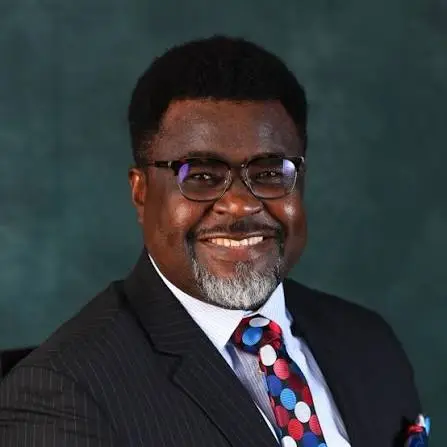
A legal practitioner, rights advocate and public policy analyst, Liborous Oshoma Esq., has said the Federal Government cannot lawfully implement the proposed reforms to the National Youth Service Corps (NYSC) without first amending the law establishing the scheme and securing the approval of the National Assembly.
Following June 30 Federal Executive Council (FEC) meeting, President Bola Tinubu approved the most comprehensive reform of the National Youth Service Corps (NYSC) since the scheme was established 53 years ago.
Among the approved changes is the extension of the orientation course from three weeks to six weeks, with the programme divided into three two-week phases focusing on leadership development, career readiness and specialised training.
The reforms also introduce 11 specialised service streams designed to equip corps members with practical skills aligned with their academic disciplines and career aspirations.
However, speaking on Monday during an exclusive interview on Frontline, a current affairs programme on Eagle 102.5 FM, Ilese-Ijebu, Ogun State, Oshoma said while reforms to the NYSC are necessary, any changes affecting the structure and operation of the scheme must follow constitutional and legislative procedures because the NYSC was created by an Act of the National Assembly.
“First and foremost, the NYSC is a creation of law. Certainly, if you want to reform, the reform should also take the position of a law amendment”
He stressed that the government’s authority to reform the scheme is not in dispute but insisted that such reforms cannot be introduced unilaterally where they alter provisions already contained in the law.
Addressing the legal process, Oshoma stated unequivocally that executive action alone would not be sufficient to alter the NYSC’s statutory framework.
He said, “Certainly the federal government cannot introduce reforms to the NYSC unilaterally without amending the act.”
According to him, the NYSC remains a creation of the National Youth Service Corps Act, meaning any significant institutional changes must receive legislative backing.
He further explained that while administrative adjustments that do not conflict with the law may be possible, provisions expressly contained in the Act cannot simply be altered through executive directives.
Using the appointment of the Director-General as an example, he noted that if the law stipulates that the office must be occupied by a serving military officer, government cannot appoint someone outside that requirement without first amending the legislation.
“For example, if the act says there shall be a director general who shall be, you know, a serving military officer at the orientation, you can not appoint a lawyer or a politician to that body without amending that provision in the act, so certainly you must amend the act to bring about the robust meaningful reforms.”
Oshoma further explained that before any amendment is presented to the National Assembly, government should first carry out extensive consultations with stakeholders to build consensus and improve public understanding of the proposed changes.
“So first and foremost, you can’t just bring those reforms without amending the act, but I think that the first thing is, before you bring the reforms and amendments, you first and foremost have to do what we call collaborative stakeholders discussions, so I want to believe that these stakeholders discussions are taking place and then maybe at the end of the day, the reforms would also take the shape of an amendment,” he said.
The legal practitioner also called for broader stakeholder engagement before the reform process advances further, saying consultations should extend beyond government officials to universities, corps members and young Nigerians who are directly affected by the scheme.
“Yes, I agree that the National Assembly should begin at this stage, begin to indirectly have robust discussions at their constituency levels to also sound out, you know, the participants. Take also universities’ direction, you know, from this level.How do people in the university, majority of them who are in the university, what’s their perception? And then, those who are in Camp, what’s their perception? What can be done?Because you can’t create something for young people without having also to pin their mind, pin their brain on what do they think about this program. That’s where the discussion needs to start from.” Oshoma stated.
He further criticised the tendency of older political leaders to make decisions for young Nigerians without adequately consulting them, insisting that youth participation should form the foundation of any lasting reform of the NYSC.
“We consistently make mistakes thinking that, oh, yes, the older ones can sit down and legislate for the younger ones without having the input of the younger ones.But we forget that some of these older ones today, nobody legislated for them because they were in government right from when they were young. Some of them became ministers at 26. Some of them became governors at 30.Some of them became head of state at 40. So today, they are in their 60s, 70s, and they tell you, no, you are still not old enough to decide for yourself. But that does not mean that we do not have young members in the House of Assemblies and the rest.But what I mean is that let’s have more inputs, more interrogation, more interaction from people who are younger”
The legal practitioner also argued that widespread public suspicion surrounding the reforms stems largely from what he described as a trust deficit between government and citizens, noting that many Nigerians now view government initiatives with scepticism regardless of their intentions.
According to him, “The challenge we have most times as a people is because of trust deficit in government, even though we clamor for reforms, the moment government initiate these reforms, because of the lack of trust in government, you know, we all become suspicious, and say oh no, nothing good can come out of them and I think that is the fallout of what is happening to the NYSC proposed reforms, because there are no trust in the process and then we also view it, we begin to view it from the prism of ethnicity, tribalism, religion.”
The legal practitioner maintained that despite the challenges confronting the scheme, the NYSC continues to play a critical role in fostering national integration and creating opportunities for young graduates, insisting that it should be strengthened instead of discarded.
“Let’s see, look, as it is, you know that other countries in Africa came to Nigeria to study NYSC and how we promote NYSC and then also introduced it to create unification. If we are able to go back and tackle insecurity and provide good governance, NYSC is a fantastic program that needs consistent reform”
The public policy analyst also defended the relevance of the NYSC maintaining that many of the criticisms levelled against the NYSC overlook the positive outcomes it has produced over the years, insisting that the programme has opened doors to employment and personal growth for thousands of participants.
“So I think we need to consistently reform it, ensure that there are some people who got jobs through NYSC. There are some people where they are working today, if not for NYSC, they probably wouldn’t have been able to step their foot into those places. They sat there and were retained in those offices. If they did not, they probably wouldn’t get there. So it is not all doom. Yes, there are doom stories, you know. And there are some people who, it was the experience from NYSC that even gave them the inkling of what they are doing today.” Oshoma said.