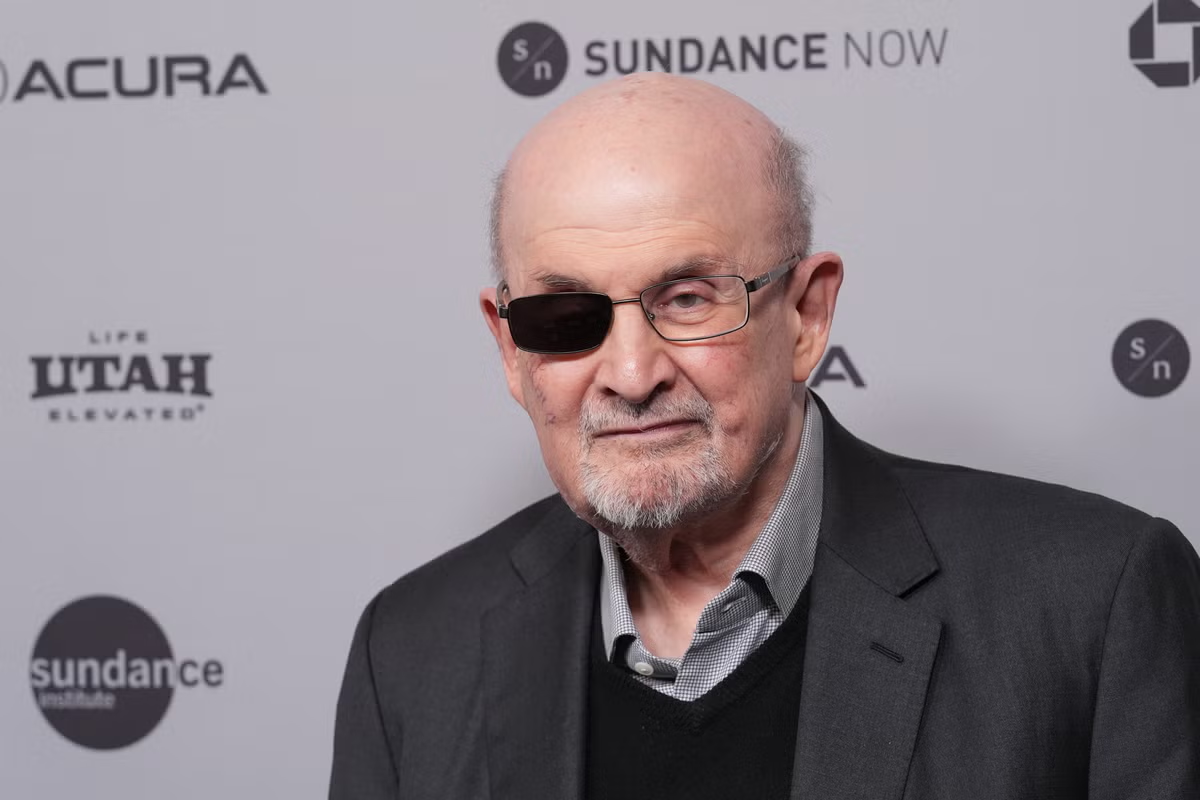
The man convicted of trying to kill author Salman Rushdie is on trial again, this time in a federal case that casts the stabbing on a lecture stage as an act of terrorism.
Prosecutors say Hadi Matar attacked the renowned author and free-speech advocate in 2022 to try to carry out a decades-old fatwa, or religious ruling, calling for Rushdie’s death over what some Muslims saw as blasphemy in his 1988 novel The Satanic Verses.
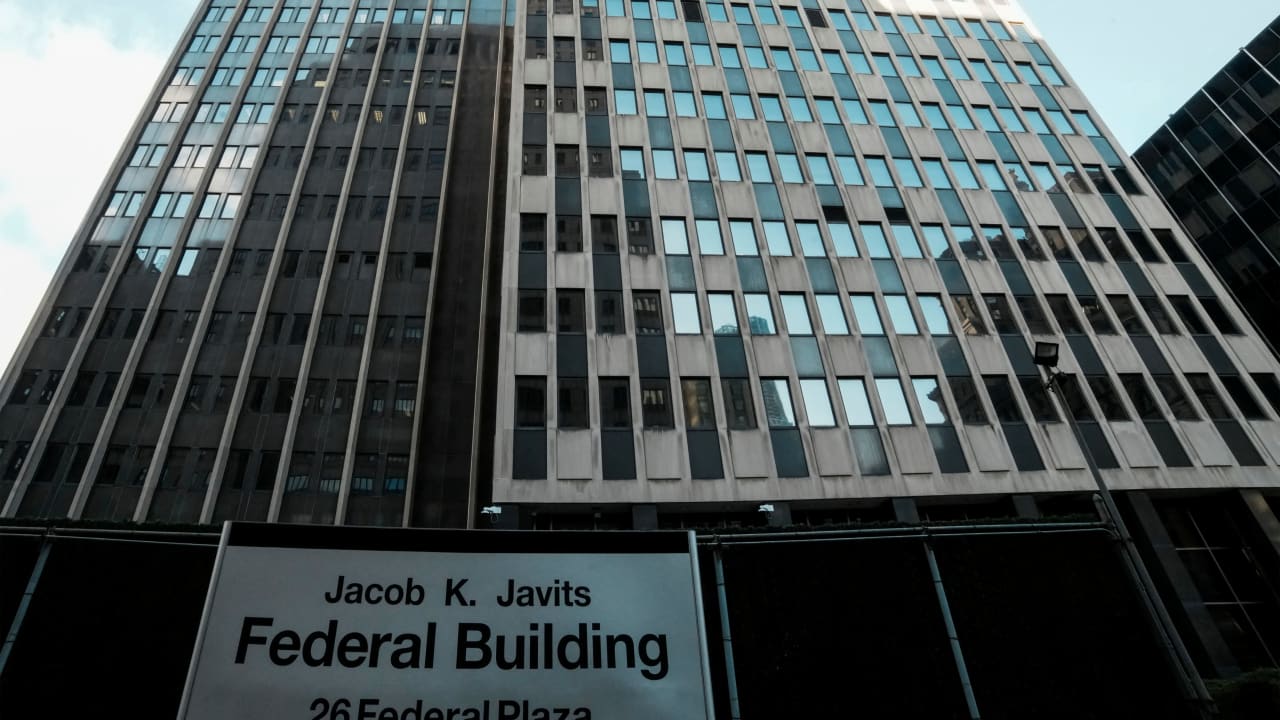
“Fulfill the fatwa — that’s what Hadi Matar intended to do,” Assistant U.S. Attorney Timothy Lynch said in an opening statement at a federal courthouse in Buffalo, New York, about 70 miles (110 km) from the arts and intellectual retreat where Rushdie was assaulted. The Booker Prize-winning author is expected to testify later this week about the stabbing that nearly killed him and left him blind in one eye.
Prosecutors said Matar’s writings, communications and other materials showed he acted out of loyalty to Iran’s theocratic government and the Iran-backed Hezbollah militant group; Iran’s late Ayatollah Ruhollah Khomeini issued the fatwa.
Defense attorney Nathaniel Barone urged jurors to keep their minds open.
“You’re going to have to ask yourselves: What was Hadi Matar’s intent?” Barone said in his opening. “The government doesn’t know what Hadi intends or what his state of mind was at any time, quite frankly.”
Matar, 28, has pleaded not guilty to federal charges that include engaging in an act of transnational terrorism. Currently serving a 25-year New York State prison sentence on an attempted murder and assault conviction, he was attired for court in dress pants and a shirt that seemed too large.
After opening statements, jurors saw video of the attack. It unfolded in front of a horrified audience at the Chautauqua Institution, where Rushdie was about to discuss writer safety.
His assailant, wearing a medical mask, strode onstage and stabbed Rushdie repeatedly, continuing even as the writer got up and fell backward. Spectators rushed to pull the attacker off Rushdie and held the assailant face-down until a state trooper arrived.
As one of the videos played, Matar, 28, placed his head down on the defense table several times before looking back up at the screen. Otherwise, he spent much of the time writing notes on a yellow pad and exchanged comments with his lawyers.
Rushdie, now 79, has recounted the assault and his lengthy recovery during Matar’s earlier trial, in a memoir and in multiple interviews.
“The thing that happens when you get really a close-up look at death — that’s as close as you can get without actually doing the dance of death and heading off to nowhere — it stays with you,” he told The Associated Press in 2024. “There’s a shadow.”
The attempted murder case against Matar focused on the details of the knife attack while the federal one delves more into questions of motive. If convicted, he faces a potential life sentence.
Matar kept a journal and sticky notes logging his years of research on Rushdie — including the location of his office, the sports teams he followed and establishments where he sometimes watched games, Lynch said in his opening statement.
“We need to kill him ASAP,” Matar wrote, framing the killing as part of what he considered a jihad, or holy war, according to the prosecutor. He said Matar added: “Become a warrior and just get it over with.”
In Matar’s New Jersey bedroom, federal agents found photos of Khomeini, his now-deceased successor Ayatollah Ali Khamenei, and a Hezbollah figure, Lynch said. Matar’s computer held a photo of him saluting in a Hezbollah-related t-shirt, plus a video about the fatwa that sought Rushdie’s death, and Matar asked a contact in 2022 whether the edict was still valid, the prosecutor said.
On the day of the attack, Matar carried a fake driver’s license in a Hezbollah figure’s name, prosecutors said.
“The defendant wanted everyone to know he was doing this for Hezbollah,” Lynch told jurors.
Matar declined to testify at his state court trial, and it’s unclear whether he will take the stand in federal court. At his state court sentencing, Matar said he believed in free speech but that Rushdie was “a hypocrite” and a “bully.”
Matar also spoke out in support of Palestinians while heading into and out of the state courtroom.
Born in the U.S. to parents who immigrated from Lebanon, Matar is a citizen of both countries. His mother has said he turned moody and withdrawn after a 2018 trip to Lebanon, where Hezbollah is based.
Rushdie was born in India, raised in Britain — where he was knighted by the late Queen Elizabeth II — and is now a U.S. citizen. He won the Booker Prize in 1981 for Midnight’s Children, a magical realist novel about a personal and national journey that begins at the instant when India became independent.
But Rushdie became most famous, and notorious, for The Satanic Verses, particularly a passage featuring a dream sequence about the Prophet Muhammad. Often-violent protests erupted against Rushdie, who was born into a Muslim family.
Khomeini’s 1989 fatwa drove Rushdie into hiding for years. Although Iran hasn’t focused in recent years on the decree, it was never rescinded. Iran’s government denied involvement in the 2022 stabbing, but its Foreign Ministry’s then-spokesperson suggested Rushdie invited trouble by insulting Islam.
After Knife, Rushdie’s memoir about the stabbing, he returned to fiction with last year’s The Eleventh Hour, a book of short stories and novellas. He was recognized with a Dayton Literary Peace Prize lifetime achievement award in November.