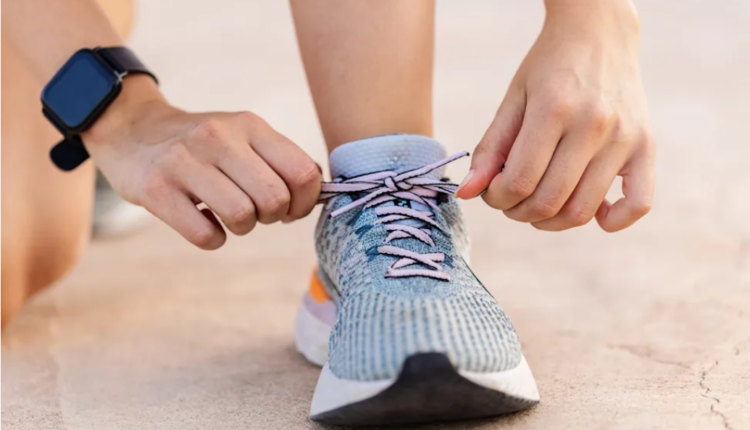
Close-up view of female jogger hands tying laces of her sport shoes before running exercise routine. Motivation, healthy lifestyle and fitness concept.
Study: Sit Less and Move More to Strengthen BonesXavier Lorenzo
Bone strength is a real concern for many as they get older, but especially for women who begin to lose bone density at a more rapid rate after menopause. Fortunately, for anyone concerned with their risk of developing osteoporosis (a.k.a. more brittle bones) as they age, there’s hope. Researchers have found a powerful link between physical activity and bone density that can help you preserve your bone—or even build new bone if you’re choosing the right forms of exercise.
Meet the experts: Alfred Tallia, M.D., M.P.H., a professor and chair in the department of family medicine and community health at Rutgers Robert Wood Johnson Medical School; Omar Atassi, M.D., an assistant professor of orthopedic surgery at Baylor College of Medicine; William Buxton, M.D., the director of neuromuscular and neurodiagnostic medicine and of fall prevention at Pacific Neuroscience Institute in Santa Monica, CA.
The study, which was published in the journal Nature Scientific Reports, analyzed data from 9,787 Americans aged 20 to 59 years who participated in the National Health and Nutrition Examination Survey from 2011 to 2018. The researchers looked at factors like bone mineral density and body fat percentage, along with how often people were sedentary and physical.
The researchers found that people who had more sedentary lives were less likely to have good bone density in their lower back and more likely to have a higher body fat percentage. But those who were more active were more likely to have better bone density and a lower body fat percentage.
“Our results show that physical activity is a key component of maintaining bone health in both men and women and is strongly associated with lower body fat percentages,” the researchers wrote. “Healthcare policy makers should consider reducing sedentary activity and increasing physical activity when preventing osteoporosis and obesity.”
Why might working out regularly promote good bone density? In this particular study, the researchers didn’t explore why exercise may help with bone density—they just found a link. However, researchers and physicians do have an idea.
“This study confirms what we know about exercise and bone density,” said Alfred Tallia, M.D., M.P.H., a professor and chair in the department of family medicine and community health at Rutgers Robert Wood Johnson Medical School. “Thinning of bone density is called osteoporosis and is responsible for fractures of the hip and spine whose consequences can take years off of a person’s life expectancy. We normally lose bone density as we age.”
The way exercise can help with bone density is slightly complicated but, on a basic level, the physical stress that your bones experience when you exercise stimulates your bones to remodel with extra deposits of calcium and bone-forming cells. This ends up creating stronger and denser bones. Your body reabsorbs old bone and creates new bone during your life and, as long as your body has a good balance of old and new bone, your bones stay healthy and strong, the U.S. National Library of Medicine (NLM) explains.