• Lists Nutrition 774, Nigeria 2050 Child Foresight Analysis, GenU, HCD, others among portfolio of initiatives
Deji Elumoye in Abuja
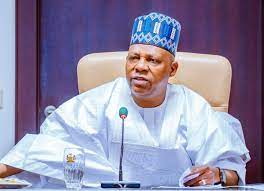
Vice President Kashim Shettima has outlined the programmes and initiatives currently being executed by the administration of President Bola Tinubu to restore and strengthen the future of the Nigerian child.
According to him, a generation of children unsure of their place in a changing world is one of the worst tragedies to befall any nation, particularly Nigeria with a youthful population, where the greatest anxiety is that the nation should never fail or falter in building a society that equips every child with opportunities worthy of their talent.
Shettima stated on this Thursday in Abuja, when he received a delegation from the United Nations Children’s Fund (UNICEF) led by its Executive Director, Ms. Catherine Russell, on a courtesy visit to the State House.
He said though the administration has “inherited profound economic and social pressures that demand partnership with trusted global development institutions such as UNICEF,” the Fund has stood firm “beside Nigeria as a dependable ally, bringing expertise, compassion and practical support to the sectors that define the future” of Nigerian children.
“I am particularly excited about today’s engagement because we have assembled a broad portfolio of interventions to restore and strengthen the place of the Nigerian child,” the Vice President declared.
Shettima observed that the world has transformed into a global village, where the “hopes and anxieties of children travel faster than borders”, pointing out that “whatever happens to a child in Abuja can influence a child in London, just as events elsewhere shape the imagination and wellbeing of our own children.”
He listed the Nutrition 774 Initiative, Renewed Hope Child Support Programme, Nigeria 2050 Child Foresight Analysis, Generation Unlimited Nigeria, and the National Human Capital Development (HCD) Programme, among others, as some of the broad portfolio of interventions being carried by the Tinubu administration to secure a safer future for the Nigerian child.
“We have the Nutrition 774 Initiative, through which we are building the foremost governance framework for nutrition across all 774 local government areas in Nigeria.
“More than ₦7.6 billion has already been mobilised in Child Nutrition Fund matching investments, while essential micronutrients continue to reach millions of women and children as we advance the Presidential Nutrition Intervention Fund,” he noted.
On the Nigeria 2050 Child Foresight Analysis, Senator the Vice President said UNICEF is supporting Nigeria’s determination to institutionalise long-term thinking in public policy through the initiative.
“Horizon scanning, scenario planning and evidence-based recommendations across education, climate resilience and youth livelihoods are now moving towards subnational implementation through a multi-stakeholder technical working group,” he explained.
On Generation Unlimited Nigeria, Shettima highlighted the strides being made to institutionalise the partnership to ensure that the goal to connect 20million Nigerian youth to livelihoods by 2030 is achieved.
On the National Human Capital Development (HCD) Programme, the Vice President said the initiative “seeks to place Nigeria among the world’s top 80 countries on the Human Capital Index by 2030 through integrated policy design, early investments in health, nutrition and foundational learning, and stronger pathways to productive employment.
“These initiatives reflect the convictions of His Excellency, President Bola Ahmed Tinubu, a leader who understands that the quality of tomorrow is determined by the investments we make in children today. That is why this administration has consistently placed human capital at the centre of national renewal,” he added.
Shettima applauded UNICEF’s contributions to Nigeria, which he said extends far beyond programmes, even as he said the Fund remains “a silver lining in a world too often defined by conflict, displacement and vulnerability.”
The Vice President also spoke on Nigeria’s commitment to the Universal Child Benefit (UCB), with President Tinubu declaring 2026 as the Year of Family and Social Protection. The Renewed Hope Baby Support initiative serves as the implementation mechanism. Already, the North-West governors have committed to the initiative, with Lagos State set to commence implementation.
Earlier, Executive Director of UNICEF, Ms. Russell, commended President Tinubu and Vice President Shettima for entrenching structural reforms that are already translating into opportunities for every Nigerian child.
She maintained that UNICEF will remain Nigeria’s long-term strategic partner as the country positions itself as a continental leader in advancing the welfare of children.
Russell reaffirmed UNICEF’s commitment to continually expanding Nigeria’s access to healthcare and financing across the health and social protection sectors, with the goal of ensuring that every Nigerian child is healthy and educated.
On his part, Coordinating Minister of Health and Social Welfare, Prof. Muhammad Ali Pate, speaking on behalf of his colleagues, praised the close collaboration between Nigeria and UNICEF across several sectors.
He disclosed that all vaccines are procured through UNICEF, in addition to the organisation’s technical support for the country’s institutions.
Pate said UNICEF has proven to be an effective partner to Nigeria across several sectors, adding that the Federal Government will continue to work closely with the global organisation.