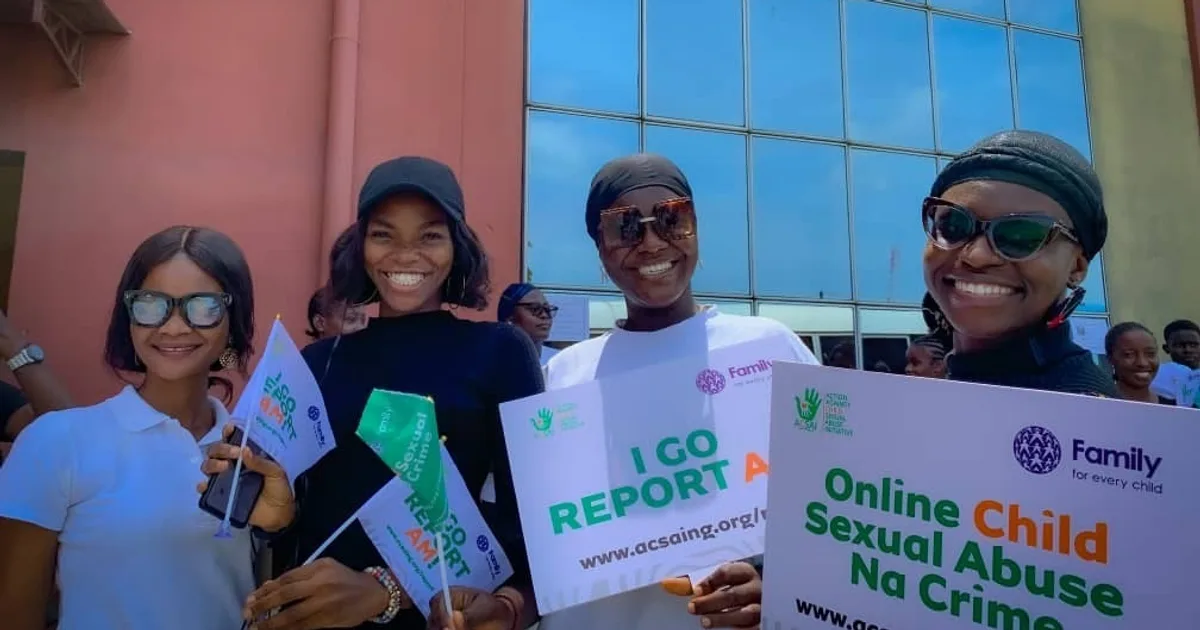
- Say millions of children exposed to harmful online content with inadequate safeguards
James Emejo and Deborah Adokoya in Abuja
Stakeholders have intensified calls for stronger measures to protect Nigerian children from growing online dangers, warning that millions of young internet users remained exposed to harmful content, sexual exploitation, cyberbullying and digital predators due to weak safeguards and limited accountability for technology platforms.
The concerns dominated a Child Online Safety Media Roundtable in Abuja, organised under the Every Second Counts campaign, where child rights advocates, medical professionals, legal experts and youth development practitioners examined the increasing risks confronting children in Nigeria’s rapidly expanding digital space.
Participants emphasised that the conversation was not centred on lobbying lawmakers but on drawing attention to mounting evidence of online harm affecting children and the urgent need for stronger public awareness, parental engagement and institutional safeguards.
Nigeria has the largest internet population in Africa, with millions of children accessing digital platforms daily. However, experts noted that the country’s child protection framework has struggled to keep pace with the realities of the digital age.
Citing data from the Nigerian Communications Commission (NCC), speakers noted that a majority of Nigerian children have encountered sexually explicit content online, while many have experienced unwanted sexual advances through digital platforms.
They further observed that in many reported cases, abusive content involving minors remained online for more than 48 hours before being removed, leaving children vulnerable to prolonged exposure.
According to campaign advocates, these developments reflect structural weaknesses within the global digital ecosystem, where social media companies often prioritise user engagement while investing inadequately in child safety systems, particularly in developing countries.
Participants noted that if similar threats were occurring in physical playgrounds, swift intervention would be expected, stressing that children deserve the same level of protection in virtual spaces as they do offline.
Participants also pointed to international examples such as the United Kingdom’s Online Safety Act and Australia’s child protection standards, saying they demonstrate that governments can successfully regulate global technology companies without disrupting digital innovation or investment.
Stakeholders described the online safety challenge as a growing national concern that requires collective action from government, technology companies, parents, educators and the media.
Speaking during the roundtable, Lead of Chazown by Ella’s Bookclub, Emmanuella Iyayi, stressed that cyberbullying affects both boys and girls, urging parents to become more intentional about spending time with their children and maintaining open communication.
She observed that although schools and government have important roles to play, parents remain the first line of defence, noting that children often carry lasting memories of harmful content encountered online.
Also contributing, Legal and Programme Officer at the Civil Society Legislative Advocacy Centre (CISLAC), Onyinyechi Amy, said child protection required a coordinated approach involving families, government and technology companies.
She maintained that parents must remain vigilant over children’s online activities, while government should establish clear rules governing digital content and platform responsibilities to reduce opportunities for online predators.
Amy also advocated healthier childhood experiences beyond excessive screen exposure, encouraging schools to prioritise physical play and social interaction alongside digital learning.
Campaign Lead at Gatefield, Christina Akintoye, noted that social media platforms were largely designed without adequate consideration for children’s safety, adding that stronger regulatory oversight would encourage greater responsibility from technology companies operating in Nigeria.
Akintoye disclosed that research indicated that nine out of every 10 Nigerian children experience at least one form of online abuse, while harmful content can reach children within seconds of going online.
She added that about half of Nigerian children have directly experienced online abuse, with many cases of sexual content involving minors remaining accessible for extended periods before removal.
Also, Medical doctor, Dr. Joy Nafesa Kabir, and Director of the Youth in Parliament Forum, Ojugo Onyelukachukwu Ojay, also highlighted the growing implications of digital exposure for children’s wellbeing and the importance of strengthening child protection efforts through policy, education and public awareness.
Stakeholders further pointed out that safeguarding children online required a whole-of-society approach in which parents, schools, civil society, technology companies, policymakers and the media work together to ensure that the country’s expanding digital environment becomes safer for its youngest users.