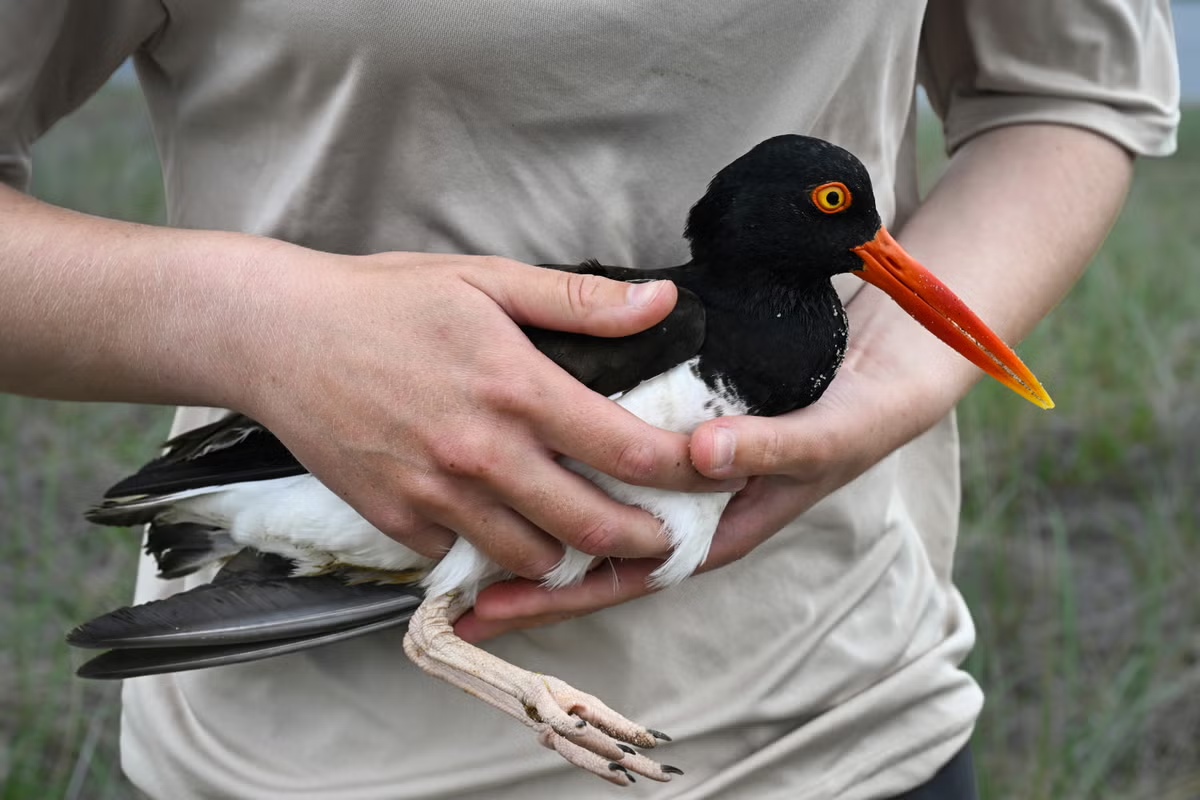
On a sun-drenched Rhode Island beach, a team of biologists raced after two American oystercatcher chicks, weaving across the sand as the long-legged birds tried to escape.
“There is a problem. They can fly,” joked Alan Kneidel, a senior conservation biologist with Manomet Conservation Sciences.
The birds were eventually caught, placed in white pillowcases and carried to a nearby dune, where U.S. Fish and Wildlife Service biologists measured them and fitted colored leg bands.
The work at the 787-acre Trustom Pond National Wildlife Refuge is part of a nationwide effort to restore the American oystercatcher, a striking shorebird with a bright orange bill once nearly wiped out in New England by hunting and egg collecting.
The campaign has become one of North America’s conservation success stories.
Over more than a decade, roughly $10 million helped fund work by 35 organizations across 16 states. The effort focused on protecting nesting habitat, educating beachgoers and reducing threats from predators, pets and human disturbance.
Between 2008 and 2023, American oystercatcher populations increased 45% along the Atlantic and Gulf coasts, even as a 2023 study found most other North American shorebird populations declining.
“It’s amazing and it’s a great conservation success story,” said Maureen Durkin, a federal wildlife biologist who led the Rhode Island banding effort.
She said the recovery shows what can happen when conservation groups work together over many years, while underscoring that protecting imperiled species requires sustained commitment.
Researchers identified low chick survival as a key driver of the species’ decline.
“At one site, it might be recreational disturbance, at another site it might be predators, at another site it might be sea level rise,” Kneidel said.
That led to locally tailored conservation plans developed by the American Oystercatcher Working Group, led by conservation biologist Shiloh Schulte, who died last year in a helicopter crash in Alaska while working to protect shorebirds.
Across the East Coast, organizations have fenced nesting areas, installed educational signs and restricted vehicles and dogs near breeding sites. On Martha’s Vineyard, predator fencing has helped protect nests, contributing to a 77% increase in breeding pairs since 2009.
In North Carolina, breeding pairs have grown nearly 20% to 403 through habitat protection and predator management.
“If you focus conservation efforts on a species … you can actually sort of head off trouble at the pass,” said Lindsay Addison, a coastal biologist with Audubon North Carolina.
Scientists say the birds’ adaptability has also aided their recovery. American oystercatchers have nested on rooftops in the U.S., while related species in Europe nest in pastures and even in a pothole at an Icelandic bus station.
“But what we found is that these birds are incredibly adaptive,” said Ted Simons, a retired North Carolina State University professor.
Despite the rebound, conservationists warn climate change remains the species’ greatest long-term threat as rising seas and stronger storms erode beaches and wash away nests. States including Georgia are building elevated nesting sites and creating islands with dredged material to help offset habitat loss.
Addison said sea-level rise will continue shrinking coastal habitat, making habitat restoration increasingly important.
Conservationists also fear recent changes to Endangered Species Act regulations could weaken protections for nesting habitat. Environmental groups filed a lawsuit Tuesday challenging the changes, arguing they could allow development to damage critical habitat even if protected animals are not directly harmed.
“It’s a direct attack on the protections that have allowed many of these shorebird species to recover,” Kneidel said.