The Trump administration is set to reinstate a controversial “public charge” rule, a policy that could deny green cards to immigrants who have utilized public assistance programs.
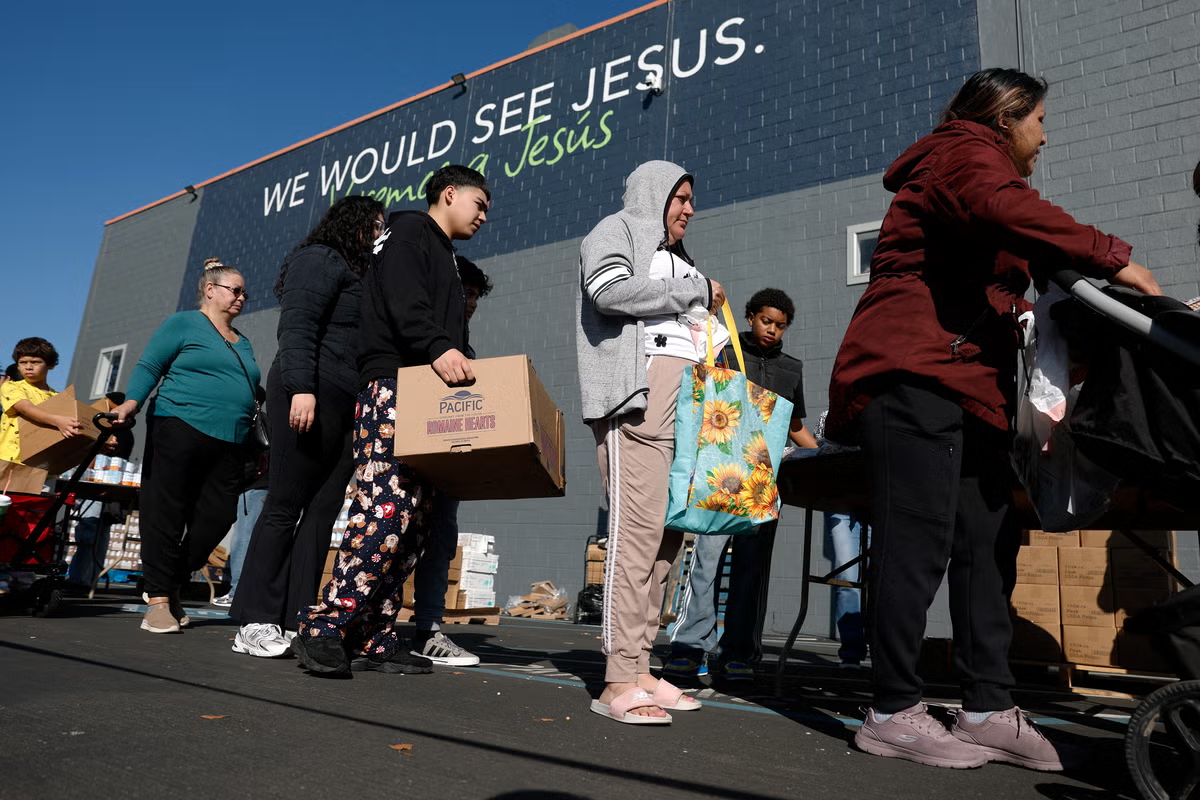
These include crucial support like food stamps, Medicaid, and housing vouchers, marking a significant shift in immigration policy.
Known as the “public charge” policy, the regulation appeared in the Federal Register on Thursday and is slated for formal publication on July 20.
This measure was initially implemented in February 2020 under Donald Trump’s first administration to limit legal immigration, but was later rescinded following President Joe Biden’s inauguration.
Under the policy, green card applicants must demonstrate they will not become a financial burden or “public charge” on the nation.
Its reintroduction coincides with the Republican administration’s hardline strategy to curb both undocumented and legal immigration, amidst rising costs for healthcare and essential food items.
U.S. Citizenship and Immigration Services (USCIS) defended the policy on its X account, stating the federal government “is reaffirming the requirement of self-reliance, protecting public resources and ending policies that encouraged dependency on the backs of hard-working American taxpayers.”
The agency added, “Under President Trump, USCIS is restoring the basic principle that immigrants must be able to support themselves.”
The rule is scheduled to take effect on September 18.
While the administration’s intensified immigration crackdown primarily targets deportations and enforcement at borders and within cities nationwide, these actions have also increasingly targeted legal immigrants and families of mixed immigration status.
Federal law already mandates that individuals seeking permanent residency or legal status must prove they will not become a public charge.
However, the Trump administration’s revived rule significantly broadens the range of public programs that could lead to an applicant’s disqualification.
When first promoted by the Trump administration in 2018, the rule was framed as ensuring only self-sufficient individuals entered the U.S. Immigrant rights advocates quickly condemned it as a “wealth test,” while public health experts warned of detrimental health outcomes.
Nongovernmental organizations previously reported the policy generated widespread confusion and fear, causing many immigrants and their U.S.-born relatives to avoid applying for essential benefits and services they were legally entitled to.