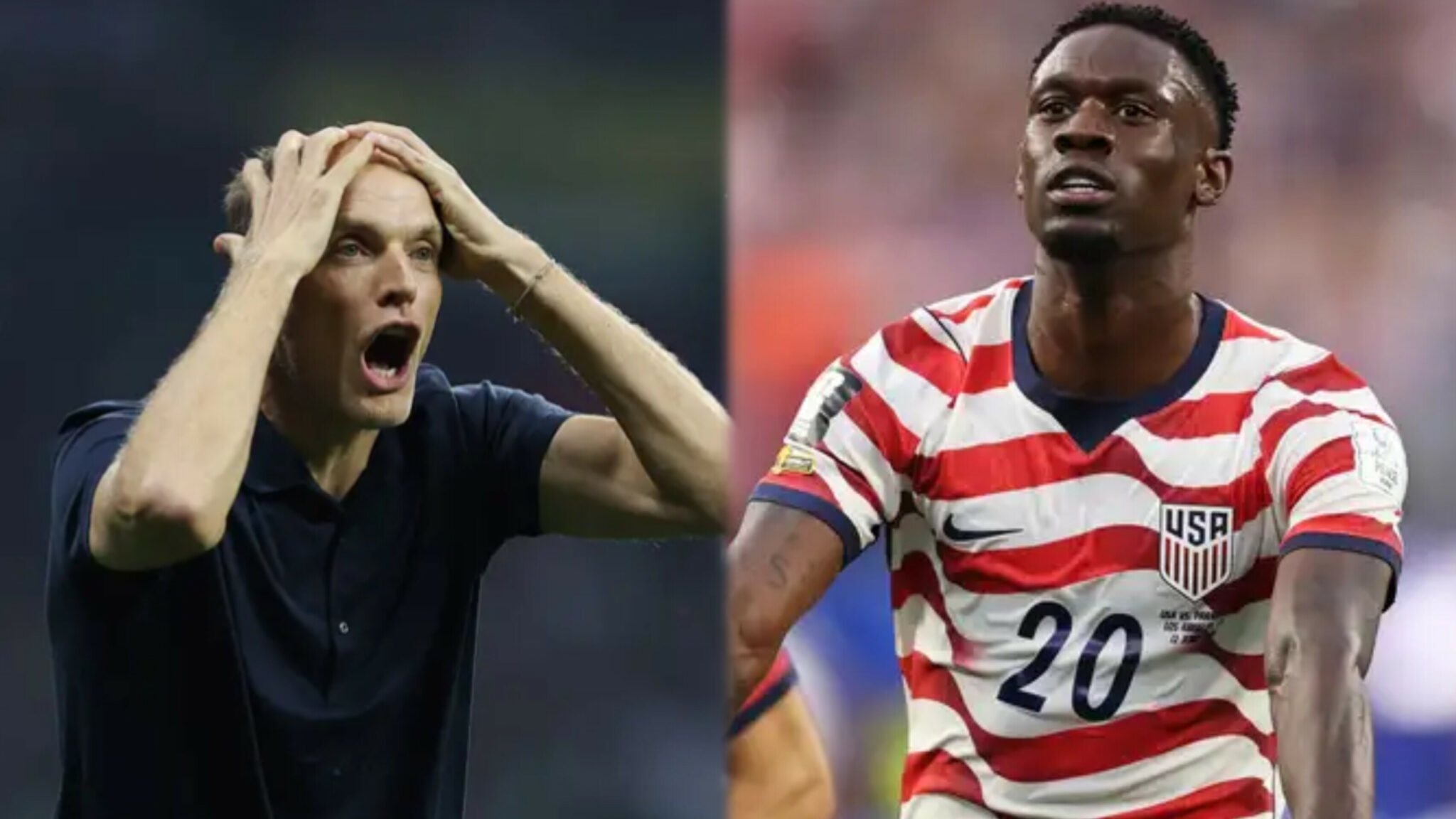
England head coach Thomas Tuchel has criticised FIFA’s decision to suspend Folarin Balogun’s World Cup ban, saying the governing body’s disciplinary process has created uncertainty over how future incidents will be handled.
Balogun was initially handed a one-match suspension after receiving a straight red card during the United States’ victory over Bosnia and Herzegovina. However, FIFA later suspended the sanction, making the striker eligible for the Americans’ Round of 16 clash against Belgium.
The decision has sparked widespread debate, with Tuchel questioning the consistency of the tournament’s disciplinary system.
Tuchel seeks clarity
Speaking after England’s victory over Mexico, Tuchel said it was now unclear where FIFA would draw the line when reviewing disciplinary decisions.
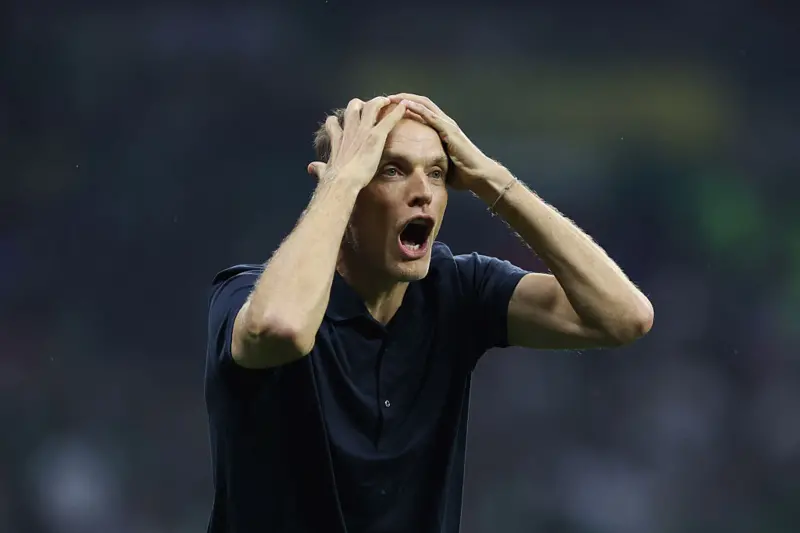
“Where does this start and where does this end now?” Tuchel said. “Can we overturn it or not overturn it? What’s going on?”
The England manager also questioned whether similar appeals could now be made for other disciplinary decisions.
“Where to draw the line is the question that I ask. I have no answer to that.”
He added:
“Do we appeal if a yellow card is not a yellow card? Do we think it is not a red card or who thinks it? Where does this start and where does this end? It’s my question. I don’t have an answer.”
Tuchel’s comments came after England defender Jarell Quansah was sent off during the Three Lions’ 3-2 quarter-final qualification victory over Mexico.
Decision draws criticism from former FIFA President Blatter
Balogun’s suspension was lifted despite FIFA regulations normally imposing an automatic one-match ban for a straight red card.
Reports have claimed United States President Donald Trump spoke with FIFA president Gianni Infantino before the decision was announced. Trump later thanked FIFA for what he described as “reversing a great injustice.”
Former FIFA president Sepp Blatter also weighed in on the controversy, warning that football should remain independent of political influence.