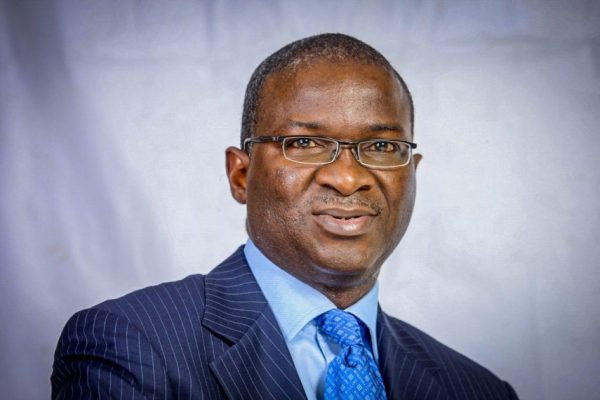
Former Lagos State Governor, Babatunde Fashola, has opposed calls for election riggers to face the death penalty, insisting that electoral offences should attract firm punishments within the provisions of the law.
Fashola, a Senior Advocate of Nigeria (SAN) and former Minister of Power, Works and Housing, said Nigeria must move away from extreme political rhetoric as the country approaches the 2027 general elections.
He made the remarks during an exclusive interview with ARISE News anchor, Ojy Okpe, while reacting to the “rig and die” slogan attributed to former Deputy Senate President, Ovie Omo-Agege, and comparisons with former President Muhammadu Buhari’s controversial comments on ballot-box snatchers ahead of the 2019 elections.
Asked whether election riggers should be sentenced to death, Fashola responded, “Absolutely not. I mean, come on.”
Speaking in the interview aired on Friday, the former governor urged political actors to abandon extreme narratives and ensure that electoral offences were addressed through established legal processes.
“I think we must move away from what I think are extreme narratives and rhetoric,” he said.
Fashola maintained that the Electoral Act did not prescribe capital punishment for electoral offences, adding that even crimes punishable by death must go through due process before a sentence can be imposed.
“The punishment under the Electoral Act is not death. And even if it were death, which I will not support, there’s a process before you take human life; a charge, a trial, an opportunity to defend yourself,” the SAN said.
He urged political parties and their supporters to reject electoral manipulation and concentrate on campaigning to win voters’ support.
“The penalty for rigging is not death. But don’t rig. Go and campaign for your party,” Fashola said.
The former minister advised political parties to focus on consolidating their support in areas where they enjoy popularity while working to reduce their losing margins in other locations.
“There are places where each party is popular. There are places where parties will never win, no matter what they do there. That is the reality across the world,” he said.
When asked whether existing punishments for electoral offences were sufficient to discourage offenders, Fashola acknowledged the need for tougher penalties, particularly for actions capable of undermining democratic institutions.
He suggested that certain electoral offences should attract stiffer custodial sentences without the option of fines to serve as a stronger deterrent.
“I think maybe there might be stiffer sentences without option of fine, maybe a defined custodial sentence that is deterrent in nature,” he said.
Fashola argued that serious offences capable of weakening democracy should not be treated as crimes that offenders could escape through financial payments.
“I always hold the view that some very serious, really impactful conduct should not be allowed to be monetised, and undermining of democracy is seriously impactful,” he added.
However, he maintained that capital punishment would be excessive for electoral offences.
“I don’t think it goes that far,” the former governor said.
Fashola also called for increased public education on elections and democratic responsibilities, arguing that Nigeria had repeatedly amended its electoral laws without giving similar attention to educating citizens about the principles of democratic participation.
He proposed sustained nationwide enlightenment on electoral conduct and ethics, including civic education beginning at primary school level and delivered in Nigeria’s major languages.
According to him, reducing political desperation requires citizens and politicians to understand that democracy is a competitive process in which political parties can win in one election cycle and lose in another.