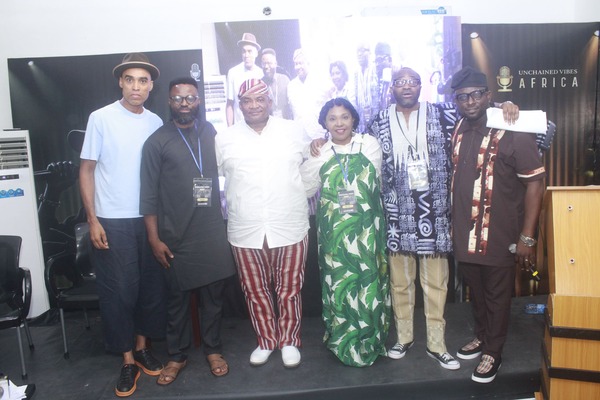
Creatives across Nigeria should be free to support political parties, endorse candidates or remain politically neutral without facing intimidation, professional discrimination or public pressure, speakers at the 4th Freedom Vibes Summit have said.
The speakers, who included musicians, filmmakers, journalists, lawyers and civil society representatives, argued that political choices should not determine whether creatives can work, express themselves or remain safe, as Nigeria approaches the 2027 general elections.
The discussion formed part of the second panel session, titled “Voices and Dialogues on Protecting Creative Integrity: State of Nigeria’s 2027 Endorsements and Emerging Challenges,” at the summit organised by Unchained Vibes Africa (UVA) on Saturday at Freedom Park, Lagos.
The panel was moderated by Ireti Bakare-Yusuf, Editor-in-Chief of International News and Current Affairs at Nigeria Info 99.3 FM.
Panellists included Ade Bantu, founder and artistic director of Afropolitan Vibes; Rufai Oseni, broadcast journalist and co-anchor of The Morning Show on Arise News; Oluwadare A. Kolawole, Deputy Director of the Socio-Economic Rights and Accountability Project (SERAP); Francis Onwochei, veteran actor, filmmaker and producer; and Olorin Aluko, a lawyer, former chairman of the Nigerian Bar Association (NBA), Abuja Branch, and partner at Trumann Rockwood Solicitors.
A key argument during the discussion was that accepting professional work from government should not automatically be interpreted as political endorsement.
Onwochei illustrated this distinction with his experience producing communication materials for the National Orientation Agency (NOA) to promote the National Values Charter, despite his stated lack of support for the current administration.
He argued that creatives should be able to take up legitimate professional engagements without being accused of supporting the political interests of the institutions or individuals commissioning the work.
The filmmaker maintained that artists should not lose professional opportunities or face hostility because of their personal political views.
He also stressed that people with opposing political opinions should still be able to work together and maintain personal relationships.
The discussion also examined the financial pressures that can make creatives vulnerable to political influence, particularly when campaign seasons create opportunities for paid endorsements.
Speakers distinguished between an artist’s personal political convictions and commercial arrangements in which celebrities are paid to promote political candidates or parties.
They argued that paid endorsements should be disclosed so audiences can distinguish sponsored political messages from an artist’s personal convictions.
The right to refuse an endorsement, they added, should be respected just as much as the right to accept one.
Ade Bantu’s contribution also raised questions about the relationship between creativity and political expression, including whether artists should be expected to use their platforms primarily for activism or political commentary.
The discussion highlighted the importance of allowing artists to create work that reflects their interests and experiences, rather than imposing expectations about the political positions they must adopt.
The panel also considered how political pressure can affect the creative industry beyond direct threats or public criticism, including the reluctance of platforms and media organisations to support artists whose work is considered politically sensitive.
Bantu spoke about the need for artists to pay greater attention to the everyday experiences of ordinary people and to create work that reflects their realities.
He also called for stronger support systems and platforms for emerging creatives.
The vulnerability of artists in northern Nigeria featured prominently during the discussion, following an account of a rapper who was allegedly pressured to perform at a political event and subsequently attacked after refusing.
The account raised concerns about the risks faced by artists who reject political demands, particularly where threats may extend beyond the individual to relatives and associates.
The speakers also called for stronger solidarity between creatives in northern and southern Nigeria, arguing that collaboration and wider platforms could help amplify the experiences of artists facing threats and professional restrictions.
The discussion also turned to the legal consequences of speaking against government actions and the extent to which existing protections for freedom of expression are being respected.
Aluko addressed the legal dimensions of political expression and the rights of individuals to support or reject political parties.
The broader discussion stressed that freedom of expression does not extend to unlawful conduct such as incitement to violence or other criminal acts.
Kolawole challenged suggestions that critics of government were not facing legal pressure or detention.
He cited the case of Daniel Ojukwu, an investigative journalist with the Foundation for Investigative Journalism (FIJ).
According to him, Ojukwu had been arraigned on November 10 over a report concerning expenditure in the Office of the Senior Special Assistant to the President on Sustainable Development Goals and remained in custody, with another court appearance scheduled for December 1.
Kolawole also raised SERAP’s own legal challenges, alleging that the organisation had faced action by the Department of State Services (DSS) over its advocacy work.
He referred to an adverse judgment involving N100 million, which he said was being appealed, and described the case as an example of a strategic lawsuit against public participation.

