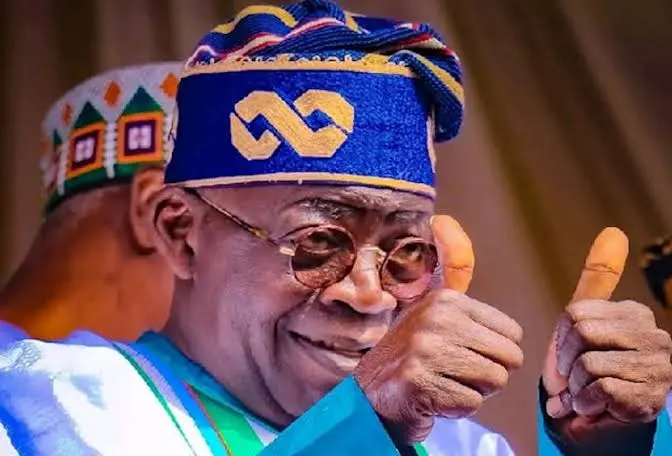
By Prince Ejeh Josh
As Nigerians gradually approach another defining electoral moment in 2027, we, the good and progressive people of Enugu State must ask ourselves an important question: Should we choose our next president based on ethnicity, emotions, tribal identity and political sentiments, or on verifiable performance, leadership capacity and the ability to deliver results?
For me, the answer is straightforward. Elections should be about the future, not sentiments. Elections should be about deliverable reforms, not tribal persuasion. We must judge political leaders by what they have done, what they are doing and what they are capable of doing. And when we apply this standard to President Bola Ahmed Tinubu, there are compelling reasons why the people of Enugu should support his re-election.
Let us begin with our immediate environment. President Tinubu’s administration has demonstrated a level of federal infrastructure commitment to Enugu that deserves objective recognition. Regardless of sentiments, opinions cannot change facts. Facts are immutable sacred materials that can be felt, touched, used, and shared.
Let me also address this lingering issue; the deliberate attempts designed by paid social media hirelings to discredit President Tinubu’s sweeping infrastructural transformation in the East, more so, in Enugu, will crumble in the face of evidence. The president, in just three years, has done what no other federal administration did for Enugu State, and by extension, the Southeast in their 8 years of governance. I’m open for discussion on this aspect. I’m willing to learn established or emerging facts that could alter my position. Let’s now take a peep into some of the projects executed by the Tinubu administration.
The long-neglected Enugu-Onitsha Expressway is undergoing reconstruction, bringing relief to motorists who endured years of dangerous journeys. For regular users of the road, the Enugu-Onitsha Expressway was a deathtrap. For years , lives, in their prime, were lost to the terrible road. Accidents were almost a daily occurrence. Between Ugwuonyeama to Amansea in Awka was a battlefield where survivors usually resorted to thanksgiving after each successful journey. Along the road were mortuaries, a thriving business anticipating more bodies. But President Tinubu came, declared the situation unacceptable with a state of emergency on the road. Today, the rest is history. Life’s good!
The collapsed New Artisan bridges have been reconstructed, while the ultramodern Eke-Obinagu flyover has substantially been completed. The Abakpa Junction interchange is also under construction.
Beyond the metropolis, the Federal Government is undertaking the dualisation of the Makurdi–Otukpo–9th Mile–Enugu corridor, a strategic road that will strengthen connectivity, trade and movement across several states. Let me take us through the memory lane. At a time, the road almost went into extinction as a result of decades of abandonment. Crisscrossing the north to the east was akin to journeying through the Sahara Desert to the Europe. It was a journey of no return. Previous administrations, since the junta days, looked the other way. Our people languished in agony. Thousands of people perished in ghastly accidents. Criminal elements saw the impassable road as an opportunity to prey on motorists. Our people gave up hope. Then came the Tinubu’s administration. Of what good could come out of Nazareth? Yes, what good could come out from Emilokan since we voted against him in the state in 2023? Yet, those administrations the Igbo voted for didn’t bother asking after their welfare and need.
Emilokan proved the naysayers wrong. He launched the construction of the road, this time, expanded it into a dual carriageway. The speed at which the project is going on has left the opposition in shock. Yet they prefer to live in self-denial. But facts are always speaking for themselves.
The Enugu-Port Harcourt Expressway is equally receiving federal attention. These are not political promises; they are identifiable infrastructure projects with physical evidence of government intervention.
The establishment of the South East Development Commission is another significant intervention. For a region that has consistently demanded deliberate federal development attention, the commission represents an institutional commitment to addressing infrastructure deficits, neglect and economic challenges.
There are also federal interventions in social welfare, including conditional cash transfers to vulnerable households, and the Nigerian Education Loan Fund (NELFUND), which has opened access to interest-free student loans for eligible tertiary institution students, including beneficiaries in Enugu. The Renewed Hope Mother and Child Care initiative at the State University of Medical and Applied Sciences, Igbo-Eno, is another intervention worth examining.
These projects and programmes should form part of the conversation when assessing the President’s record in our state.
More importantly, Nigerians must look beyond roads and bridges to the national economy. When Tinubu assumed office in 2023, Nigeria faced an unsustainable fiscal situation, severe foreign exchange distortions and a petrol subsidy regime that placed enormous pressure on public finances. His administration took difficult decisions, including subsidy removal, exchange-rate reforms and monetary policy adjustments.
Yes, these decisions came with painful consequences. Families struggled, businesses faced increased operating costs and the cost of living rose sharply. Nobody should dismiss that discomfort. However, genuine economic restructuring is rarely painless, particularly when correcting years of accumulated distortions.
Today, independent assessments provide evidence of progress. The World Bank reported that Nigeria’s economy grew by 4.2 per cent in the first half of 2026, while the IMF acknowledged that reforms had improved macroeconomic stability and strengthened economic resilience. Inflation has also moderated considerably from its earlier peaks, although food prices and household pressures remain a concern that will ease with time.
The task now is to ensure that these macroeconomic improvements translate into affordable food, better incomes, jobs and improved living conditions for ordinary Nigerians.
This is where leadership continuity becomes important. Economic recovery requires consistency, discipline and the courage to see difficult policies through, not perpetual policy reversals.
In 2027, Enugu people must therefore ask what each presidential candidate has demonstrated in leadership, economic management, national experience and commitment to our region. Beyond campaign speeches and ethnic solidarity, where is the evidence of comparable capacity and delivery?
We should not surrender our votes to emotional appeals. We should examine the facts, inspect the projects and demand accountability.
President Tinubu deserves to be judged by his record, not by the noise surrounding his presidency. For Ndi Enugu, the choice should be guided by what advances our communities, our economy and our children’s future.
Our votes should reward performance, recognise courage and secure progress. In 2027, let facts speak louder than sentiments. Let facts define our choice rather than propaganda and lies wrapped in tribal political allegiance.
Amongst the presidential candidates vying for the 2027 election, President Tinubu has shown commitment, capacity, competence, leadership courage and qualities that are far beyond the elementary proposals churned out by others. We cannot risk voting in Trojan horses in the name tribal affiliation and social media noises.