Former Vice President Atiku Abubakar has called for greater investment in human capital, education and artificial intelligence, warning that Nigeria risks turning its growing population into a source of unemployment, poverty and insecurity if young people are not adequately equipped for the changing global economy….
Former Vice President Atiku Abubakar has called for greater investment in human capital, education and artificial intelligence, warning that Nigeria risks turning its growing population into a source of unemployment, poverty and insecurity if young people are not adequately equipped for the changing global economy.
Atiku said the country’s future development would depend largely on its ability to develop the skills, creativity and productive capacity of its people.
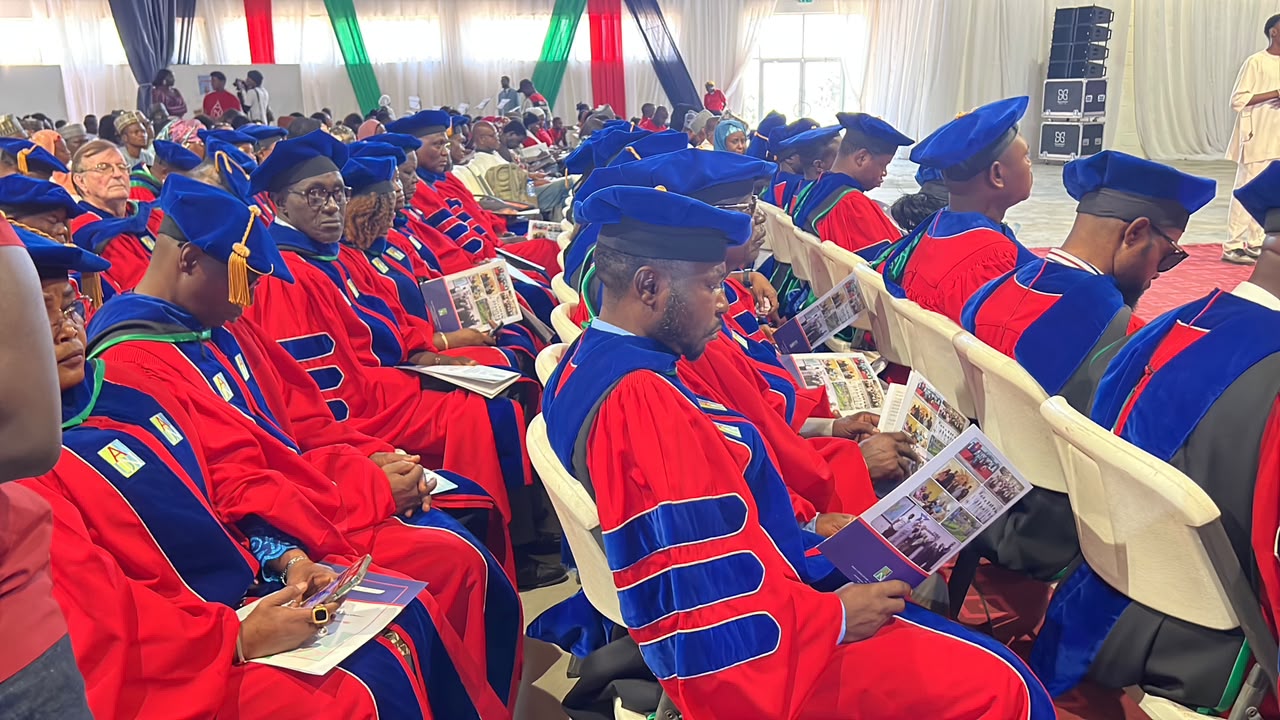
He spoke at the 18th Founders’ Day celebration of the American University of Nigeria (AUN), Yola, Adamawa State, on Saturday.
Represented by former Rivers State Governor and African Democratic Congress (ADC) vice-presidential candidate, Rotimi Amaechi, the former vice president said Nigeria’s greatest development challenge was not a shortage of talent but its failure to sufficiently develop and harness the potential of its population.


He urged the government to reposition the education system towards practical skills, innovation, entrepreneurship and problem-solving.
According to him, emerging technologies such as artificial intelligence, robotics, automation and digital networks are reshaping the global economy, making it necessary for Nigeria to prepare young people not merely to use technology but also to develop solutions to local challenges.
Atiku called for an education system that combines strong foundational knowledge with practical competence, ethical leadership and social responsibility.
He also urged universities to move beyond the traditional focus on certificates and become centres of research, innovation and economic transformation.
The former vice president stressed that government, private-sector organisations, universities and Nigerians in the diaspora must work together to expand access to quality education, research, skills development and technology.
He identified reliable electricity, affordable internet access, security and a supportive business environment as essential conditions for building a competitive workforce.
Delivering the Founders’ Day lecture, titled Purposeful Education and the 21st-Century University: Leadership, Innovation and Social Responsibility, Professor Obiora Okonkwo challenged universities to assess their relevance by the solutions they provide to society, the capabilities they develop and the opportunities they create.
Okonkwo said higher education must produce graduates who can think critically, communicate effectively, solve problems and translate knowledge into practical outcomes.
He also emphasised the importance of balancing international academic standards with the developmental needs of communities hosting universities.
The lecturer acknowledged Atiku’s investment in AUN, describing the establishment and continued support of the institution as a long-term commitment to education and national development.
He highlighted the university’s non-profit status, scholarship opportunities and efforts to make quality education accessible to students from disadvantaged backgrounds.
Meanwhile, AUN President, Dr DeWayne P. Frazier, disclosed that the institution had enrolled nearly 1,700 students from all 36 states of Nigeria and more than 20 countries.
Frazier also highlighted the university’s Feed and Read initiative, which provides children in Yola with meals and support in reading and mathematics.
He said some of the Almajiri boys participating in the programme could be considered for full scholarships after completing their secondary education.
The 18th Founders’ Day celebration also marked 23 years since the university’s groundbreaking, with speakers highlighting the need for education to drive innovation, human development and national renewal.