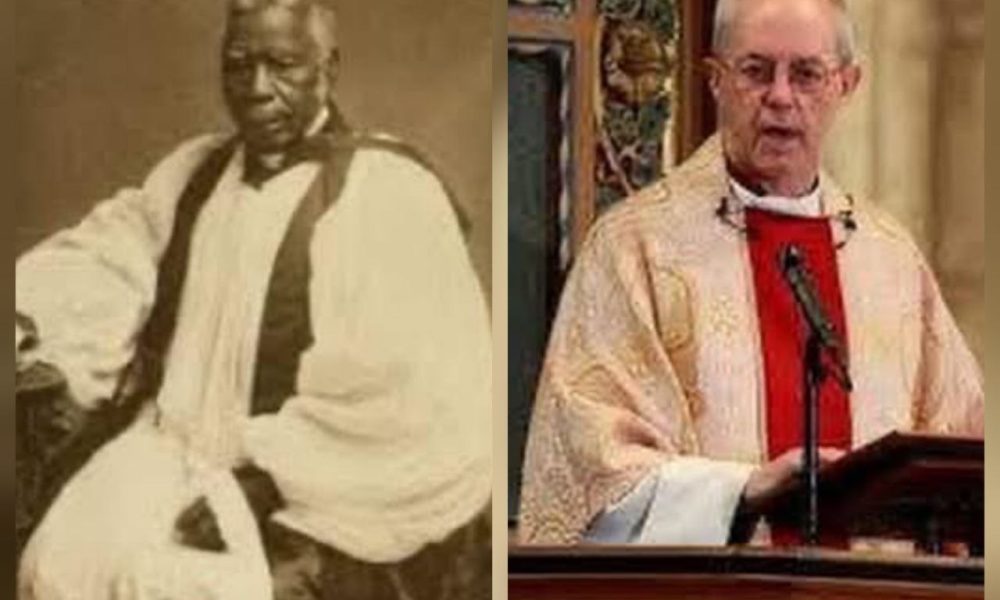
The Church of England publicly apologised in 2014 for the discrimination, humiliation and injustice suffered by Bishop Samuel Ajayi Crowther, one of Africa’s most prominent Christian leaders, during his lifetime.
Crowther, who died in 1891, was the first African Anglican bishop and a pioneer of Christianity in West Africa. Despite his historic achievements, he faced opposition from some European missionaries who reportedly resented the idea of serving under a Black bishop.
Between 1880 and 1891, several European missionaries challenged his authority, with racial prejudice playing a significant role in the controversy surrounding his leadership.
At a meeting in Onitsha in 1890, European missionaries reportedly took control of the mission’s finances and administrative responsibilities away from Crowther. Several African ministers and mission workers appointed under his leadership were also suspended or dismissed.
The controversy extended to Lokoja, where a building established by Crowther to accommodate African missionaries was sold by the European missionaries. They reportedly argued that the facility was too magnificent for African missionaries. The property was subsequently sold to Sir George Goldie’s Royal Niger Company and reportedly converted into a military base.
The developments deeply affected Crowther, who had devoted years to building the Anglican mission and expanding Christianity across West Africa.
Following the setbacks, he resigned from his position in 1890. He suffered a stroke in 1891 and died that same year.
However, more than a century after his death, the Church of England acknowledged the injustice he had suffered.
In 2014, the then Archbishop of Canterbury, representing the Church of England, publicly apologised for the treatment meted out to the pioneering African bishop.
He said:
“We in the Church of England need to say sorry that someone was properly and rightly consecrated Bishop and then betrayed and let down and undermined. It was wrong.
“We are sorry for his suffering at the hands of Anglicans in this country.”
The apology came 123 years after Crowther’s death, bringing renewed attention to a painful chapter in the history of the Anglican Church and the struggle of African Christian leaders against racial discrimination during the colonial era.
Bishop Samuel Ajayi Crowther remains an important figure in African history, remembered for his contributions to Christianity, education, African languages and the translation of the Bible into Yoruba.
His story remains a reminder of the discrimination faced by African leaders during colonialism and the importance of recognising their contributions and preserving their place in history.