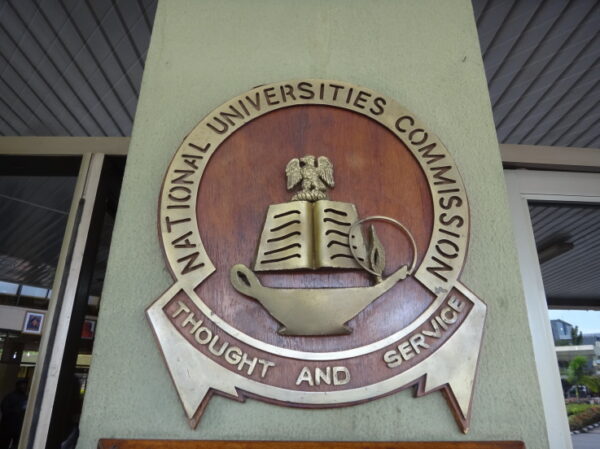
The University of America, Curaçao has pushed back against the National Universities Commission (NUC) after the regulator declared its Nigerian operations illegal and warned prospective students not to enrol.
The NUC had warned that the institution is operating unapproved centres in Nigeria—such as in Abuja and Edo State—alleging that it was admitting students, running academic programmes and claiming to award degrees through unauthorised campuses and learning centres across the country.
However, the university has challenged the commission’s position, insisting that its legal existence as a foreign institution is distinct from the regulatory status of its learning support centres in Nigeria.
In a public notice issued on Tuesday, the NUC’s Director of Public Affairs, Rita Okonjo, said the institution had not been authorised to operate or award degrees in Nigeria.
She identified the centres allegedly linked to the institution as Cosmopolitan International Business School (CIBS), Garki, Abuja; its purported Federal Capital Territory learning centre; and the University of America College of Science and Technology, also known as UAPOLY, Ekpoma, Edo State.
Okonjo said the commission’s investigations showed that the institution was not accredited by any agency recognised by the United States Department of Education or the Council for Higher Education Accreditation (CHEA).
She explained that its purported listing in the Integrated Postsecondary Education Data System (IPEDS), as well as claimed registrations in California and Florida, did not constitute accreditation or authorisation to award recognised university degrees.
The NUC spokesperson also dismissed claims that the institution had obtained approval from the Federal Ministry of Education, the Joint Admissions and Matriculation Board, the National Board for Technical Education and the Nursing and Midwifery Council of Nigeria.
According to her, even if such approvals had been obtained, they would not confer the authority to operate a university or award degrees in Nigeria.
The commission expressed concern over advertisements by the institution offering programmes in law, nursing science, engineering, pharmaceutical science, aerospace and rocket engineering, as well as postgraduate qualifications, including PhD degrees.
It also raised concerns about promises of National Youth Service Corps mobilisation, professional recognition and opportunities to obtain green cards to live and work in the United States or Europe.
Okonjo warned that qualifications obtained from unapproved institutions would not be recognised for NYSC mobilisation, professional registration with relevant Nigerian regulatory bodies or admission into the Nigerian Law School.
She further cautioned that using reputable public institutions as venues for ceremonies did not amount to an endorsement or confer legitimacy on an unapproved university.
The commission advised prospective students, parents and guardians against seeking admission, paying fees or participating in academic programmes organised by the institution and its affiliated centres, warning that individuals and organisations involved in the operations risked regulatory and legal action.
Reacting to the development, the University of America, Curaçao, in a statement issued by its Media Consultant, Martins Chiedozie Ugwu, said it was established under the laws of Curaçao, a constituent country of the Kingdom of the Netherlands.
It maintained that its authority to award degrees derived from its home jurisdiction and that it had never presented itself as a Nigerian university or claimed that its existence depended on a licence from the NUC.
The institution said it possessed a government-issued operating licence, a ministerial charter authorising it to award academic degrees and institutional accreditation under Curaçao’s regulatory framework.
It, however, acknowledged that recruiting students, establishing physical learning facilities and conducting educational activities in Nigeria were subject to applicable Nigerian laws and regulations.
Addressing the facilities mentioned in the NUC notice, the university said CIBS, the purported FCT learning centre and UAPOLY were learning support centres rather than independent degree-awarding institutions.
It explained that the centres were designed to provide students with internet access, tutorials, learning resources, library services and supervised examination support, where applicable, while enrolment and the award of qualifications remained the responsibility of the foreign institution.
The university also argued that institutional licensing, government charters, accreditation, professional recognition and registration in international educational databases were distinct regulatory concepts.
It said inclusion in an international database or registration in a foreign jurisdiction did not automatically amount to accreditation in Nigeria, just as the absence of Nigerian accreditation did not, in its view, invalidate the legal existence of a foreign institution in its home country.
On concerns over NYSC mobilisation, professional registration and admission into the Nigerian Law School, the university acknowledged that recognition by Nigerian regulatory and professional bodies was separate from the validity of its foreign charter.
It also referred to what it described as previous engagements and instances of graduate recognition relating to NYSC mobilisation, saying the claims could be verified through official correspondence and relevant records.
The institution called on the NUC and the Federal Ministry of Education to engage it in a formal process to examine its operating licence, charter, accreditation documents, academic arrangements and the status of its learning support centres in Nigeria.
It said it was willing to make relevant institutional documents available to the authorities and address legitimate regulatory concerns through lawful channels.
The university urged the media to distinguish between allegations, regulatory findings and established legal facts in reporting the controversy, noting that the disagreement could affect students, graduates, parents and its institutional reputation.
It maintained that disagreements over the regulation of educational activities in Nigeria should be treated separately from questions concerning the legal existence of a foreign institution in its home jurisdiction.
The institution said its priority remained protecting the interests of its students and pursuing constructive engagement with Nigerian authorities.