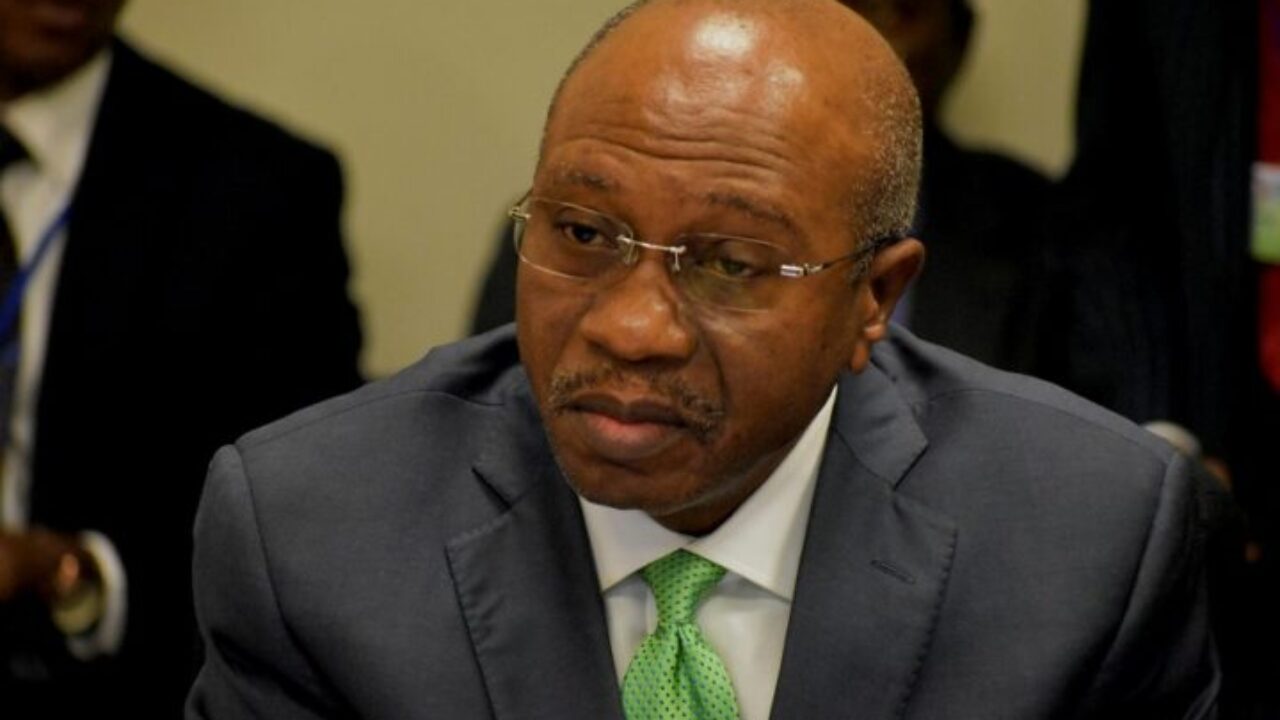
Mr Emefiele faces four charges, including illegal redesign of naira notes, disobedience to the direction of law and illegal acts causing injury to the public.
A police investigator on Thursday told an FCT High Court that former Central Bank of Nigeria (CBN) Governor Godwin Emefiele produced a colour swap of the naira notes instead of the redesign approved by former President Muhammadu Buhari.
Eloho Okpoziakpo, the 11th prosecution witness, said this while testifying in Mr Emefiele’s trial over allegations of illegal redesign of the naira and other financial misconduct.
Mr Okpoziakpo, a Commissioner of Police who led investigations into allegations against the former CBN governor following his removal from office in June 2023, gave the testimony while being led in evidence by the Director of Public Prosecutions of the Federation, Rotimi Oyedepo, a Senior Advocate of Nigeria (SAN).
The witness told the court that investigators found no evidence that the CBN board met and approved the colour swap.
He said Mr Emefiele had sought President Buhari’s approval for a naira redesign and attached samples of the proposed notes, which the president approved.
“But what was eventually done was not a redesign as was approved by the president but a colour swap,” Mr Okpoziakpo said.
The case is one of several prosecutions Mr Emefiele has faced since his removal from office in June 2023 over allegations of corruption and financial misconduct.
In the four charges filed against him in this case, the Economic and Financial Crimes Commission (EFCC) accused him of unlawfully redesigning the naira notes and printing currency worth N684.5 billion at a cost of N18.96 billion.
The EFCC accused Mr Emefiele of illegally redesigning Nigeria’s three highest denominations, the N200, N500 and N1,000 notes, in 2022. The policy triggered a severe cash shortage, causing widespread hardship and disruption in the build-up to the 2023 general elections.
According to the EFCC, Mr Emefiele violated Section 19 of the CBN Act, which requires the bank to obtain the president’s approval, based on the recommendation of its board, before changing the currency.
The commission also accused him of unlawfully approving the withdrawal of N124.8 billion from the Consolidated Revenue Fund (CRF), allegedly in violation of the requirement that withdrawals from the account must follow procedures prescribed by the National Assembly, usually through an Appropriation Act or budget.
Mr Emefiele has denied the allegations.
At Thursday’s proceedings, Mr Okpoziakpo said Mr Emefiele forwarded the president’s approval to the Managing Director of the Nigerian Security Printing and Minting Plc (NSPM).
The managing director, however, raised concerns in a letter to Mr Emefiele, which the witness read to the court.
“It was then agreed that based on the urgency, we should advise the CBN to avoid changes to the banknotes, which require a long period to implement. Instead, work on the colours because of the availability of inks and how far it can be accessed. It will also enable the NSPM to serve the CBN and its nation diligently,” part of the letter read.
Mr Okpoziakpo said the initial designs submitted by Mr Emefiele to the president included QR codes, watermarks and different numbering on the N1,000, N500 and N200 notes.
However, he said the versions Mr Emefiele eventually approved for production did not have QR codes.
The witness insisted that there was no subsequent presidential approval for the notes that were eventually produced.
The investigator also told the court that Mr Emefiele approved the withdrawal of N124.8 billion from the CRF without appropriation by the National Assembly.
The CRF, established under the Nigerian Constitution, is the federal government’s central account into which most government revenues are paid and from which public expenditure is made with legislative approval.
Reading Mr Emefiele’s approval to the court, Mr Okpoziakpo said it stated: “Please debit the CFR account for N124.8 billion and clear the debit in the account.”
He said the Ministry of Finance informed the investigation team in a letter that the debit was made directly by the CBN.
During cross-examination by Mr Emefiele’s lawyer, Olalekan Ojo, Mr Okpoziakpo listed his academic and professional qualifications.
He said he holds a Bachelor of Science degree in psychology, a Master of Science degree in International Diplomacy and has undergone basic police training.
The witness said he had served in the Nigeria Police Force for 31 years, spending most of his career in investigations.
He said he worked at the police intelligence department in Abuja during the implementation of the naira redesign policy.
He also told the court that he took Mr Emefiele’s statement at the Kuje Custodial Centre alongside Jim Obazee, the special investigator who led the investigation into the former CBN governor’s alleged misconduct.
However, Mr Okpoziakpo said he did not personally interview Mr Emefiele. He said his role involved analysing documents and interviewing the managing director of the NSPM.
Mr Ojo presented him with an audit report of the CBN covering Mr Emefiele’s tenure. But the witness maintained that the investigation was not based on the audit report but focused on the legality of the withdrawal from the CRF.
Justice Maryann Anenih adjourned the case until 2 December.